Why Perfume Bottle Size Matters in Fragrance Packaging
Perfume bottle size is not just a technical specification. It plays a critical role in fragrance branding, pricing strategy, and customer perception.
For fragrance brands, choosing the right bottle size directly impacts:
- How customers perceive product value
- Whether the fragrance is positioned as luxury or entry-level
- Retail shelf presence and visual impact
- Shipping cost and packaging efficiency
Smaller bottles are often used for sampling and travel-friendly products, while larger bottles represent long-term use and premium positioning.
In modern fragrance packaging strategy, most successful brands do not rely on a single size. Instead, they combine multiple perfume bottle sizes to serve different customer segments.
Standard Perfume Bottle Sizes in the Global Market
Perfume bottles typically follow internationally recognized size standards used across Europe, the US, and Asia.
Common perfume bottle sizes include:
- 5ml – Sample vial / promotional use
- 10ml – Travel spray / refillable mini bottle
- 15ml – Luxury mini edition
- 30ml – Entry-level retail size
- 50ml – Most popular standard retail size
- 75ml – Mid-premium fragrance size
- 100ml – Flagship full-size perfume bottle
Perfume Bottle Size Reference Table
| Size | Market Position | Typical Use |
| 5ml | Sample | Marketing & testing |
| 10ml | Travel | Portable fragrance |
| 30ml | Entry luxury | First purchase |
| 50ml | Core retail | Best-selling size |
| 100ml | Premium flagship | Long-term use |
These sizes are widely used by perfume brands and supported by most glass perfume bottle manufacturers and packaging suppliers.
Perfume Bottle Sizes Based on Consumer Usage Behavior
When you choose perfume bottle sizes, it is really about how your customers use the product in real life. Different people use fragrance in different ways, and that is why you often see brands offering multiple perfume bottle sizes instead of just one.
1. Travel-Friendly Sizes (5ml–15ml)
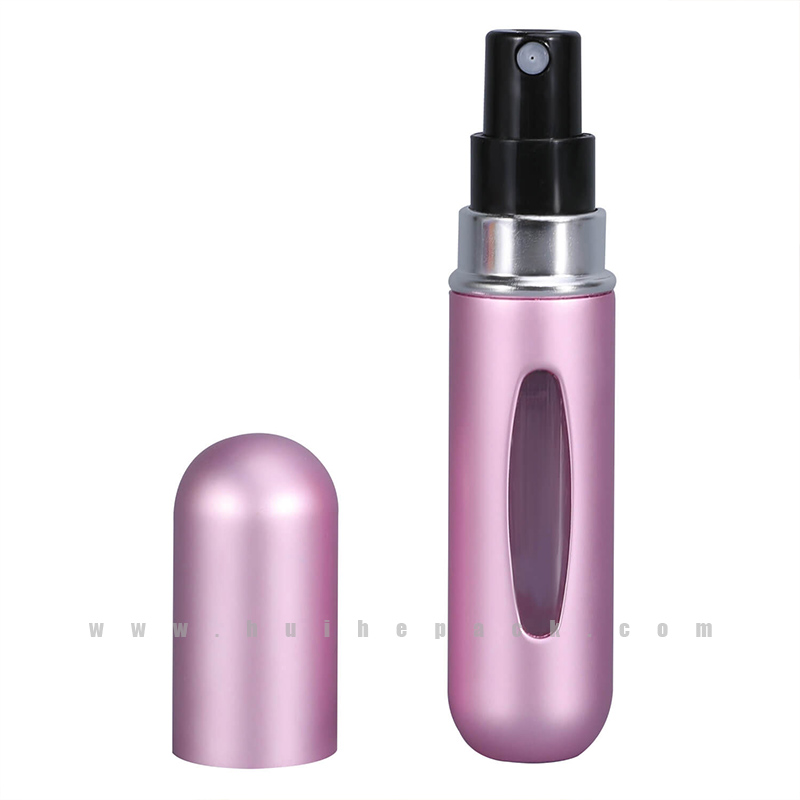
If your customers travel often or like to carry fragrance in their bag, smaller perfume bottles like 5ml to 15ml work much better. These travel perfume bottles are easy to use, easy to refill in some cases, and perfect when you want to test a new scent before buying a larger size.

2. Daily Use Sizes (30ml–50ml)
For everyday use, most customers naturally move toward 30ml and 50ml perfume bottles. These sizes feel balanced. You get enough product for daily use without the bottle feeling too heavy or too expensive. In many fragrance brands, 50ml perfume bottles are actually the best-selling size because they fit most users’ expectations for both value and convenience.
3. Long-Term Use & Luxury Positioning (75ml–100ml)
When you move into premium positioning or long-term use, 75ml and 100ml perfume bottles become more common. These larger fragrance bottle sizes are often chosen by loyal customers who already know the scent and want a longer-lasting option. They also work well when you want your perfume packaging to feel more luxurious and visually strong on the shelf.
From a perfume bottle wholesale perspective, understanding these usage behaviors helps you choose the right mix of glass perfume bottle sizes. If you plan your product line correctly, you can easily cover travel, retail, and luxury segments without overcomplicating your packaging strategy.
How Brands Choose Perfume Bottle Size Strategically
Most fragrance brands don’t rely on just one perfume bottle size. Instead, they build a size strategy that matches different customer groups, price levels, and product positioning. This helps you sell more effectively across retail, luxury, and niche markets.
Here is a simple breakdown of how different brand types usually choose perfume bottle sizes:
| Brand Type | Typical Perfume Bottle Sizes | Strategy Purpose |
| Startup Brands | 30ml / 50ml | You focus on lower risk entry sizes that are easy to sell and test the market. |
| Mid-Size Brands | 30ml + 50ml + 100ml | You cover multiple customer segments and build a complete retail product line. |
| Luxury Brands | 50ml heavy glass + 100ml flagship bottle | You emphasize premium feel, gift value, and strong shelf presence. |
| Niche Fragrance Brands | 10ml discovery sets + 50ml core size | You attract scent explorers and encourage repeat purchases after sampling. |
For most perfume bottle wholesale projects, a combination of 2–3 sizes usually performs better than a single-size strategy. When you plan your glass perfume bottle lineup this way, you can better match how customers actually buy fragrance in the market.
Glass Structure & Size Relationship in Perfume Bottles
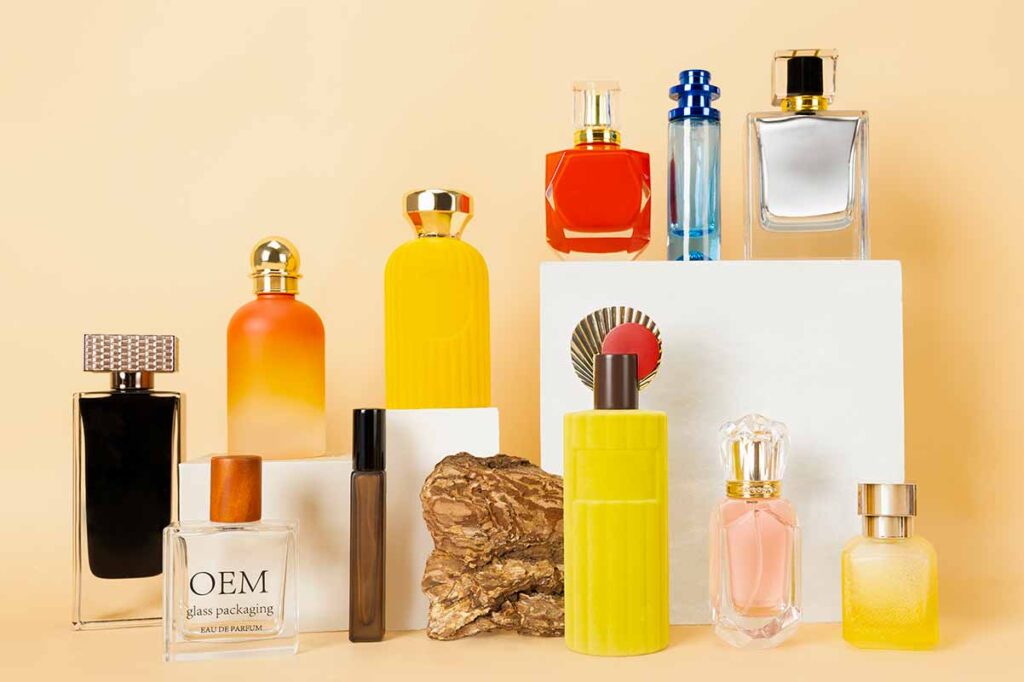
When you choose different perfume bottle sizes, you are not only selecting volume. You are also working with glass structure, neck finish compatibility, and overall packaging performance. These factors directly affect how your fragrance bottle looks, sprays, and performs in real use.
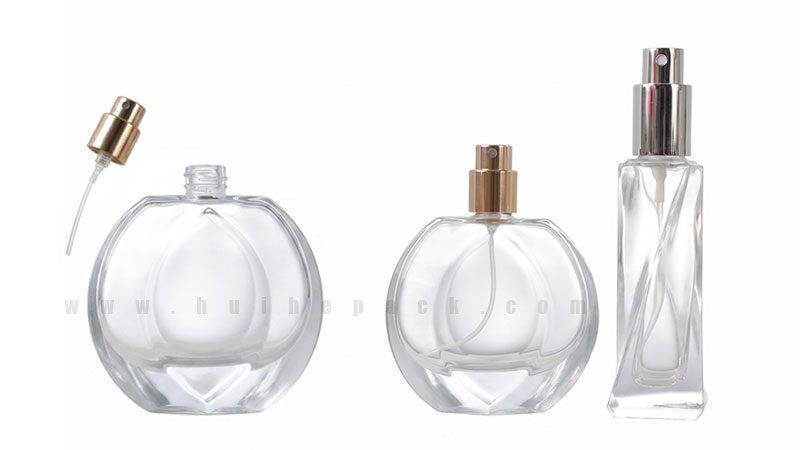
One of the most important technical standards in perfume packaging is the FEA neck finish system, especially FEA 15 and FEA 18. These two specifications are widely used in glass perfume bottle manufacturing and determine how the pump, collar, and bottle neck work together.
FEA 18 is the most common standard for medium to larger perfume bottle sizes, especially 50ml and 100ml glass perfume bottles. It offers a slightly wider neck opening, which makes it more stable for standard spray pumps. If you are developing mainstream retail perfume bottles or wholesale fragrance packaging, FEA 18 is usually the safest and most widely compatible choice.
On the other hand, FEA 15 is more commonly used for smaller perfume bottle sizes such as 5ml, 10ml, and some 30ml designs. Because the neck is narrower, it works well for compact travel perfume bottles and mini fragrance packaging where precision and portability matter more than structural strength.
From a glass structure perspective, larger perfume bottles like 75ml and 100ml often require a stronger base and thicker glass walls to maintain stability, especially when paired with FEA 18 neck systems. This is important not only for durability, but also for the luxury feel of the final perfume packaging.
Smaller bottles with FEA 15 necks usually focus more on lightweight design and efficient production. They are easier to carry, easier to sample, and more cost-effective for perfume bottle wholesale projects.
When you plan your fragrance packaging system, it is important to align perfume bottle size, glass thickness, and neck finish together. This ensures your bottles are compatible with standard spray pumps and avoids issues during filling or production.
At HUIHE PACK, we support both FEA 15 and FEA 18 neck finishes across different perfume bottle sizes, helping you build a consistent and scalable fragrance packaging system from sample vials to luxury flagship bottles.
Wholesale Perfume Bottle Size Selection for B2B Buyers
For wholesalers, distributors, and private label brands, selecting perfume bottle sizes is also a logistics and cost decision.
Key considerations include:
- MOQ differences: stock sizes usually have lower minimum order quantities
- Shipping efficiency: smaller bottles reduce freight cost per unit
- Packaging optimization: carton size and pallet loading efficiency
- Customization feasibility: some sizes are more suitable for custom molds
At HUIHE PACK, we provide both stock perfume bottles and custom mold solutions depending on brand requirements.
Refillable Perfume Bottle Size Trends (2026 Market Insight)
Refillable perfume bottles are becoming one of the most noticeable shifts in fragrance packaging, especially as more brands move toward sustainable and long-term packaging strategies in 2026. Instead of treating bottle size as a one-time retail choice, you now see brands designing perfume bottle sizes that are built for repeated use, refilling, and system compatibility.
In most cases, the 50ml perfume bottle has become the most common starting point for refillable fragrance packaging. It feels practical for consumers, while still giving enough volume for premium positioning. At the same time, many brands also use 100ml refillable perfume bottles for flagship products, especially when they want to emphasize value, longevity, and a more luxurious unboxing experience. Smaller sizes like 10ml refillable travel perfume bottles are also gaining attention, particularly in duty-free and travel retail channels where convenience matters more than volume.
What is changing in 2026 is not just the size itself, but how perfume bottle sizes are being designed for refill systems. You need better compatibility between the bottle neck finish, spray pump, and refill mechanism, which is why standard systems like FEA 15 and FEA 18 are becoming even more important in refillable perfume bottle production. Brands are also paying more attention to whether their glass perfume bottles can be reused without losing aesthetic quality after multiple refills.
From a wholesale perspective, this trend is pushing more fragrance brands to rethink their product structure. Instead of selling a single disposable bottle, you are now more likely to see a system built around core sizes like 30ml, 50ml, and 100ml, all designed to support refillable usage and reduce packaging waste over time.
Recommended Perfume Bottle Sizes by Brand Positioning
| Brand Type | Recommended Sizes |
| Startup Brand | 30ml / 50ml |
| Mid-size Brand | 30ml + 50ml + 100ml |
| Luxury Brand | 50ml heavy glass + 100ml flagship |
| Niche Brand | 10ml discovery set + 50ml |
This structure helps fragrance brands build a scalable product line across different market segments.
Conclusion: Choosing the Right Perfume Bottle Size
Selecting the right perfume bottle size is a combination of branding strategy, consumer behavior, and production efficiency.
Most successful fragrance brands use multiple sizes to serve different market segments rather than relying on a single format.
At HUIHE PACK, we support a full range of perfume bottle sizes from 5ml sampling bottles to 100ml luxury glass bottles, including stock options and custom development for private label brands.

FAQ – Perfume Bottle Sizes
1.What is the most popular perfume bottle size?
The 50ml perfume bottle is the most widely used size in global retail markets.
2.Is 30ml or 50ml better for perfume brands?
30ml is better for entry-level positioning, while 50ml is the most balanced and best-selling size.
3.Why do luxury perfumes often use 100ml bottles?
100ml bottles are used for flagship products and long-term customer loyalty positioning.
4.What size perfume bottle is best for travel?
5ml to 10ml perfume bottles are ideal for travel use and airline compliance.
5.Can perfume bottles be customized in different sizes?
Yes, most glass perfume bottle manufacturers support multi-size customization within the same design system.
References & Industry Data Sources
Industry & Market Research
- Statista – Fragrance & Perfume Market Data
Provides global data on perfume market size, consumer trends, and product segmentation across different fragrance categories. - Euromonitor International – Beauty and Personal Care Insights
Covers in-depth analysis of fragrance packaging trends, premiumization, and shifting consumer behavior in cosmetics and perfumes. - Grand View Research – Fragrance Market Reports
Offers global forecasts and segmentation insights, including product format evolution and packaging innovation trends.
Packaging & Industry Standards
- FEA – European Aerosol Federation Packaging Standards
Defines FEA 15 and FEA 18 neck finish standards widely used in perfume bottle and spray pump compatibility systems. - Glass Packaging Institute (GPI)
Provides technical guidelines on glass packaging design, sustainability, and material standards used in fragrance bottles.
Sustainability & Refillable Packaging Trends
- McKinsey – Sustainability in Beauty Industry Report
Explores how refillable packaging and sustainable design are reshaping beauty and fragrance product development.