
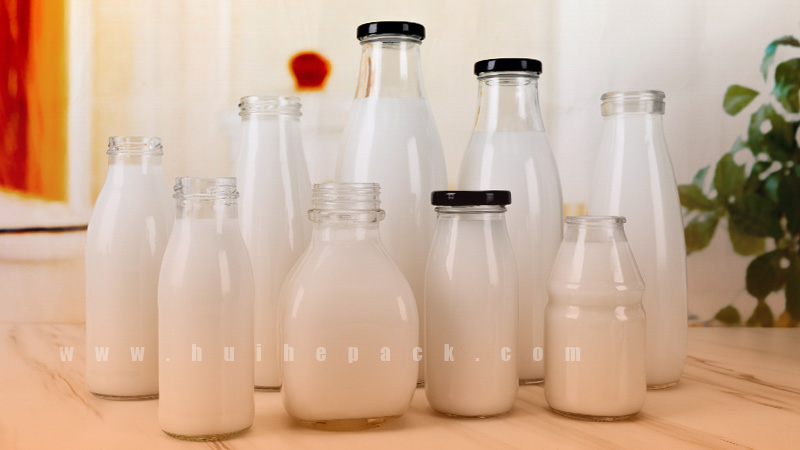
Choosing the right glass milk bottle size is about more than how much milk the bottle holds. The size you choose can affect your serving format, shelf space, shipping cost, filling process, and customer experience.
If you are sourcing glass milk bottles for a dairy brand, it helps to compare common capacities before you place an order. In this guide, you will find the most common glass milk bottle sizes, their typical applications, ml-to-oz conversions, and practical tips for choosing the right size for your product.
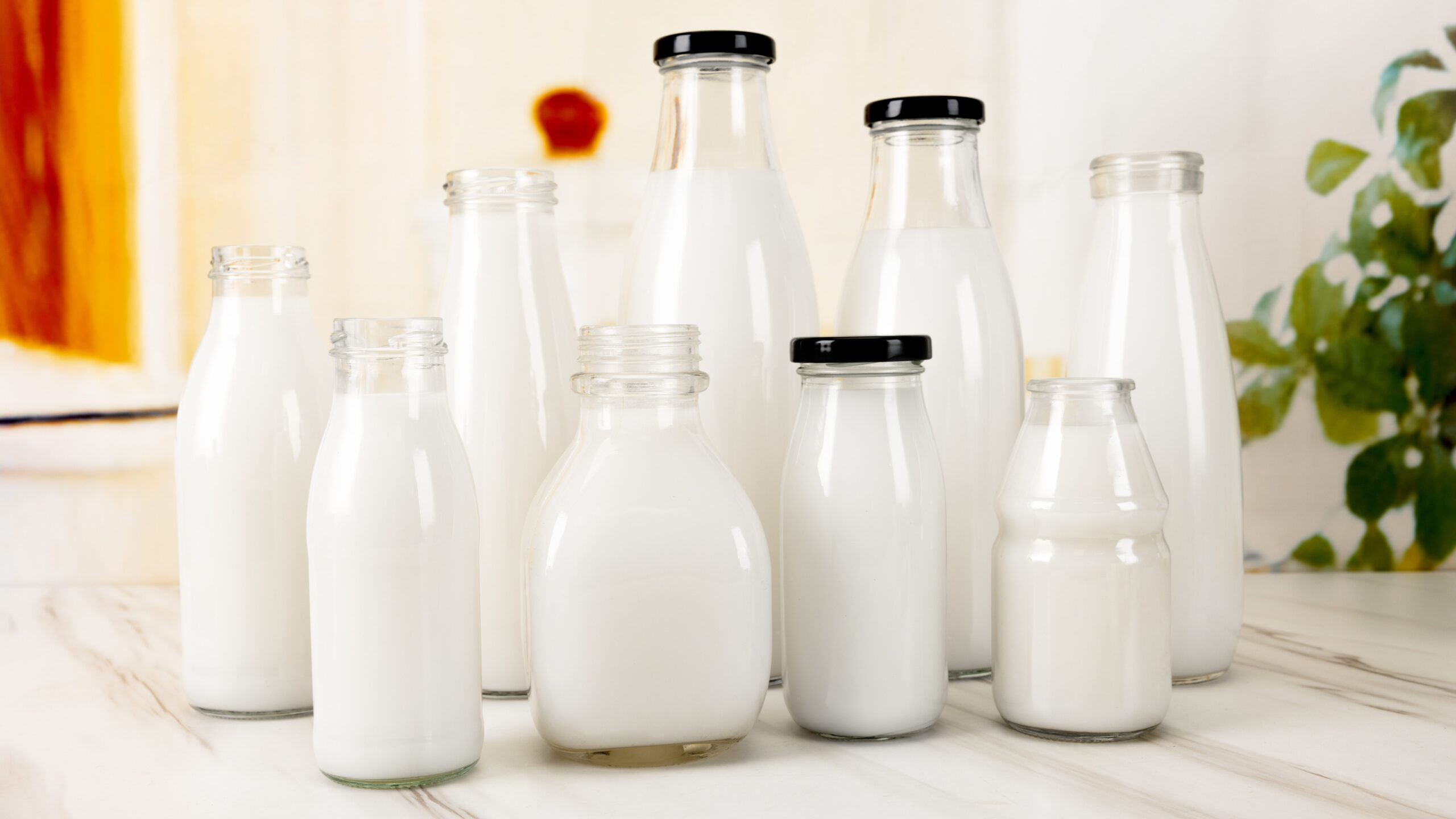
Standard Glass Milk Bottle Sizes at a Glance
There is no single standard milk bottle size for every dairy product. The right capacity depends on your product, target customer, and sales channel.
| Glass Milk Bottle Size | Approx. US fl oz | Common Applications |
| 100–150ml | 3.4–5.1 oz | Cream, tasting portions, hotel service |
| 200ml | 6.8 oz | School milk, kids’ drinks, small servings |
| 250ml | 8.5 oz | Single-serve milk, flavored milk |
| 300–350ml | 10.1–11.8 oz | Chocolate milk, dairy drinks, cafés |
| 500ml | 16.9 oz | Retail milk, flavored milk, on-the-go drinks |
| 750ml | 25.4 oz | Premium dairy products, family sharing |
| 1L | 33.8 oz | Fresh milk, family-size packaging |
| 1.5–2L | 50.7–67.6 oz | Family use, dairy delivery |
For commercial packaging, the actual fill volume may differ from the bottle’s brimful capacity. When you order wholesale glass milk bottles, confirm the required fill volume, headspace, and bottle specifications with your supplier.
200ml Glass Milk Bottles
A 200ml glass milk bottle works well when portion control is important. You can use this size for school milk, children’s dairy drinks, hotel breakfast service, and small promotional or tasting packs.
It is also a practical choice when you want a compact bottle that is easy to hold and consume in one serving.
250ml / 8 oz Glass Milk Bottles
250ml is one of the most useful sizes for single-serve dairy packaging. It is suitable for fresh milk, flavored milk, chocolate milk, and other ready-to-drink dairy beverages.
If your target market uses ounces, you may also see this format described as an 8 oz glass milk bottle. A true 8 US fl oz volume is about 237ml, so 250ml is a common metric-market equivalent rather than an exact conversion.
300–350ml Glass Milk Bottles
Looking for a little more than a standard single serving? A 300ml or 350ml glass milk bottle gives you extra capacity without moving into a family-size format.
These sizes are useful for chocolate milk, flavored milk, protein dairy drinks, and café beverages. They can also give premium products a more substantial feel.
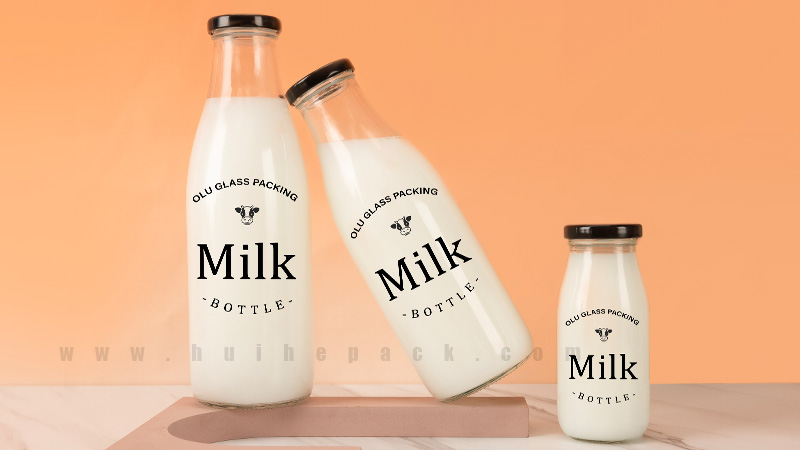
500ml / 16 oz Glass Milk Bottles
A 500ml glass milk bottle is a flexible middle-size option. You can use it for retail milk, flavored dairy drinks, café products, and larger individual servings.
500ml is approximately 16.9 US fl oz, although brands often market this size as a 16 oz format. If you sell internationally, check the labeling requirements in your target market before deciding how to state the net contents.
750ml Glass Milk Bottles
750ml glass milk bottles are less focused on single servings and more suited to sharing or premium positioning.
You may consider this size for farm-fresh milk, specialty dairy products, premium café products, or brands that want a larger bottle without going all the way to 1 liter.
1 Liter Glass Milk Bottles
The 1L glass milk bottle remains a practical choice for family-size milk and retail dairy products. It gives consumers enough product for several servings while fitting a familiar household format.
A 1L bottle holds approximately 33.8 US fl oz. In some markets, 32 oz is used as a common commercial reference, but these volumes are not exactly the same.
1.5–2L Glass Milk Bottles
Larger glass milk bottles are mainly designed for family consumption, dairy delivery, and other high-volume applications.
Before choosing a 1.5L or 2L format, consider the total package weight. A larger bottle can add significantly to handling and shipping costs, especially when your products are shipped long distances.
Choosing Milk Bottle Size by Dairy Product
Your product should be one of the first things you consider when selecting a glass milk bottle capacity.
| Dairy Product | Suitable Bottle Sizes |
| Fresh milk | 500ml, 1L |
| Flavored milk | 200–500ml |
| Chocolate milk | 250–350ml |
| Yogurt drinks | 100–250ml |
| Cream / creamer | 100–200ml |
| Protein milk | 250–500ml |
| Farm-fresh milk | 500ml–1L |
| Dairy delivery | 500ml–2L |
For example, if you sell a ready-to-drink chocolate milk, a 250ml or 350ml glass milk bottle may be more practical than a 1L bottle. If you sell fresh milk for family use, 500ml and 1L formats are usually easier to position.
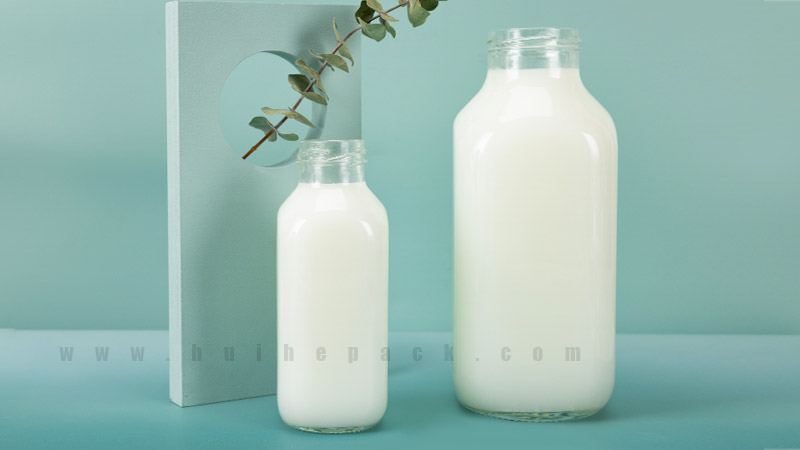
Choosing a Milk Bottle Size by Sales Channel
Your sales channel also matters.
Supermarkets and grocery stores: 500ml and 1L bottles are practical choices for everyday retail milk. You should also consider refrigerator shelf space and carton configuration.
Cafés and restaurants: 200ml to 350ml bottles work well for individual servings, table service, and ready-to-drink dairy beverages.
Schools and institutions: 200ml and 250ml formats make portion control simple and are easy for individual consumption.
Dairy farms and delivery services: 500ml, 1L, and larger glass milk bottles can work well for family-size orders and returnable packaging systems.
Glass Milk Bottle Size Conversion: ml to oz
If you sell in both metric and US markets, a simple ml-to-oz reference can make bottle selection easier.
| Metric Capacity | Approx. US fl oz |
| 100ml | 3.4 oz |
| 150ml | 5.1 oz |
| 200ml | 6.8 oz |
| 250ml | 8.5 oz |
| 300ml | 10.1 oz |
| 350ml | 11.8 oz |
| 500ml | 16.9 oz |
| 750ml | 25.4 oz |
| 1000ml | 33.8 oz |
| 1500ml | 50.7 oz |
| 2000ml | 67.6 oz |
Remember that bottle capacity and actual fill volume are not always the same. Your filling level, headspace, and product requirements should be confirmed before production.
Beyond Capacity: What Else Should You Consider?
Bottle size is only one part of your packaging decision.
Bottle shape: Round milk bottles are easy to handle and stack, while custom or specialty shapes can help create a stronger brand identity.
Neck finish: Check the neck size and finish before choosing a closure. Your bottle needs to work with your filling, capping, and sealing process.
Closure: Screw caps, lug closures, and other food-grade options can be used depending on your bottle design and processing requirements.
Glass weight: Larger bottles are not automatically better. A heavier bottle may feel more premium, but it can also increase shipping and handling costs.
Filling and processing: If your milk goes through pasteurization, sterilization, or another heat treatment, make sure the bottle is designed for the required process. Do not select a bottle based on capacity alone.
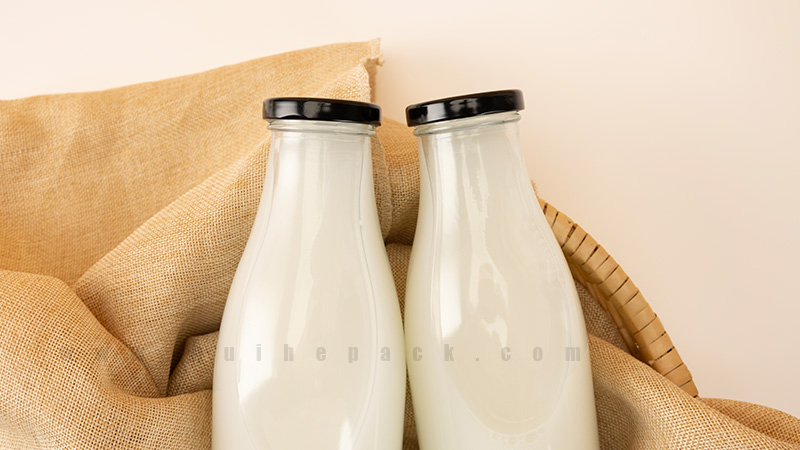
How Bottle Size Affects Dairy Packaging Cost
A larger milk bottle does not simply mean a higher glass cost. You should also look at the total packaging cost per liter.
Smaller bottles generally give you better portion control and convenience, but you need more bottles, closures, labels, and cartons for the same volume of product. Larger bottles can reduce packaging per liter, but they may increase package weight and handling requirements.
For a new dairy brand, it is often better to start with your target serving size and sales channel, then select the bottle capacity that fits both.
Are Glass Milk Bottles Suitable for Reuse?
Yes, glass milk bottles can be used in returnable packaging systems when the entire supply chain is designed for reuse.
If you plan to collect, wash, inspect, and refill bottles, consider bottle strength, washing conditions, mechanical stress, closure replacement, and crate handling. A reusable milk bottle should be selected as part of a complete returnable packaging system rather than as a standard bottle alone.
Choosing the Right Glass Milk Bottle Supplier
When sourcing wholesale glass milk bottles, look beyond the bottle capacity. You should also check dimensional consistency, food-contact requirements, closure compatibility, filling-line compatibility, export packaging, and production stability.
HUIHE PACK can support dairy brands with different glass bottle capacities, bottle shapes, closures, custom bottle designs, and OEM/ODM packaging programs. If you already know your target capacity, you can start with a standard bottle. If you need a specific shape or volume, a custom mold can be considered.
The best glass milk bottle size is ultimately the one that fits your product, customers, sales channel, and packaging process—not simply the largest or most popular size.

FAQ
What is the most common glass milk bottle size?
There is no universal standard. 250ml, 500ml, and 1L glass milk bottles are common commercial formats, with the best choice depending on the product and sales channel.
What size is an 8 oz glass milk bottle?
8 US fl oz is approximately 237ml. A 250ml glass milk bottle is a common metric-market equivalent.
How many ounces are in a 500ml milk bottle?
500ml is approximately 16.9 US fl oz. It is often sold or described as a 16 oz bottle in commercial packaging.
What size glass milk bottle is best for single-serve milk?
For single-serve milk, 200ml, 250ml, and 300–350ml are practical choices. Your ideal size depends on the target serving and sales channel.
What size milk bottle is best for retail?
500ml and 1L glass milk bottles are flexible options for retail. Choose based on shelf space, customer usage, product positioning, and packaging cost.
Can glass milk bottles be customized?
Yes. Depending on your requirements, you can customize the bottle capacity, shape, color, embossing, decoration, neck finish, and closure. For custom production, confirm the target volume and filling requirements before mold development.