Choosing a glass milk bottle starts with the product and the operation behind it. Capacity and appearance are important, but the bottle must also work with the dairy’s filling equipment, closure system, storage conditions and delivery route. A well-chosen design reduces uncertainty before the first commercial order.
This guide follows the selection process from an initial brief to an approved sample. It is intended for dairy brands and packaging buyers comparing standard or custom glass formats. Use it to organize supplier conversations and involve the filling team before a visual preference becomes a production commitment.
1. Describe the product and process
Tell the supplier what will go into the bottle and how the product is processed and filled. Specify whether the product is chilled pasteurized milk, flavored milk or another dairy beverage. State the intended storage conditions and the proposed filling and sealing process.
A container supplier can assess packaging specifications, but the dairy remains responsible for validating its food process and finished-product life. FDA milk guidance distinguishes processing and packaging controls across different dairy systems. A bottle choice does not convert chilled milk into an ambient-stable product or remove sanitation requirements.
Include any process temperatures and cleaning conditions relevant to the container. Ask for written confirmation of the proposed use instead of relying on a generic “food grade” description. The answer should identify the bottle, closure and any limits that require further assessment.
2. Define usable capacity and headspace
Specify the quantity of milk you intend to sell, then check how that relates to the bottle drawing. Nominal fill volume, brimful capacity and the visual fill level are different concepts. The required headspace should be determined with the filling and process team for the actual package.
Request dimensions and tolerances, not only a catalog volume. Two bottles sold under the same capacity description may have different heights, shoulder profiles and label panels. These differences can affect filling sensors, cap application, refrigeration space and the customer’s impression of fullness.
Do not select an oversized container simply to create a premium appearance. Excessive empty space may confuse customers, while insufficient operating space may complicate filling. Evaluate filled samples at the intended net quantity before approving the shape.
3. Match the bottle to the filling line
Give the filling team the proposed drawing and physical samples. Review conveyor handling, guide rails, filling nozzle clearance, capping equipment and inspection points. A square or unusually shaped bottle may need orientation control that an existing line does not provide.
Plan a representative line trial rather than a single hand-filled demonstration. Record the agreed settings, observed interruptions and any additional change parts. If the line is operated by a contract packer, obtain its approval before finalizing your packaging order.
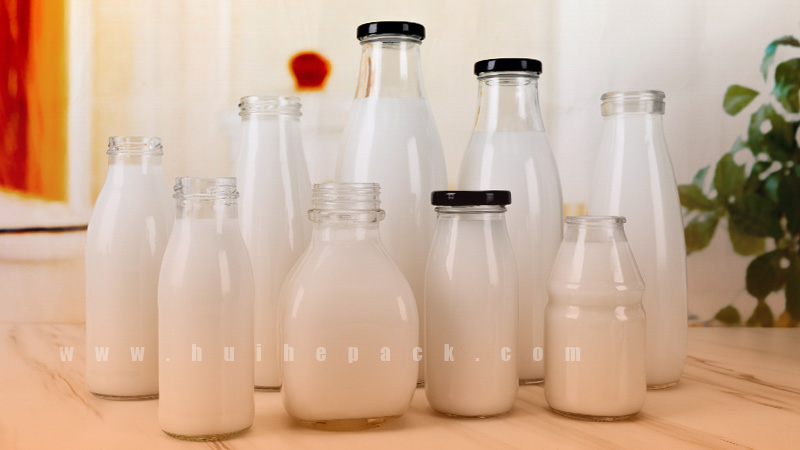
When exploring glass milk bottles, ask which existing formats are closest to the line’s approved operating range. Starting with a compatible standard design can simplify development even when a custom appearance remains a later goal.
4. Select the closure as part of the same system
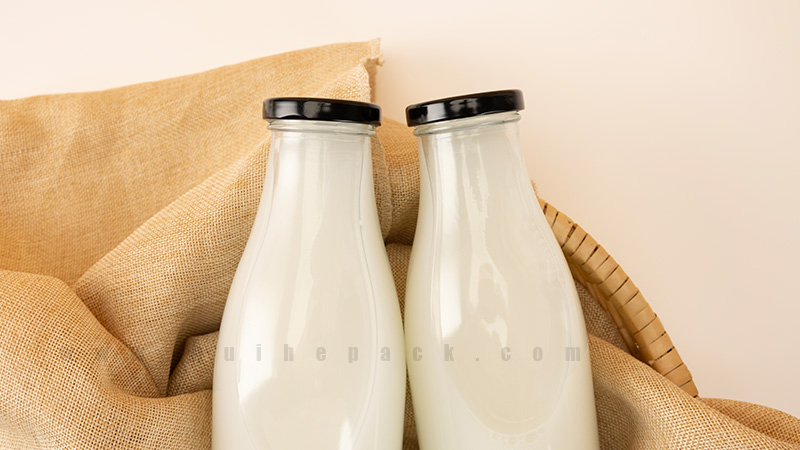
The neck finish and closure must be documented as a compatible combination. Similar outside diameters do not establish that two caps are interchangeable. Check the sealing surface, thread or lug arrangement, liner and intended application method.
Define whether the project requires tamper evidence and how customers will reseal the bottle after opening. A tamper-evident feature shows evidence of access when functioning correctly; it does not by itself establish product safety or shelf life. Test opening and resealing on filled, stored samples.
Discuss beverage accessories and closures with the exact bottle reference available. Confirm the cap’s intended dairy use and process compatibility. Keep the approved closure item code in the purchasing specification so that a later substitution receives technical review.
5. Address light exposure deliberately
Milk quality can be affected by light exposure, so clear glass visibility should be assessed alongside protection needs. Research on retail lighting and milk packaging shows that both the illumination and the package design influence the outcome. The correct test uses your actual product and intended display conditions.
A colored bottle, a suitable label arrangement or secondary packaging may form part of the solution. However, an amber appearance alone is not a quantified light-barrier specification. Request relevant performance information and validate the complete design rather than assuming that a particular color guarantees a shelf-life result.
Review amber glass packaging options if light protection is part of the brief. Availability in the required shape and closure finish still needs confirmation; not every colored bottle is appropriate for milk filling.
6. Choose shape around handling and storage
Round bottles can offer a familiar dairy presentation and a continuous label surface. Square or rectangular bodies can create a distinct shelf appearance, but their packing efficiency depends on actual dimensions, protective separation and the chosen case. Compare a complete packed case, not just two silhouettes.
Ask representative users to grip and pour from a cold, filled sample. Consider wet hands, cap opening effort, bottle height and refrigerator fit. A design that photographs well may be awkward for daily use, particularly at larger capacities.
Check whether the shoulder and neck allow the product to pour cleanly. For thicker dairy beverages, test the actual formulation because water trials may hide different flow behavior. Keep the mouth opening compatible with both consumer use and the filling process.
7. Decide whether the system is single-use or returnable
If you plan commercial reuse, make that requirement explicit before selecting the bottle. Returnable operation requires a suitable container, inspection criteria and a validated cleaning and refilling system. Do not assume that any glass bottle can be repeatedly washed under your plant’s conditions.
Map collection, sorting, rejected bottles and closure replacement. Estimate returns and losses from a realistic pilot. The additional handling and storage of empties should appear in the business case alongside the purchase price of the bottle.
8. Approve decoration and logistics together
Provide the printer with an accurate label panel and test artwork at actual size. Check mandatory information, barcode readability and product differentiation. Where condensation is expected, verify the label material and adhesive under the relevant conditions before committing to a long print run.
For custom bottle development, include case dimensions and pallet handling in the design review. Confirm how empty bottles will be protected and how filled bottles will reach customers. Decoration and protective packaging should support the same distribution plan.
Use a sample approval checklist
| Approval area | Evidence to obtain |
|---|---|
| Product suitability | Written intended-use assessment and relevant documents |
| Dimensions and capacity | Current drawing and sample measurements |
| Filling and capping | Line trial with recorded settings |
| Quality through storage | Product-specific package and shelf-life evaluation |
| Customer use | Opening, pouring and resealing observations |
| Distribution | Trial results for the intended packed route |
Assign an owner for each approval. Marketing can approve appearance, while operations and technical teams confirm their own requirements. Keep a signed-off reference sample and record any differences between that sample and the final production specification.
Send a complete brief to the supplier
A useful inquiry includes the dairy product, target volume, process, closure needs, sales market, distribution route and expected order quantities. Add your preferred appearance and any non-negotiable equipment constraints. HUIHE PACK can then discuss glass formats against a concrete brief, helping your team narrow the options before testing and commercial approval.
Technical references: FDA 2025 Grade A Pasteurized Milk Ordinance; Research on retail lighting and milk packaging.