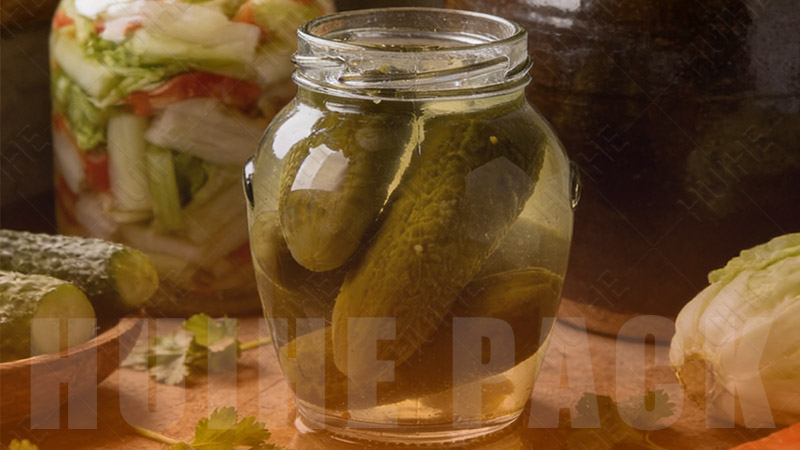
With 16 years of OEM experience in glass bottles and jars, HUIHE PACK supplies food brands, private label sellers, and manufacturers worldwide. Our factories produce 250,000 tons annually and meet multiple quality standards such as SGS and FDA certifications. When choosing pickling jars, you need glass packaging that withstands acidic brines, seals securely, and performs consistently in commercial production.
What Makes a Jar Suitable for Pickling?
Choosing the best commercial pickling jars is not just about appearance. For food brands and manufacturers, the right jar must protect product safety, support efficient filling, and stay stable throughout its shelf life. Here are the key factors you should evaluate.
Acid Resistance & Food Safety
Pickling liquids are highly acidic, which is why glass pickling jars are preferred over plastic. Soda-lime glass does not react with vinegar or brine, helping preserve flavor and food safety over time. For commercial use, food-grade pickling jars wholesale should meet major regulations such as FDA, LFGB, and EU food contact standards, ensuring your products are safe for global markets.
Airtight Sealing Performance
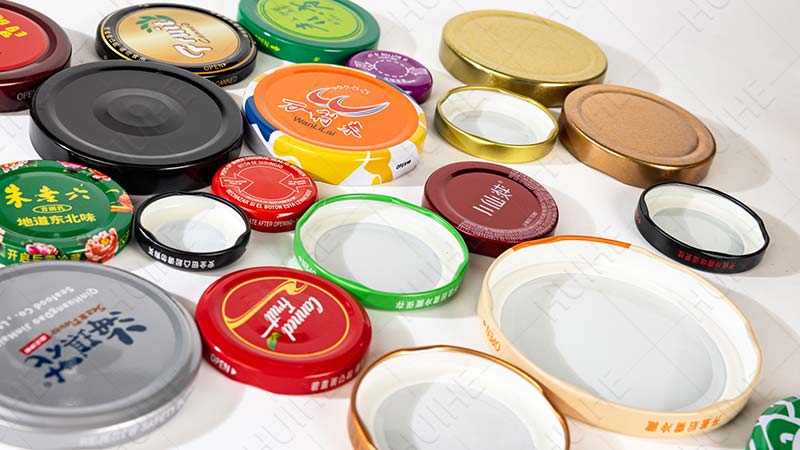
A reliable seal is essential for long-term storage. Most best pickling jars for business use twist-off lids or lug caps designed for vacuum sealing. Proper vacuum formation prevents leakage, slows spoilage, and protects your brand from costly recalls. This is why sealing performance matters as much as the jar itself.
Wide Mouth vs Regular Mouth
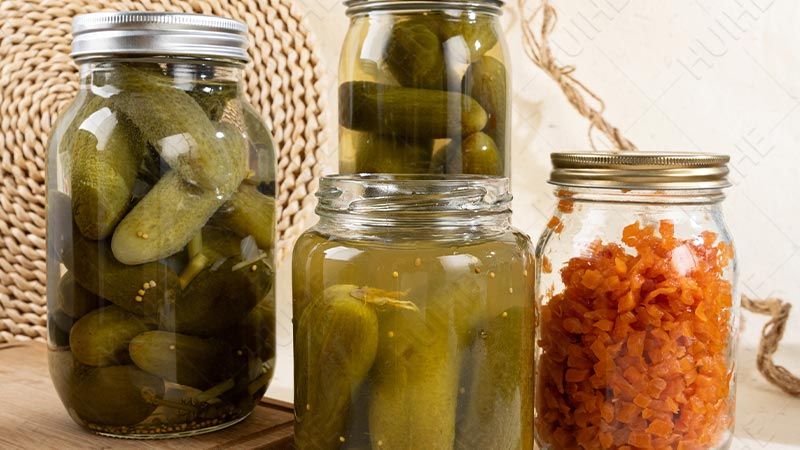
The mouth size directly impacts your operational efficiency and consumer experience. Wide mouth jars speed up filling and cleaning processes—you can pack whole vegetables or large ingredients without hassle, cutting down production time. They also boost product visibility, letting shoppers see the crisp pickles inside and driving purchases. Regular mouth jars are ideal for smaller items like jams or single-serve pickles, and they’re easy for consumers to hold and pour. Choose the right mouth size based on your product type and target audience.
Jar Wall Thickness & Thermal Shock Resistance
Commercial pickling often involves hot filling or pasteurization steps. Thin-walled jars crack easily under sudden temperature changes, leading to costly production losses. Durable pickling jars for business feature thick, uniform walls that handle thermal shock like a pro. They stand up to hot liquid pours and high-heat pasteurization without breaking. Thicker walls also add durability during shipping and stacking, reducing damage rates and saving you money on logistics. This robust build is what sets the best commercial pickling jars apart from ordinary containers.
By understanding these factors, you can confidently select food-grade, durable, and reliable pickling jars that support both product quality and efficient large-scale production.
Popular Pickling Jar Sizes Used by Food Brands
Choosing the right size is just as important as selecting the right jar design. Different volumes serve different markets, from retail shelves to foodservice channels. Below are the most popular pickling jar sizes commonly used by food brands and private label manufacturers.
| Jar Size | Common Use |
| 250ml | Samples, gift packs, and trial products |
| 370ml | Pickled vegetables for everyday retail |
| 500ml | Retail cucumbers and core SKUs |
| 720ml | Family-size pickles and value packs |
| 1000ml | Foodservice, catering, and bulk sales |
For brands sourcing food-grade pickling jars wholesale, these sizes offer flexibility across different sales channels. Selecting the right capacity helps you optimize shelf presence, control costs, and match consumer buying habits.
Recommended Pickling Jars by Product Type & Production Scenario
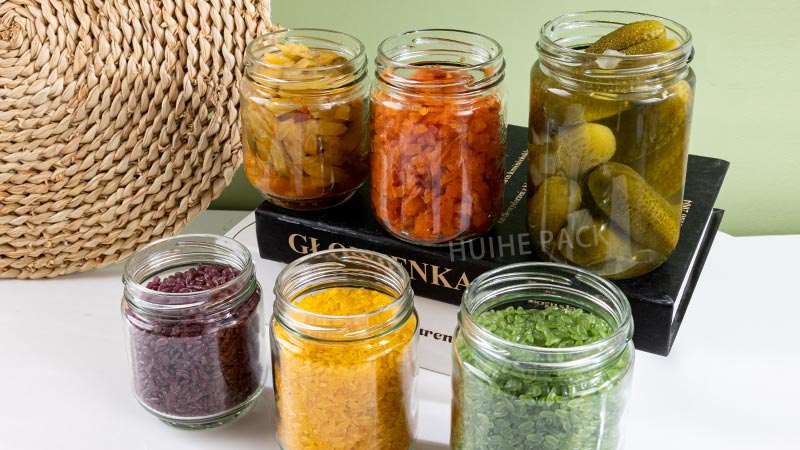
Different pickled foods and production scales require different packaging solutions. By matching jar design to your product and operation, you can improve efficiency, reduce waste, and strengthen your brand image.
Pickling Jars by Food Type
Pickles & Kimchi
For acidic vegetables like cucumbers and kimchi, wide mouth pickling jars for pickles are the best choice. The larger opening makes filling, cleaning, and product removal easier, especially in semi-automatic or manual production. Paired with silicone-sealed lids, these jars maintain a tight seal even after repeated opening and closing.
Jams & Preserved Fruits
Jams and candied fruits benefit from narrow-mouth glass jars with light protection. Smaller openings help limit air exposure, while amber or coated glass reduces oxidation and color change caused by sugar and light.
Bulk Pickling & Fermentation
For large-scale pickling, bulk pickling jars wholesale in 1L to 5L capacities are ideal. Stackable designs save warehouse space, improve pallet efficiency, and support foodservice or back-of-house processing.
Pickling Jars by Purchasing Scale
Startup Brands & Small Test Runs
If you are launching a new product or running pilot batches, standardized stock pickling jars are the most efficient option. They offer low MOQs, fast lead times, and stable quality—perfect for market testing and early-stage growth.
Established Brands & Large-Volume Production
For mature brands, working with a custom logo pickling jars supplier allows you to stand out on crowded shelves. Custom shapes, embossing, and dedicated molds help reinforce brand identity, while free sampling ensures the jar performs well in your production line.
By choosing the right jar based on your product type and production scale, you can achieve better performance, smoother operations, and a stronger market presence.
Glass vs Plastic Pickling Jars (Why Glass Wins)
When comparing glass and plastic, glass remains the top choice for commercial pickling. Glass is taste-neutral, so it never absorbs or alters flavors, even with strong vinegar brines. It also offers superior acid resistance, staying stable over long storage periods. From a sustainability perspective, glass is fully recyclable and supports eco-friendly brand values. Most importantly, glass pickling jars deliver a premium look that helps your products stand out on retail shelves and reinforces quality perception.
Why Food Brands Choose HUIHE PACK as Their Pickling Jar Supplier
A strong pickling jar is only as reliable as the factory behind it. At HUIHE PACK, you are not just buying jars—you are choosing a proven packaging partner.
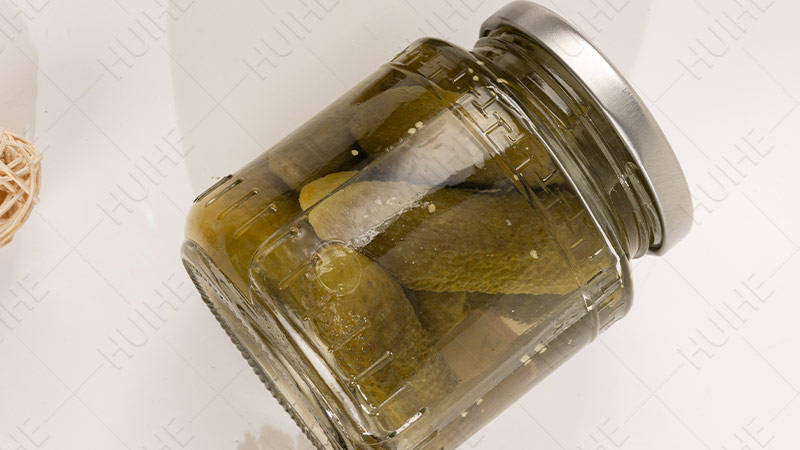
- Our HUIHE PACK pickling jars are produced on fully automated production lines, combined with manual quality inspections. This dual system ensures uniform wall thickness, clean glass surfaces, and jars free from bubbles or impurities.
- As a pickling jars factory direct supply partner, we comply with major food-contact standards including FDA, SGS, and LFGB, and have extensive export experience serving North America and Europe. You can move forward with confidence, knowing your packaging meets international requirements.
- Cost control is another key advantage. As an OEM pickling jars manufacturer, we supply directly from our own factories—no middlemen, no unnecessary markups. We support OEM and ODM projects and offer one-stop packaging solutions, including lids, closures, and label matching.
We also back our quality with real-world results. For example, one North American sauce brand sources over 500,000 pickling jars annually from HUIHE PACK, relying on our stable supply and consistent quality to support their growth.
With manufacturing strength, compliance expertise, and proven partnerships, HUIHE PACK delivers more than jars—we deliver complete pickling packaging solutions you can trust.
Buying Guide: Common Mistakes to Avoid When Sourcing Pickling Jars
When sourcing pickling jars at scale, small mistakes can turn into costly problems. Understanding these common pitfalls helps you protect product quality, logistics performance, and brand reputation.
- Mistake 1: Choosing Low-Cost, Low-Quality Jars
Ultra-cheap jars often use substandard glass that cannot handle acidic brines. Poor sealing performance leads to leaks during transport, failed pickling jars leak-proof tests, and higher breakage rates. What looks like savings at first often results in product loss, customer complaints, and higher overall costs. - Mistake 2: Ignoring Customization Details
Unclear logo printing, inconsistent decoration, or jar designs that do not match your filling line can slow production and reduce shelf appeal. These issues are common when suppliers lack real OEM experience. - Smart Solution: Test Before You Scale
You should always work with suppliers that offer free sample testing. Test sealing, vacuum performance, and line compatibility before placing bulk orders. Many professional suppliers also support wholesale pickling jars with no minimum order for initial trials, helping you reduce risk while scaling confidently.
By avoiding these pitfalls, you can secure reliable pickling jars that perform well from factory to shelf.
Conclusion
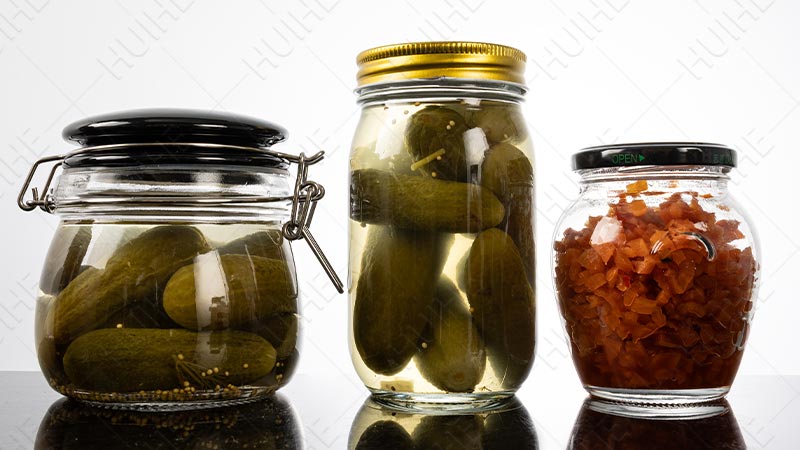
Choosing the best pickling jars is a critical decision for food brands, private label sellers, and manufacturers. The right glass jar protects flavor, ensures food safety, improves production efficiency, and reduces long-term costs. From acid resistance and airtight sealing to size selection and customization, every detail matters in commercial pickling.
With 16 years of OEM experience, factory-direct supply, and full compliance with global food-contact standards, HUIHE PACK helps you source reliable, food-grade pickling jars that perform consistently at scale. Whether you need stock jars for fast launch or custom packaging to build a strong brand, you can count on us for a complete pickling packaging solution.
FAQ
Q1. Are glass jars better for pickling?
Yes. Glass jars are taste-neutral, resistant to acidic brines, and do not absorb odors or chemicals. This makes them safer and more stable than plastic for long-term pickling.
Q2. What size jar is best for pickles?
Common sizes include 370ml and 500ml for retail pickles, 720ml for family packs, and 1L or larger for foodservice or bulk use. The best size depends on your target market and sales channel.
Q3. Can pickling jars be customized?
Yes. Pickling jars can be customized with unique shapes, embossing, logo printing, coatings, and matched lids. Custom designs help brands stand out on crowded shelves.
Q4. Do you offer food-grade lids and caps?
Yes. We provide food-grade twist-off lids, lug caps, and silicone-sealed closures designed for strong vacuum sealing and leak prevention.
Q5. What is the MOQ for custom pickling jars?
MOQ varies by design and size. For standard stock jars, low or no minimum order options are available. For custom pickling jars, MOQ is discussed after sample testing and mold confirmation.
Q6. Which container is best for pickles?
Glass containers with airtight lids are the best choice for pickles. They preserve taste, ensure safety, and support longer shelf life.
Q7. What kind of jars do you need for pickling?
You need durable, food-grade glass jars with proper wall thickness, vacuum-compatible lids, and compliance with food safety regulations.
Q8. Which canning jars are best?
For commercial use, thick-walled glass canning jars with reliable sealing systems are best. They perform well during hot fill, pasteurization, and long-distance transportation.