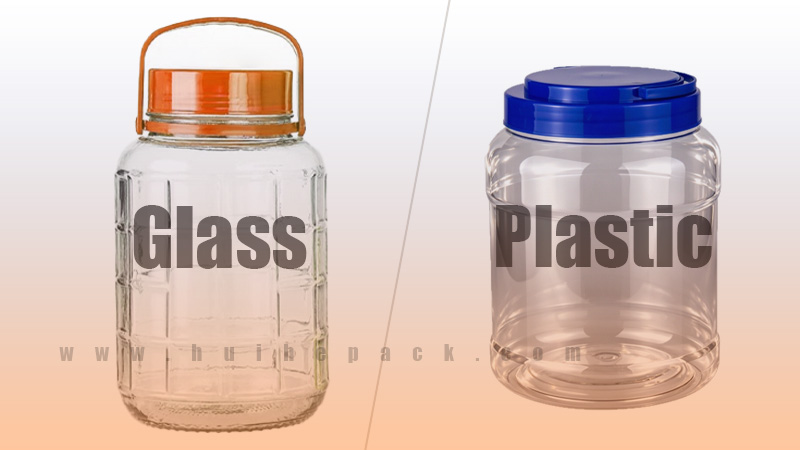
When choosing food packaging, you may find yourself comparing glass and plastic. Both materials have clear advantages, but the better choice depends on your product, filling process, shipping needs, budget, and brand positioning.
So, is glass better than plastic for food packaging? Not always. The right question is which material fits your product and supply chain better.
In this guide, you’ll see how glass and plastic food packaging compare in food safety, cost, sustainability, transportation, branding, and everyday use.
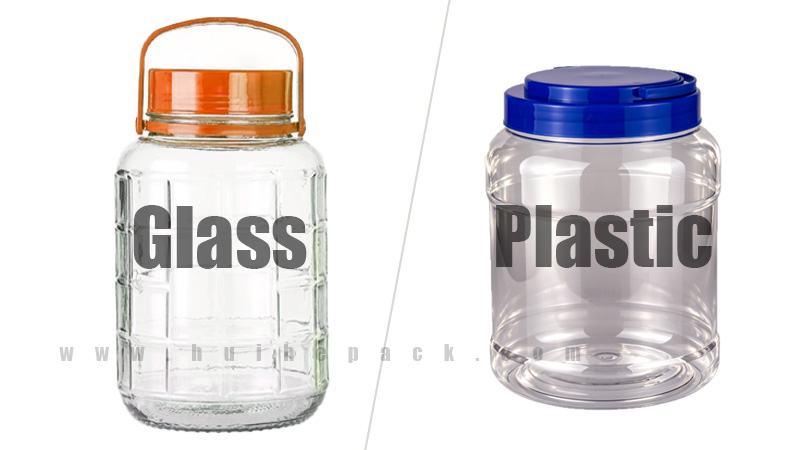
Glass vs Plastic Food Packaging at a Glance
| Factor | Glass Food Packaging | Plastic Food Packaging |
| Food contact | Excellent chemical stability | Depends on the plastic type |
| Weight | Heavier | Lightweight |
| Breakage | Can break if dropped | High impact resistance |
| Barrier performance | Excellent | Varies by material |
| Reusability | Excellent for suitable applications | Depends on the material and design |
| Recycling | Widely recyclable | Depends on polymer and local systems |
| Shipping | Higher freight weight | Lower freight weight |
| Premium appearance | Strong | Depends on design |
| Decoration | Labels, printing, coating, embossing, etc. | Many decoration options |
| Typical cost | Usually higher | Often lower |
There is no universal winner. Glass can be a strong choice when you value product protection, reuse, shelf appeal, and a premium customer experience. Plastic can make more sense when low weight, impact resistance, and shipping efficiency are your top priorities.
What Is the Difference Between Glass and Plastic Food Packaging?
Glass is an inorganic packaging material made mainly from silica and other mineral ingredients. It is rigid, transparent, chemically stable, and suitable for a wide range of food products.
Plastic food packaging is made from different polymers, such as PET, HDPE, and PP. Because these materials have different properties, you should not treat all plastic packaging as the same.
For example, a PET bottle and an HDPE food container can have very different barrier, temperature, flexibility, and durability characteristics.
This is why choosing between glass and plastic food containers should start with your actual product requirements rather than the material alone.
Is Glass Safer Than Plastic for Food Packaging?
Food safety is one of the first things you should consider when choosing a packaging material.
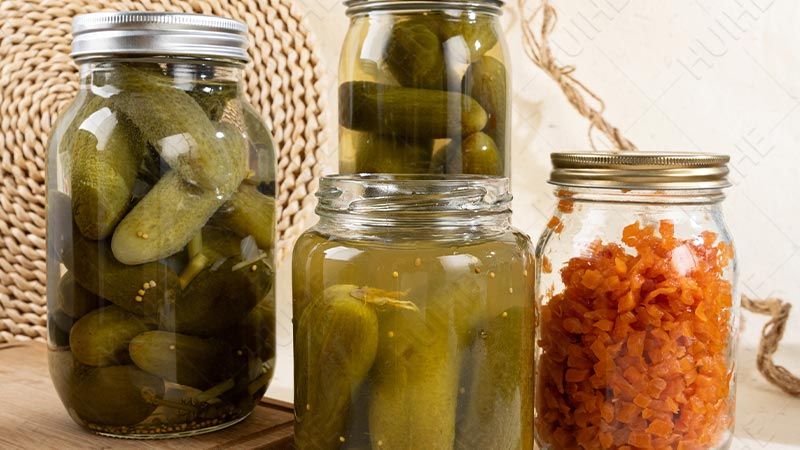
Glass has excellent chemical stability and provides a strong barrier between the food and the outside environment. It is widely used for products such as sauces, honey, jams, pickles, beverages, and other foods where product purity and packaging stability are important.
Food-contact plastics can also be safely used when the correct material is selected for its intended application. However, different polymers and additives have different properties, so you need to choose packaging that is suitable for the food, temperature, and filling process.
For B2B food packaging, the important question is not simply whether glass or plastic is “safe.” You should ask whether the selected container is suitable for your product, processing conditions, and intended shelf life.
Glass vs Plastic for Food Storage
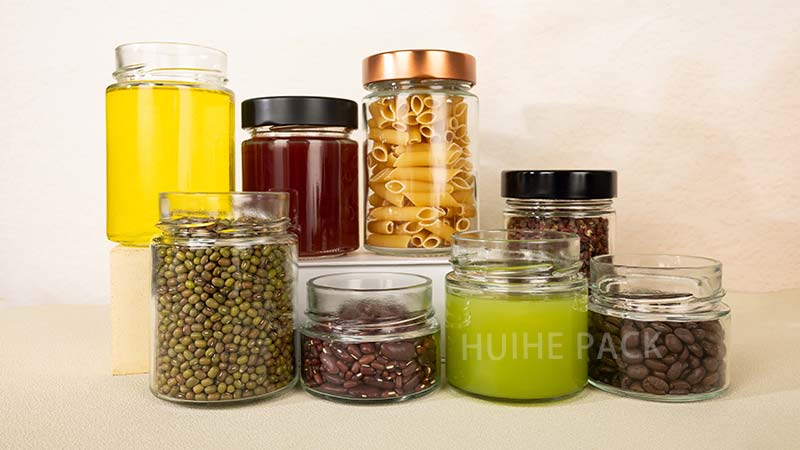
Glass is especially popular for food storage because it is rigid, easy to clean, and suitable for repeated use in many applications.
You can use glass food jars for products such as:
- Honey
- Jam and preserves
- Pickles
- Sauces
- Spices
- Dry foods
- Nuts
- Specialty foods
Glass also gives you excellent product visibility. A clear glass jar allows customers to see the color, texture, and quality of the food inside.
Plastic containers are often preferred when lightweight handling is important. They are easier to transport and less likely to break during distribution, making them useful for high-volume and convenience-focused products.
Is Glass More Sustainable Than Plastic?
This is one area where you should avoid simple answers.
Glass is highly recyclable and can be reused for suitable applications. It also provides a long service life when the container is designed and handled correctly.
However, glass is much heavier than most plastic packaging. That means transportation can require more energy and create higher shipping impacts, especially when the packaging is used only once and shipped over long distances.
Plastic has an important advantage here: its low weight can reduce transportation weight and packaging-related logistics costs.
So, is glass more environmentally friendly than plastic? It depends on how the packaging is made, transported, used, reused, and recycled.
A reusable glass container can have a very different environmental profile from a single-use glass container. The same is true for different types of plastic packaging.
For your business, it makes more sense to consider the full packaging lifecycle instead of choosing a material based on one environmental factor.
Glass vs Plastic Food Packaging Cost
Plastic is often cheaper on a unit basis, especially for lightweight, high-volume packaging. It can also reduce freight costs because of its lower weight.
Glass usually has a higher initial packaging cost and requires more attention to shipping and protective packaging.
But the lowest unit price does not always mean the lowest overall packaging cost.
When you compare glass food packaging and plastic, consider:
- Container price
- Closure cost
- Freight
- Pallet efficiency
- Secondary packaging
- Breakage risk
- Storage space
- Decoration
- Product positioning
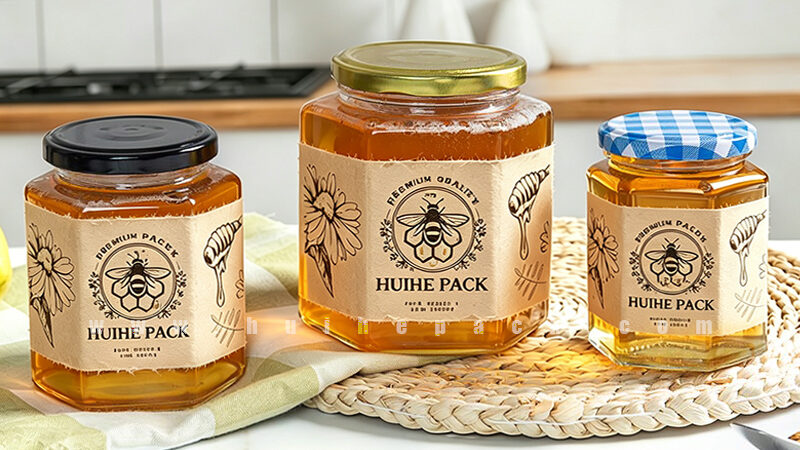
For a premium honey, sauce, jam, or specialty food brand, the higher cost of glass may be justified by its appearance and perceived product value.

Glass vs Plastic for Transportation and Logistics
Transportation is one of the clearest differences between the two materials.
Glass is heavier and can break if it is dropped or handled roughly. If you import glass food jars or bottles in bulk, you need suitable cartons, dividers, pallets, and protective packaging.
Plastic is lightweight and has excellent impact resistance. This can make it easier to handle during transportation and reduce shipping weight.
However, glass containers are not necessarily difficult to ship. With the right bottle or jar design and suitable export packaging, you can reduce breakage risks and make bulk glass packaging practical for international distribution.
For B2B purchasing, you should compare the total delivered packaging cost, not just the factory price per piece.
Which Food Products Are Better Suited to Glass Packaging?
Glass is a strong option for many foods, especially products where appearance, barrier performance, and premium positioning matter.
| Food Product | Why Glass Works Well |
| Honey | Premium appearance and excellent product visibility |
| Jam | Suitable for traditional and premium presentation |
| Pickles | Strong barrier and rigid container structure |
| Sauces | Excellent shelf appeal and decoration options |
| Olive oil | Premium look and good product protection |
| Spices | Easy to clean and suitable for repeated use |
| Dry foods | Reusable and easy to store |
| Specialty foods | Strong visual appeal and brand differentiation |
For these products, the packaging is often part of the product experience. A well-designed glass jar can make your food look more premium while giving customers a container they can reuse.
Plastic may be a better fit when you need squeeze functionality, very low packaging weight, high impact resistance, or a highly cost-sensitive solution.
Glass vs Plastic for Brand Positioning
Your packaging does more than protect food. It also communicates what your brand stands for.
Glass is often associated with premium, natural, traditional, and craft food products. Its weight and rigid structure can also create a stronger physical feel in the customer’s hands.
Clear glass gives you another advantage: the product itself becomes part of the visual presentation.
You can also customize glass food packaging with labels, screen printing, embossing, coating, frosting, and other decoration methods.
Plastic offers a different range of possibilities. Its lightweight structure, flexibility, and wide choice of shapes and colors make it useful for modern, convenience-focused, and mass-market products.
When you choose between glass and plastic food packaging, think about how you want customers to see and use your product—not just how much the container costs.
When Should You Choose Glass Food Packaging?
Glass is worth considering if your priorities include:
Premium Product Presentation
If you sell premium honey, jam, sauces, olive oil, or specialty foods, glass can give your product a more substantial and refined appearance.
Product Visibility
Clear glass allows customers to see the actual product. This can be especially useful when color and texture are important selling points.
Reusable Packaging
If you want customers to reuse the container or you are developing a refill model, glass can be a practical option for suitable applications.
Strong Barrier Performance
Glass provides excellent protection against many external factors and is a good fit for foods where packaging stability matters.
Long-Term Brand Value
A well-designed glass jar or bottle can become part of your brand identity rather than simply being a disposable container.
When Should You Choose Plastic Food Packaging?
Plastic may be the better option when you need:
- Very low packaging weight
- Lower transportation costs
- High impact resistance
- Flexible or squeeze packaging
- Large-volume cost efficiency
- Convenient handling
For products that are frequently transported, handled, or used on the go, the lightweight nature of plastic can be a major advantage.
The goal is not to choose glass simply because it is glass. You should choose the material that solves the practical needs of your product.
Glass or Plastic? A Simple Decision Guide
| Your Priority | A Good Starting Point |
| Premium appearance | Glass |
| Reusable packaging | Glass |
| Product visibility | Glass |
| Strong chemical stability | Glass |
| Traditional food presentation | Glass |
| Lowest shipping weight | Plastic |
| High impact resistance | Plastic |
| Squeeze functionality | Plastic |
| High-volume lightweight distribution | Plastic |
| Premium honey, jam, or specialty foods | Glass |
This table is a starting point rather than a fixed rule. Your filling temperature, food formulation, distribution route, target price, and local recycling system should all be part of the final decision.
How to Choose the Right Food Packaging Material
Before ordering food packaging in bulk, look at the complete packaging requirement.
1. Identify your food product.
Consider acidity, oil content, moisture, shelf life, and storage conditions.
2. Check the filling process.
Filling temperature and processing methods can affect your container choice.
3. Calculate logistics costs.
Compare container weight, pallet loading, freight, secondary packaging, and breakage risk.
4. Consider your target market.
A premium specialty food brand may have very different packaging needs from a mass-market product.
5. Choose the right closure.
Your jar or bottle needs a compatible closure that provides the required seal and user experience.
6. Plan decoration early.
Labels, screen printing, embossing, coating, frosting, and other finishes can change the final look and cost of your packaging.
7. Compare the total cost.
Look beyond the unit price and calculate your actual delivered packaging cost.
Why Choose Glass Food Packaging for Your Brand?
If you decide that glass is the right material, the next step is choosing the right container.
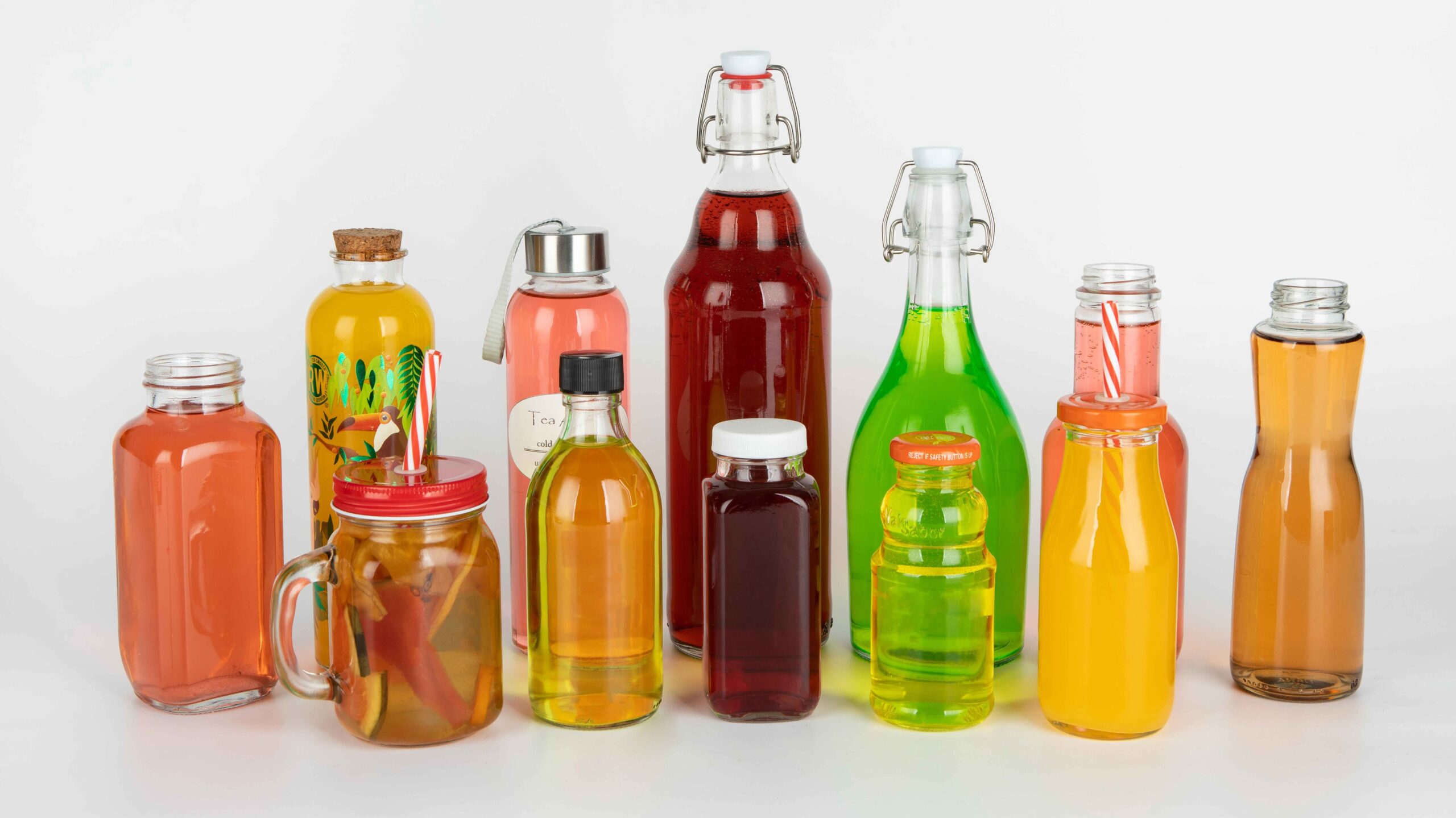
HUIHE PACK supplies glass food packaging for different applications, including food jars, honey jars, pickle jars, sauce bottles, spice containers, and other custom glass packaging.
You can choose different capacities, shapes, glass colors, neck finishes, closures, and decoration options based on your product requirements.
For a new food product, you do not need to start with a final bulk order. You can first compare suitable glass container designs, confirm dimensions and closures, test your filling process, and then move to bulk production.
The best food packaging is not simply the cheapest or most sustainable-looking option. It is the one that gives you the right balance of food protection, cost, logistics, usability, appearance, and brand value.

FAQ
Is glass better than plastic for food packaging?
Glass can be a better choice when you need premium presentation, product visibility, strong barrier performance, and reusable packaging. Plastic can be better when low weight, impact resistance, and shipping efficiency are more important.
Is glass safer than plastic for food storage?
Both glass and properly selected food-contact plastics can be used safely for food storage. The right choice depends on the food product, packaging specification, processing conditions, and intended use.
Is glass more environmentally friendly than plastic?
Not in every situation. Glass is highly recyclable and reusable, but it is also much heavier. Transportation, reuse, recycling, and the number of packaging cycles all affect the environmental impact.
What are the disadvantages of glass food packaging?
Glass is heavier than plastic and can break during handling. It can also have higher transportation and secondary packaging costs. These factors should be included when calculating your total packaging cost.
Which foods are best packaged in glass jars?
Honey, jams, pickles, sauces, olive oil, spices, dry foods, and specialty foods are common applications for glass jars. Glass works especially well when product visibility and premium presentation are important.
Should you choose glass or plastic for your food product?
Start with your food type, filling process, shelf life, distribution method, budget, and brand positioning. If you need help selecting a suitable glass jar or bottle, HUIHE PACK can help you compare capacities, shapes, closures, and decoration options for your application.