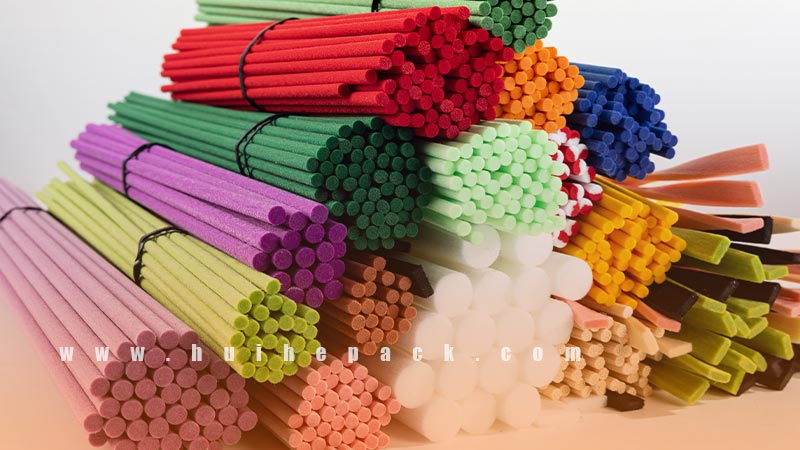
Many diffuser brands focus on fragrance oils and bottle design, but the choice of reeds has a major impact on scent performance. Different reed materials absorb and release fragrance at different rates, affecting scent throw, longevity, and customer satisfaction.
This guide explains the most common diffuser reed types and helps you choose the right option for your product line.
How Reed Diffusers Actually Work
Before comparing different diffuser reed types, it’s important to understand how a reed diffuser functions.
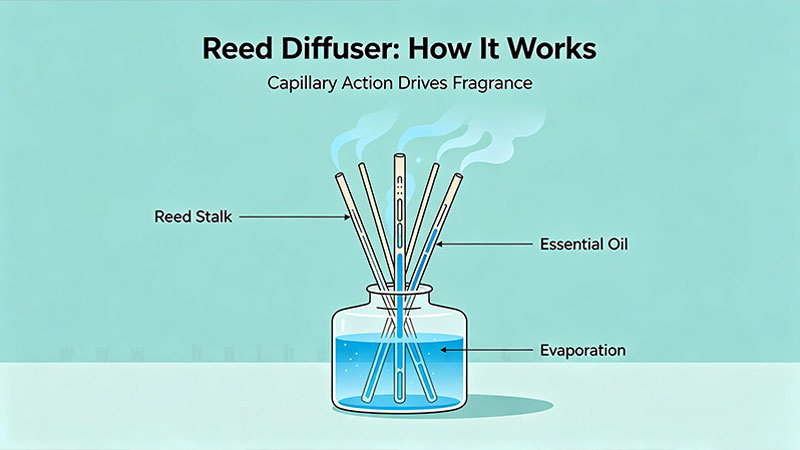
A reed diffuser works through a process called capillary action. The fragrance oil travels up the tiny channels inside the reed and evaporates from the exposed surface into the surrounding air.
The more efficiently a reed absorbs and releases oil, the better the scent dispersion will be.
This is why two diffusers using the same fragrance oil can perform very differently. In many cases, the reed itself is the deciding factor.
Several factors influence performance:
- Reed material
- Reed diameter
- Number of reeds used
- Fragrance oil viscosity
- Room temperature and airflow
Choosing the right reed is just as important as choosing the right diffuser bottle.
The Main Types of Reed Diffuser Sticks
There are several reed diffuser reeds available on the market today. Each material offers different advantages depending on your fragrance formulation, budget, and brand positioning.
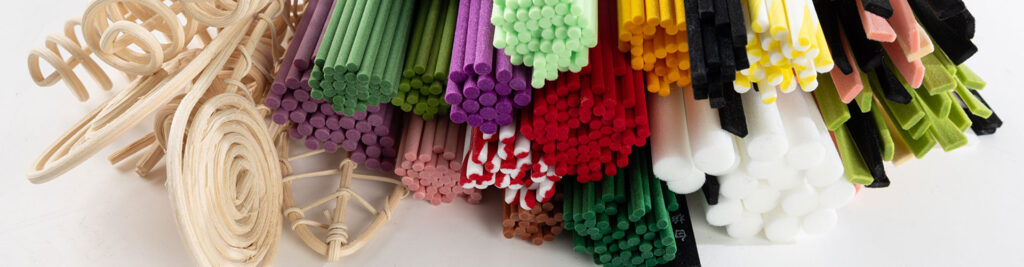
Natural Rattan Reeds
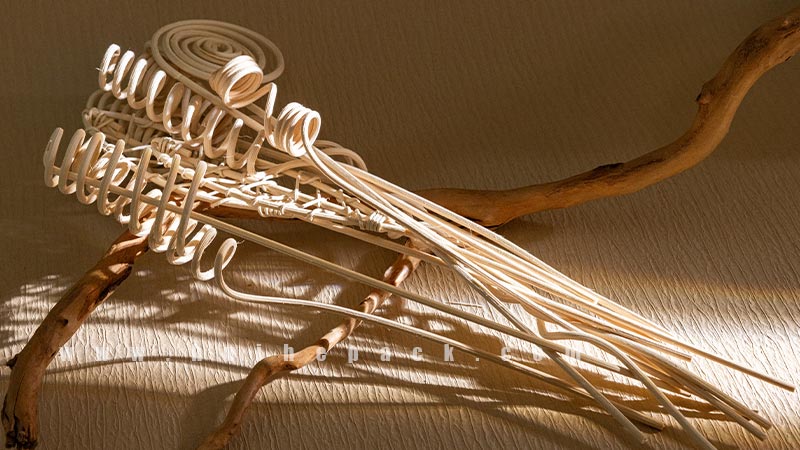
Natural rattan reeds are the most traditional and widely used option.
Made from rattan palm stems, these reeds contain natural channels that allow fragrance oil to travel upward. Their organic appearance makes them popular among brands that emphasize natural ingredients and eco-friendly packaging.
Advantages
- Natural and sustainable appearance
- Cost-effective solution
- Widely available
- Suitable for most standard fragrance oils
Limitations
- Performance can vary from batch to batch
- Channels may clog over time
- Less consistent scent diffusion than engineered reeds
Natural rattan reeds are commonly used in home fragrance products, gift sets, and artisan diffuser collections.
Fiber Reeds
Fiber reeds have become increasingly popular among premium fragrance brands.
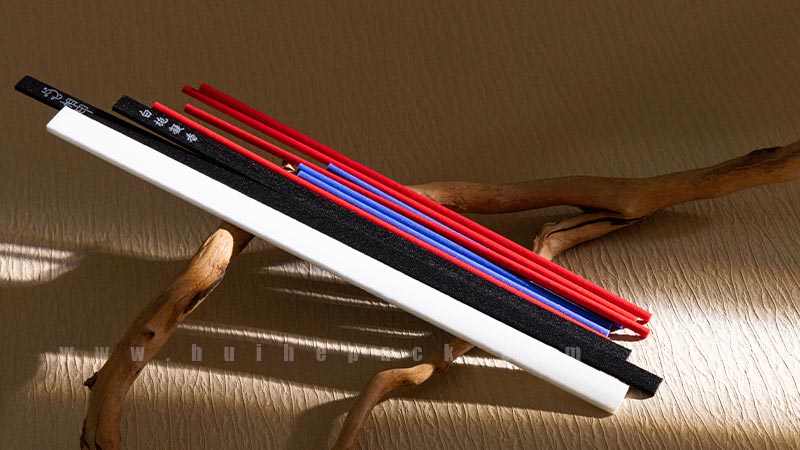
Unlike natural reeds, fiber reeds are manufactured with engineered internal channels. This creates more consistent oil absorption and fragrance release.
Many luxury diffuser brands now prefer fiber reeds because they provide stronger and more reliable scent performance.
Advantages
- Excellent scent throw
- Consistent performance
- Suitable for thicker fragrance oils
- Less likely to become blocked
Limitations
- Higher cost than rattan reeds
- Less natural appearance
If your goal is maximum fragrance performance, fiber reeds are often considered the best reeds for diffuser bottles.
Cotton Reeds
Cotton reeds are less common in commercial reed diffusers but can occasionally be found in decorative fragrance products.
These reeds absorb fragrance oil effectively but generally provide weaker scent dispersion compared to rattan or fiber reeds.
Cotton reeds are usually chosen for their appearance rather than performance.
Bamboo Sticks
Many buyers mistakenly assume bamboo sticks function the same way as diffuser reeds.
In reality, standard bamboo sticks do not contain the same capillary channels found in rattan or fiber reeds.
As a result, they typically deliver poor fragrance performance and are often used only for decorative purposes.
If scent throw is important, bamboo should not be your primary reed material.
Fiber Reeds vs Rattan Reeds: Which Is Better?
One of the most common questions buyers ask is whether fiber reeds or rattan reeds provide better performance.
The answer depends on your product goals.
| Feature | Fiber Reeds | Rattan Reeds |
| Scent Throw | Strong | Medium |
| Consistency | Excellent | Good |
| Oil Compatibility | Excellent | Good |
| Lifespan | Long | Moderate |
| Risk of Clogging | Low | Medium |
| Cost | Higher | Lower |
| Appearance | Modern | Natural |
If you are creating a premium home fragrance line, fiber reeds are often the preferred choice.
If you are targeting a natural or handmade aesthetic, rattan reeds may better match your brand image.
Many fragrance brands test both options before launching a product.
How Reed Thickness Affects Fragrance Performance
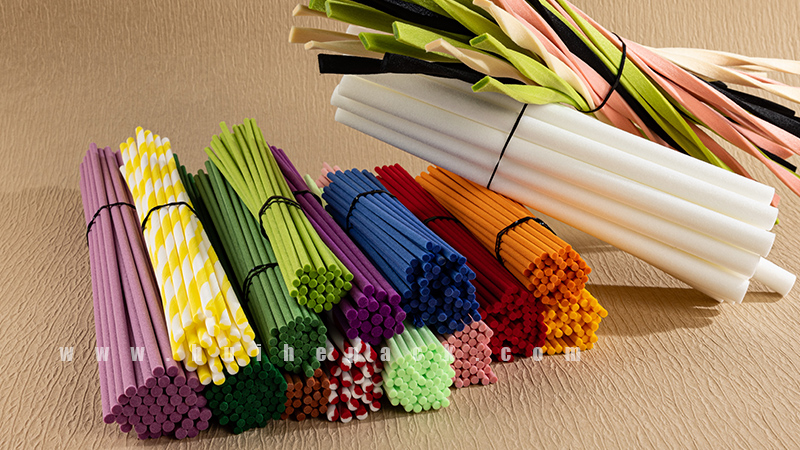
The diameter of the reed can significantly influence fragrance diffusion.
Thicker reeds generally absorb more oil and release stronger fragrance. However, they may also consume fragrance oil faster.
3mm Reeds
Best for:
- Small diffuser bottles
- Light fragrance formulations
- Compact gift sets
4mm Reeds
Best for:
- Standard retail diffusers
- 100ml to 200ml bottles
- Balanced scent performance
5mm and Larger Reeds
Best for:
- Large diffuser bottles
- Premium home fragrance collections
- Strong scent throw requirements
When choosing reed diameter, always consider both bottle size and fragrance strength.
Using oversized reeds in a small bottle may cause the fragrance to evaporate too quickly.
How Many Reeds Should You Use?
Another common question is how many reeds should be placed in a diffuser bottle.
Using too few reeds may result in weak fragrance diffusion, while using too many can cause the fragrance oil to evaporate faster than expected.
The ideal number depends on the bottle size, fragrance concentration, reed diameter, and desired scent intensity.
| Bottle Size | Recommended Number of Reeds |
| 50ml | 4-5 reeds |
| 100ml | 6-8 reeds |
| 150ml | 7-9 reeds |
| 200ml | 8-10 reeds |
| 500ml | 10-12 reeds |
| 1000ml | 12-16 reeds |
| 1500ml+ | 16-20 reeds |
| 3000ml+ Commercial Diffusers | 20+ reeds (depending on reed diameter) |
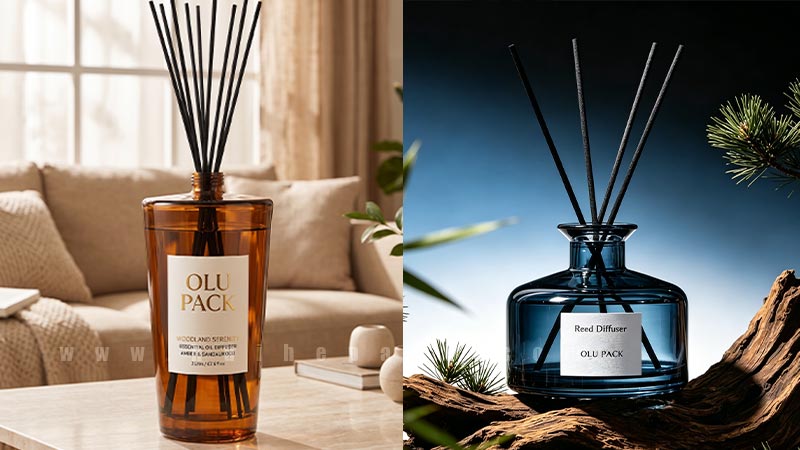
For standard home fragrance products, 6 to 10 reeds are usually sufficient. However, large diffuser bottles designed for hotels, retail stores, offices, and commercial spaces require more reeds to achieve effective scent dispersion.
For a 1000ml diffuser bottle, most brands use 12 to 16 reeds with diameters ranging from 4mm to 5mm. Larger decorative diffusers above 1500ml may require 16 to 20 reeds or even more, depending on the fragrance strength and room size.
Keep in mind that increasing the number of reeds will boost scent throw, but it will also accelerate fragrance oil consumption. For oversized diffusers, many premium brands test different reed quantities before launch to find the right balance between fragrance performance and product longevity.
HUIHE PACK Expert Tip
For 1000ml diffuser bottles and other large-format reed diffusers, using thicker fiber reeds often delivers better performance than simply adding more standard rattan reeds. The right combination of reed material, diameter, and quantity can significantly improve scent diffusion while helping the fragrance last longer.
Choosing the Right Reeds for Different Fragrance Formulations
Not all fragrance oils behave the same way. Some formulas flow easily, while others are thicker and more difficult to diffuse.
Selecting the correct diffuser reeds can significantly improve product performance.
Alcohol-Based Diffuser Formulas
Alcohol-based formulations are generally thinner and travel easily through most reed materials.
Recommended options:
- Natural rattan reeds
- Fiber reeds
Both provide effective fragrance diffusion for lighter formulations.
Essential Oil Reed Diffusers
Essential oils can vary in viscosity depending on the ingredients used.
For most natural essential oil blends, high-quality rattan reeds perform well and support a natural brand image.
However, if the formula contains heavier oils, fiber reeds may provide more consistent performance.
High-Viscosity Fragrance Oils
Some luxury fragrance oils contain rich ingredients that make them thicker than standard diffuser formulations.
In these situations, fiber reeds are usually the best choice.
Their engineered channels help move oil more efficiently and reduce the risk of clogging.
For brands seeking strong and consistent scent throw, fiber reeds vs rattan reeds is often an easy decision when working with thicker oils.
Common Reed Diffuser Problems and Solutions
Even well-designed reed diffusers can experience performance issues over time.
Understanding the causes can help you improve customer satisfaction and reduce complaints.
Why Do Diffuser Reeds Stop Working?
One of the most common issues is reduced fragrance output after several weeks.
Possible causes include:
- Dust accumulation on the reeds
- Saturated reed channels
- Low-quality reed materials
- Thick fragrance oils blocking oil flow
Solution:
Replace the reeds or flip them periodically to refresh fragrance diffusion.
Why Is My Reed Diffuser Scent Weak?
Weak scent throw can result from several factors.
Common reasons include:
- Too few reeds
- Poor reed quality
- Large room size
- Low fragrance concentration
- Incorrect reed material selection
If stronger performance is required, switching from rattan reeds to fiber reeds often improves results.
How Often Should Reeds Be Replaced?
Most reed diffuser reeds should be replaced every 2 to 6 months.
The actual lifespan depends on:
- Reed material
- Fragrance formulation
- Room conditions
- Frequency of flipping
For commercial products, providing replacement reeds can improve customer experience and encourage repeat purchases.
Should You Flip Diffuser Reeds?
Yes.
Flipping reeds exposes the saturated side to the air, temporarily increasing fragrance intensity.
However, excessive flipping can shorten product lifespan because fragrance oil evaporates more quickly.
For most home fragrance products, flipping reeds once every one to two weeks is sufficient.
Common Reed Diffuser Problems and Solutions
Even well-designed reed diffusers can experience performance issues over time.
Understanding the causes can help you improve customer satisfaction and reduce complaints.
Why Do Diffuser Reeds Stop Working?
One of the most common issues is reduced fragrance output after several weeks.
Possible causes include:
- Dust accumulation on the reeds
- Saturated reed channels
- Low-quality reed materials
- Thick fragrance oils blocking oil flow
Solution:
Replace the reeds or flip them periodically to refresh fragrance diffusion.
Why Is My Reed Diffuser Scent Weak?
Weak scent throw can result from several factors.
Common reasons include:
- Too few reeds
- Poor reed quality
- Large room size
- Low fragrance concentration
- Incorrect reed material selection
If stronger performance is required, switching from rattan reeds to fiber reeds often improves results.
How Often Should Reeds Be Replaced?
Most reed diffuser reeds should be replaced every 2 to 6 months.
The actual lifespan depends on:
- Reed material
- Fragrance formulation
- Room conditions
- Frequency of flipping
For commercial products, providing replacement reeds can improve customer experience and encourage repeat purchases.
Should You Flip Diffuser Reeds?
Yes.
Flipping reeds exposes the saturated side to the air, temporarily increasing fragrance intensity.
However, excessive flipping can shorten product lifespan because fragrance oil evaporates more quickly.
For most home fragrance products, flipping reeds once every one to two weeks is sufficient.
Sustainability Trends in Reed Diffusers
Sustainability has become an important purchasing factor in the home fragrance industry.
Consumers are increasingly looking for products that combine attractive design with environmentally responsible materials.
As a result, many diffuser brands are adopting:
- Natural rattan reeds
- Recyclable glass bottles
- FSC-certified paper packaging
- Refillable diffuser systems
- Reduced plastic components
Natural rattan reeds remain popular because they are derived from renewable plant sources and support eco-conscious product positioning.
At the same time, many premium brands are introducing refill programs that allow customers to reuse their diffuser bottles instead of purchasing entirely new products.
For fragrance brands planning long-term growth, sustainable packaging is no longer just a trend—it has become an important market expectation.
Expert Tips for Better Reed Diffuser Performance
Based on industry experience, several simple adjustments can significantly improve fragrance performance.
Match Reeds to Oil Viscosity
Thin oils can work well with both rattan and fiber reeds.
Thicker oils typically perform better with fiber reeds.
Test Multiple Reed Diameters
A small change in reed diameter can noticeably affect scent throw and evaporation speed.
Testing different sizes before mass production can help optimize performance.
Avoid Overcrowding the Bottle Neck
Too many reeds packed into a narrow opening can restrict airflow and reduce fragrance diffusion.
Consider Room Size
A diffuser designed for a small bedroom may not perform well in a large living room.
The reed quantity should be adjusted according to the intended application.
Prioritize Consistency
Customers expect the same performance every time they purchase your product.
Using high-quality reeds and conducting compatibility testing can help maintain consistent fragrance results.
How HUIHE PACK Supports Reed Diffuser Packaging Projects
HUIHE PACK provides a one-stop solution for your reed diffuser needs. We supply high-quality diffuser bottles, matching reed sticks, caps, and collars. Whether you need standard stock items or fully customized designs, we support OEM/ODM production, decoration options, and export-ready packaging. With HUIHE PACK, you get consistent quality, reliable supply, and complete packaging solutions tailored to your brand.

FAQ
- What types of reeds does HUIHE PACK supply?
HUIHE PACK offers natural rattan, fiber, cotton, and decorative bamboo reeds to suit different fragrance formulas and bottle sizes, MOQ starts from 1000. - Can you provide reeds for large diffuser bottles (1000ml+)?
Yes. We can supply thicker reeds in the right quantity to ensure optimal scent diffusion for commercial and oversized bottles. - Do you support custom reed lengths and diameters?
Absolutely. HUIHE PACK can customize reed diameter, length, and bundle size according to your product specifications. - Can I order diffuser bottles and reeds together as a complete kit?
Yes. We provide full diffuser packaging kits, including bottles, reeds, caps, collars, and decoration options, ready for export. - How long does it take to get samples?
Standard samples are usually ready within 3–7 business days, depending on your customization requirements.