What Does “Scent Volume” Really Mean?
When people talk about scent volume, they often confuse it with how strong a fragrance smells. In reality, scent volume does not mean scent strength. It has nothing to do with how intense or long-lasting the smell is.
Scent volume refers to the actual amount of fragrance liquid inside the bottle. In packaging and product development, it usually means:
- Fragrance liquid volume
- Fill volume
- Bottle capacity
In simple terms, scent volume answers one question:
How much fragrance does your product contain?
This concept is widely used across different fragrance products, including:
- Reed diffusers
- Room sprays
- Essential oils
- Perfume and home fragrance products
For brands and buyers, choosing the right scent volume is not just a technical detail. It directly affects product lifespan, user experience, pricing strategy, and glass bottle selection. Understanding what scent volume really means helps you make smarter packaging and sourcing decisions from the start.
Why Choosing the Right Scent Volume Matters
Choosing the right scent volume is a strategic decision, not just a packaging choice. For brands and B2B buyers, scent volume directly shapes how a fragrance product performs in the market.
- First, scent volume affects product lifespan and refill frequency. A smaller fragrance bottle may need frequent refills, while a larger volume can offer longer usage time. This impacts how customers perceive convenience and whether refill programs make sense for your product line.
- Second, scent volume influences perceived value and price positioning. A 100ml fragrance bottle often feels like a “standard” choice, while 150ml or larger volumes suggest premium or long-lasting value. The volume you choose sends a clear signal about where your brand sits in the market.
- Third, scent volume plays a major role in packaging cost and logistics. Larger volumes usually mean heavier glass bottles, higher material costs, and increased shipping weight. Smaller volumes can reduce logistics pressure but may raise unit costs if custom bottle sizes are used.
- Finally, scent volume determines shelf presence and brand image. Bottle height, width, and overall balance all depend on volume. The right scent volume helps your product stand out on retail shelves, maintain stability, and align with your brand’s visual identity.
From a B2B perspective, selecting the right scent volume helps you balance cost, usability, and brand positioning—making it a key factor in successful fragrance packaging decisions.
Most Common Scent Volumes in the Market
When you look at today’s fragrance and home scent market, certain scent volumes appear again and again. These sizes are widely accepted because they balance usage time, cost, and packaging efficiency. For B2B buyers, choosing a common scent volume can also simplify sourcing and reduce risk.
Below is a quick overview of the most common scent volumes used in fragrance products, along with their typical applications and bottle types:
| Scent Volume | Common Use Case | Estimated Usage Time | Typical Bottle Type |
| 30ml | Travel / sample | 1–2 weeks | Mini glass bottle |
| 50ml | Entry-level product | 2–4 weeks | Round or square glass bottle |
| 100ml | Best seller size | 1–2 months | Standard diffuser bottle |
| 150ml | Home fragrance | 2–3 months | Tall diffuser bottle |
| 200ml+ | Large space / long use | 3+ months | Custom glass bottle |
Among these options, 100ml scent volume is often the most popular choice. It offers a good balance between product lifespan and perceived value, while remaining easy to package and ship. Larger scent volumes, such as 150ml or 200ml+, are commonly used for home fragrance lines that focus on long-lasting performance and strong shelf presence.
For manufacturers and brands, starting with standard scent volumes makes it easier to match existing glass bottle molds, control packaging costs, and ensure consistent supply. Custom scent volumes can work well too, but they usually require more planning around bottle design, MOQ, and logistics.
How Scent Volume Affects User Experience
Even though scent volume is a technical choice, it strongly shapes how people experience your fragrance product in daily use. The volume you select affects expectations, satisfaction, and repeat purchase behavior.
- One key factor is refill anxiety. If the scent volume is too small, users may feel the product runs out too quickly, which creates frustration and frequent refill needs. On the other hand, an overly large fragrance volume can feel wasteful, especially if the scent is not used every day. The right scent volume helps you strike a balance between “lasting long enough” and “not overcommitting.”
- Visual satisfaction is another important point. People often judge value by what they see. A fragrance bottle that looks full, balanced, and well-proportioned feels more worth the price. Even when two products contain the same scent quality, a better-matched scent volume and bottle size can create a stronger sense of premium value.
- Scent volume also shapes room size perception. Smaller volumes naturally feel more suitable for personal spaces or compact rooms, while larger scent volumes suggest coverage for living rooms, open areas, or commercial spaces. When the volume matches the intended room size, users feel the product is designed for their needs.
By choosing the right scent volume, you create a smoother and more confident user experience—one that feels intentional, visually satisfying, and appropriate for the space it’s used in.
Matching Scent Volume with Bottle Design
Choosing the right scent volume only works when it is matched with the right glass bottle design. Volume and design should support each other. When they don’t, even a good fragrance can feel poorly made.
- For small scent volumes, such as 30ml or 50ml, bottle design focuses on a premium feel. A short neck and a thick base help the bottle look solid and well-balanced. Extra glass thickness adds weight in the hand, which often signals quality and value, even for smaller fragrance volumes.
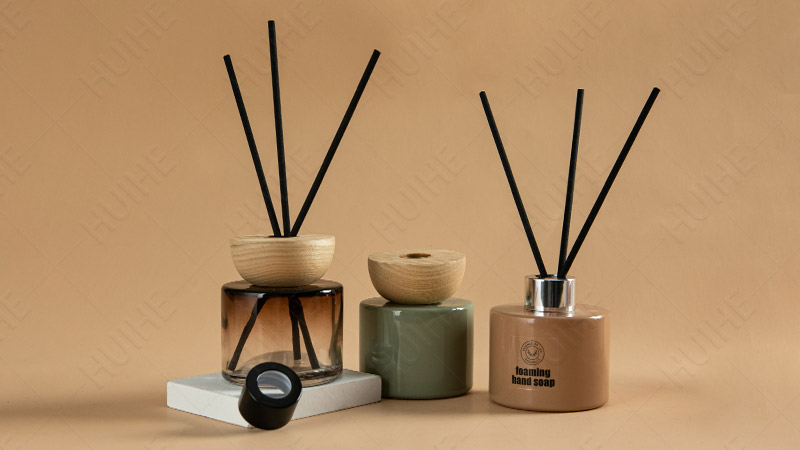
- For mid-range scent volumes, like 100ml, the key is balance between height and stability. These bottles are often used as best sellers, so they need to work well in both display and daily use. Proper glass thickness and a stable base help prevent tipping, while a compatible neck finish ensures smooth filling and closure fit.
- For large scent volumes, such as 150ml or 200ml and above, weight distribution becomes critical. Taller bottles must be designed with an anti-tip structure, wider bases, or reinforced bottoms. At this scale, base stability and consistent glass thickness are essential to avoid handling and transport issues.
Across all sizes, neck compatibility also matters. The bottle neck must match caps, pumps, or diffuser closures without stress. When scent volume, bottle shape, glass thickness, and base design work together, the result is packaging that feels intentional, stable, and reliable—qualities that matter in long-term fragrance product success.
How to Choose the Perfect Scent Volume for Your Brand
Choosing the perfect scent volume becomes much easier when you break the decision into clear steps. Below is a simple checklist you can use to align scent volume with your brand strategy and packaging goals.
Target market
Start with your market position. Luxury fragrance brands often prefer smaller or mid-range scent volumes that feel refined and exclusive. Mass-market products usually focus on standard volumes like 100ml for better cost control. Gift-focused products may use compact or visually striking volumes that look appealing in sets.
Usage scenario
Think about where the fragrance will be used. Small rooms and personal spaces work well with lower scent volumes, while whole-home or open areas often require larger volumes to feel practical. Matching scent volume to room size helps your product feel purpose-built.
Price point and refill strategy
Your scent volume should support your pricing model. A larger fragrance volume can justify a higher price and longer usage time. Smaller volumes may work better with refill programs or seasonal launches. Decide early whether refills are part of your long-term plan.
Logistics and shelf constraints
Consider storage, shipping, and display. Larger scent volumes increase weight and carton size, which affects shipping cost. Shelf height, box dimensions, and pallet efficiency can all influence which scent volume makes the most sense.
By reviewing these factors together, you can choose a scent volume that fits your brand identity, packaging system, and supply chain—without overcomplicating the decision.
Common Mistakes to Avoid When Choosing Scent Volume
Even experienced brands can make mistakes when selecting scent volume. Avoiding these common issues can save you time, cost, and packaging problems later.
- One common mistake is choosing scent volume based on appearance only. A bottle may look attractive, but if the fragrance volume is too small or too large for real use, it can lead to poor user experience and weak repeat sales.
- Another issue is ignoring evaporation rate. Different fragrance formulas evaporate at different speeds, especially in reed diffusers and open systems. If evaporation is not considered, the actual usage time may be much shorter than expected, even with a larger scent volume.
- Many brands also underestimate shipping weight. Larger scent volumes require thicker glass and stronger cartons, which increases freight cost. Without early planning, logistics expenses can quickly reduce profit margins.
- Finally, using non-standard scent volumes without supply support can create long-term risks. Custom sizes may limit bottle options, increase MOQ, and complicate future reorders. Standard scent volumes are often easier to scale and maintain consistent supply.
By avoiding these mistakes, you can select a scent volume that performs well in the market and remains practical from production to delivery.
Conclusion
Choosing the right scent volume is more than a sizing decision—it’s a key part of product planning, packaging design, and brand positioning. From product lifespan and refill strategy to bottle stability and logistics cost, scent volume affects every stage of a fragrance product’s journey.
By understanding common scent volumes, how they impact user experience, and how they should match glass bottle design, you can make more confident and practical decisions. When scent volume aligns with your target market, usage scenario, and supply chain, your product feels intentional, balanced, and easier to scale.
A well-chosen scent volume helps you reduce risk, control cost, and create fragrance packaging that works in real-world conditions—not just on the shelf.

FAQ
Q1: What does scent volume mean in fragrance packaging?
Scent volume refers to the amount of fragrance liquid inside the bottle. It is also called fragrance volume, fill volume, or bottle capacity, and it is not related to scent strength.
Q2: Is a larger scent volume always better?
Not always. Larger scent volumes offer longer usage time, but they also increase glass weight, shipping cost, and space requirements. The best scent volume depends on usage scenario, price point, and packaging design.
Q3: What is the most popular scent volume for home fragrance products?
For many brands, 100ml is the most common scent volume. It offers a good balance between usage time, perceived value, and packaging efficiency.
Q4: How does scent volume affect bottle design?
Scent volume influences bottle height, base width, glass thickness, and stability. Larger volumes require better weight distribution and anti-tip design, while smaller volumes often focus on premium feel.
Q5: Can I use a custom scent volume instead of a standard size?
Yes, but custom scent volumes may require higher MOQs, custom molds, and longer lead times. Standard scent volumes usually offer more flexibility and supply stability.
Q6: Does scent volume affect shipping and logistics?
Yes. Larger scent volumes increase glass weight and carton size, which can raise shipping and storage costs. Logistics should always be considered when selecting scent volume.
Q7: How do I choose the right scent volume for my brand?
Start by defining your target market, usage scenario, price range, and refill plan. Then consider packaging limits such as shelf space, bottle stability, and shipping efficiency.