Boston round bottles are one of the most widely used glass packaging solutions across industries. From essential oils and pharmaceuticals to personal care and laboratory products, their simple cylindrical shape and rounded shoulders make them easy to fill, label, store, and transport.
If you’re sourcing Boston round glass bottles for your business, choosing the right size is just as important as selecting the right closure or glass color. The correct bottle capacity can improve user experience, reduce packaging costs, and fit your production line more efficiently.
This Boston round bottle size guide explains the most common bottle sizes, neck finishes, dimensions, and industry applications to help you make an informed purchasing decision.
What Is a Boston Round Bottle?
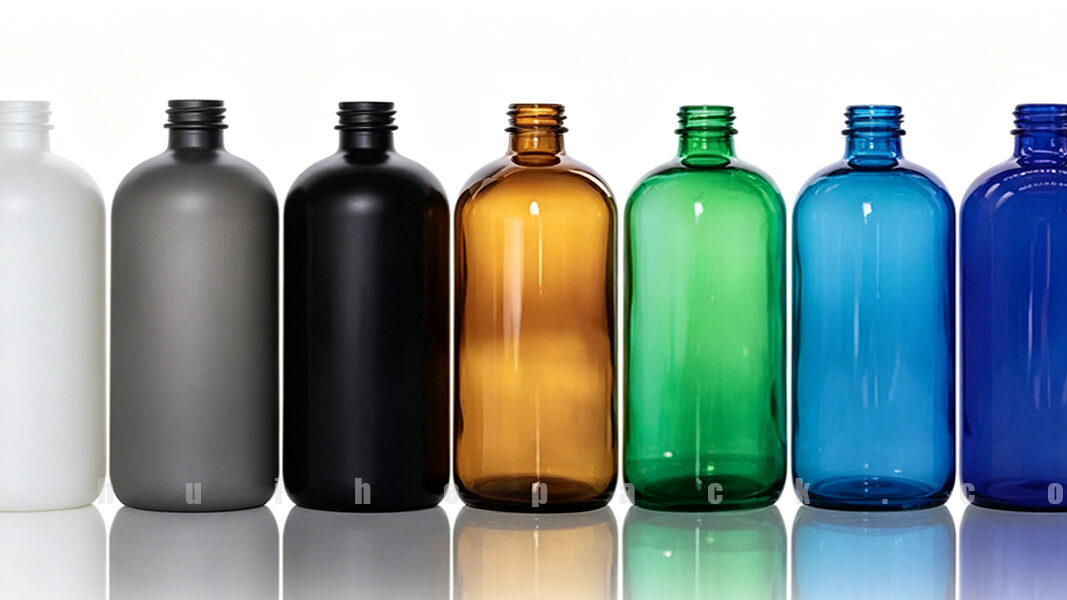
A Boston round bottle is a cylindrical glass bottle with rounded shoulders and a narrow neck. Originally developed for pharmaceutical packaging, it has become a popular choice for cosmetics, essential oils, chemicals, food ingredients, and laboratory products.
Its timeless design offers several advantages:
- Easy to fill on automated production lines
- Large labeling surface for branding
- Compatible with many closure types
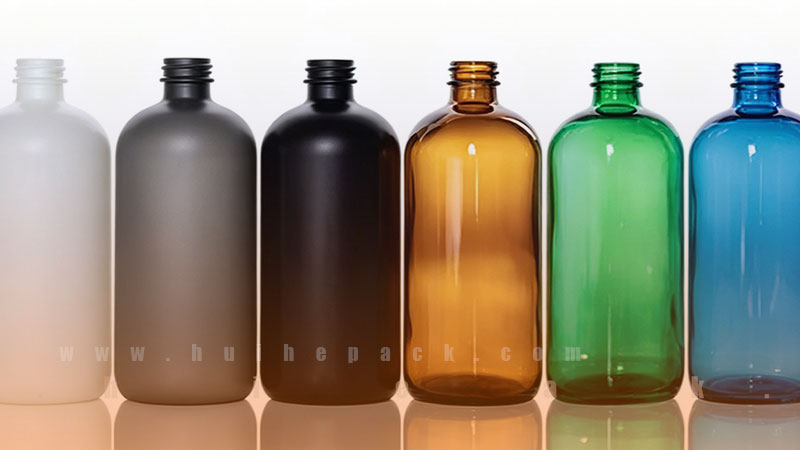
- Available in clear, amber, cobalt blue, green, and custom colors
- Suitable for both stock and custom packaging
Today, Boston round glass bottles are one of the most versatile packaging options available for B2B buyers.
Standard Boston Round Bottle Size Chart
Although custom sizes are available, several capacities have become industry standards.
| Capacity | Approx. Oz | Common Neck Finish | Typical Applications |
| 15 ml | 0.5 oz | 18-400 | Essential oils, fragrance samples |
| 30 ml | 1 oz | 20-400 | Serums, tinctures, CBD oil |
| 60 ml | 2 oz | 20-400 | Essential oils, pharmaceuticals |
| 120 ml | 4 oz | 24-400 | Lotion, shampoo, liquid soap |
| 250 ml | 8 oz | 24-410 | Personal care, food ingredients |
| 500 ml | 16 oz | 28-400 | Chemicals, soap, detergents |
| 1000 ml | 32 oz | 33-400 | Laboratory reagents, industrial liquids |
These sizes cover most commercial packaging needs and are widely supported by closures, labels, and filling equipment.
Understanding Boston Round Bottle Dimensions
Bottle capacity is only one part of the specification. Before placing a wholesale order, you should also understand the dimensions that affect production and packaging.
Bottle Height
Bottle height determines carton size, shipping efficiency, and shelf appearance. Taller bottles create a premium look, while shorter bottles are often easier to transport.
Bottle Diameter
The diameter affects label size, packing density, and storage space. A larger diameter also provides greater stability on filling lines.
Neck Finish
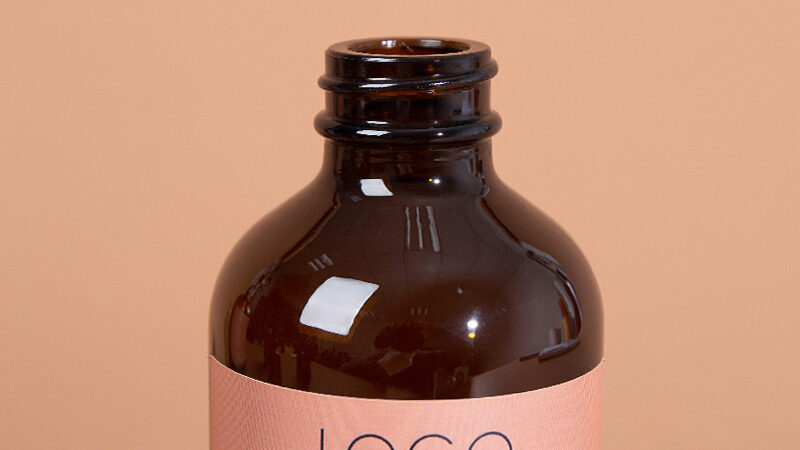
The neck finish defines which cap, pump, sprayer, or dropper fits the bottle. Even bottles with the same capacity may use different neck finishes depending on their intended application.
Overflow Capacity
Overflow capacity refers to the maximum volume the bottle can hold when filled to the top. It is usually slightly larger than the nominal capacity to allow for proper filling and product expansion.
Understanding these measurements helps you avoid compatibility issues when selecting closures and filling equipment.
Common Boston Round Bottle Neck Finishes
Selecting the correct neck finish is essential because it determines which closure your bottle can use.
| Neck Finish | Compatible Closures | Common Industries |
| 18-400 | Glass droppers, screw caps | Essential oils |
| 20-400 | Pumps, droppers, sprayers | Cosmetics, CBD |
| 24-400 | Disc top caps, lotion pumps | Personal care |
| 24-410 | Trigger sprayers, pumps | Household products |
| 28-400 | Chemical-resistant caps | Industrial liquids |
| 33-400 | Large screw caps | Laboratory packaging |
If you’re developing a new product, it’s often best to select the closure first and then choose a bottle with the matching neck finish.
A quick tip: the first number (such as 18, 20, or 24) refers to the neck diameter in millimeters, while the last three digits (like 400 or 410) describe the thread style. In practice, 400 and 410 are the most common finishes. A 410 finish has a slightly taller thread, which often provides a more secure seal and works well with pumps and sprayers, while 400 finishes are widely used with standard screw caps and droppers. Always confirm the neck finish before ordering closures, as even bottles with the same capacity may use different thread specifications.
Choosing the Right Boston Round Bottle Size
Different industries tend to favor different bottle capacities. Matching the bottle size to your product improves functionality while reducing packaging costs.
Essential Oils
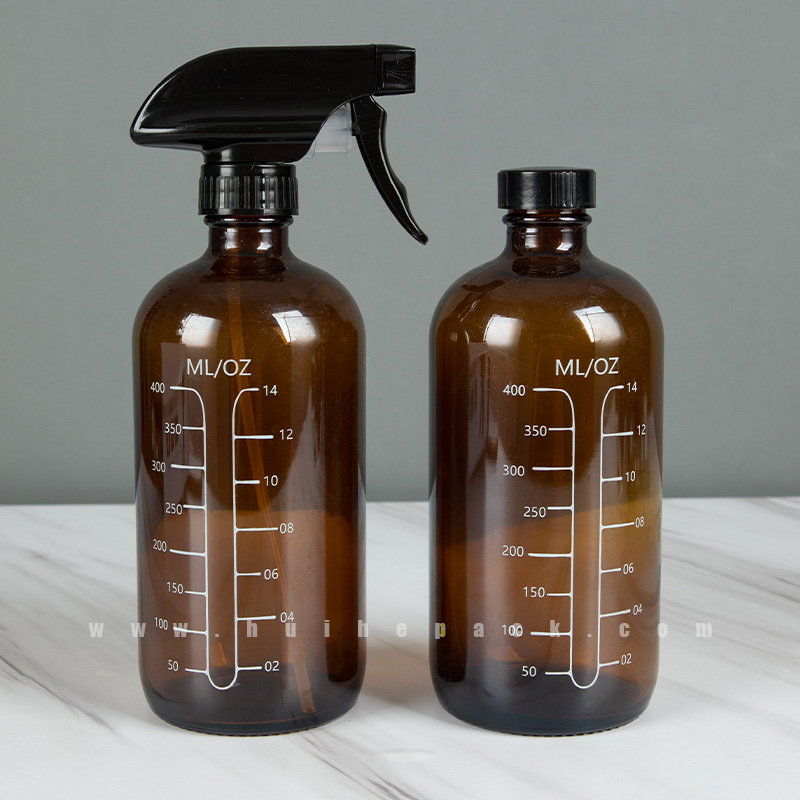
Small bottles between 15 ml and 30 ml remain the most popular choice for essential oils. Amber glass is commonly used to protect light-sensitive formulas, while glass droppers provide accurate dispensing.
Skincare and Cosmetics
For facial serums, toners, and beauty oils, 30 ml, 50 ml, and 60 ml bottles are common. Larger products such as body lotion or shampoo typically use 120 ml to 250 ml Boston round bottles paired with lotion pumps.
Pharmaceuticals
Liquid medicines, tinctures, and supplements are often packaged in 30 ml, 60 ml, and 120 ml bottles. Child-resistant closures are frequently used to improve product safety.
Laboratory and Chemicals
Laboratories and industrial suppliers generally choose 250 ml, 500 ml, or 1000 ml bottles for storing chemicals, reagents, and testing solutions. Larger capacities reduce the need for frequent refilling and simplify inventory management.
Food Ingredients
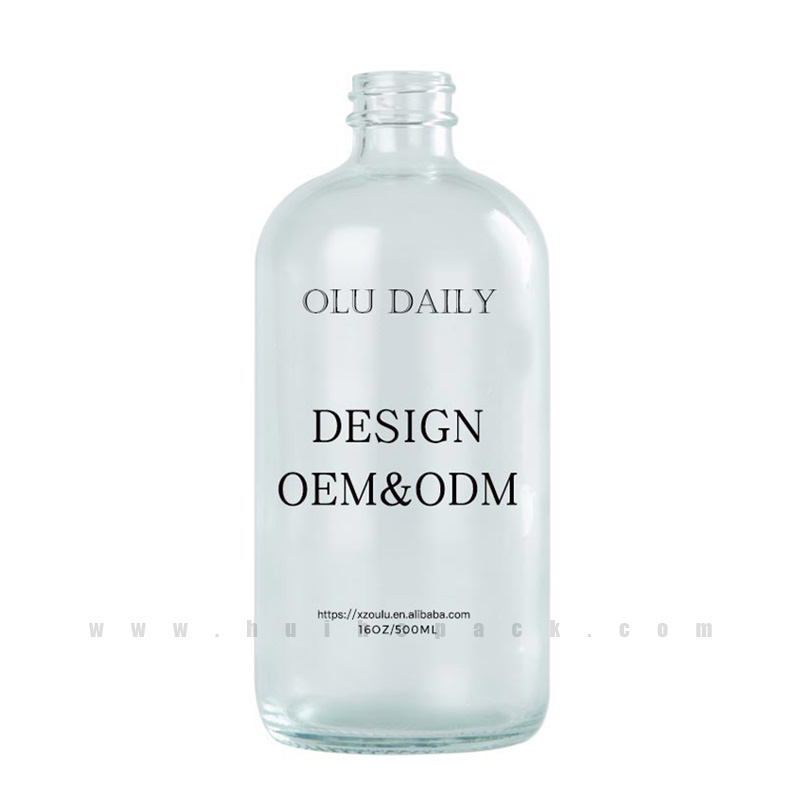
Flavor extracts, syrups, food coloring, and specialty oils are often packaged in 60 ml to 250 ml Boston round bottles. Depending on the product, manufacturers may choose clear glass for product visibility or amber glass for added UV protection.
Boston Round Bottle Capacity Conversion Chart
Many international buyers work with both metric and imperial units. This quick reference makes capacity conversion easier.
| Milliliters (ml) | Fluid Ounces (oz) |
| 15 ml | 0.5 oz |
| 30 ml | 1 oz |
| 60 ml | 2 oz |
| 120 ml | 4 oz |
| 250 ml | 8 oz |
| 500 ml | 16 oz |
| 1000 ml | 32 oz |
Using both units helps simplify communication with suppliers and customers across different markets.
Amber vs. Clear vs. Cobalt, Green & Opal Boston Round Bottles
Bottle color is more than a design choice. It also affects product protection, shelf appeal, and how customers perceive your brand.
| Glass Color | Best For | Main Advantage |
| Amber | Essential oils, pharmaceuticals, chemicals | Excellent UV protection for light-sensitive products. |
| Clear | Cosmetics, food products, beverages | Shows the product clearly and creates a clean, modern look. |
| Cobalt Blue | Premium skincare, aromatherapy, wellness products | Eye-catching appearance with moderate light protection. |
| Green | Herbal extracts, botanical oils, specialty beverages | Offers a distinctive natural look and light UV protection. |
| Opal (White Porcelain) Glass | High-end skincare, beauty, luxury personal care | Fully opaque glass that protects sensitive formulas while delivering a premium, elegant appearance. |
If your product contains light-sensitive ingredients, amber remains the best all-around choice. Clear bottles are ideal when product visibility supports your brand, while cobalt blue creates a premium look for wellness and cosmetic products. Green and opal glass are more niche options, often chosen by brands that want a distinctive appearance or additional protection for high-value formulations.
Custom Boston Round Bottle Solutions
Standard bottles meet many packaging needs, but custom packaging helps your brand stand out in competitive markets.
At HUIHE PACK, you can customize Boston round bottles with a wide range of options, including custom colors, frosting, silk screen printing, hot stamping, spray coating, electroplating, embossing, and custom molds. Matching caps, pumps, droppers, and sprayers are also available to create a complete packaging solution.
If you’re launching a new product or upgrading your existing packaging, custom decoration allows you to build a stronger brand while maintaining production efficiency.
Frequently Asked Questions
1、What is the most common Boston round bottle size?
The most commonly used sizes are 30 ml, 60 ml, 120 ml, and 250 ml, as they cover a wide range of cosmetic, pharmaceutical, and personal care products.
2、Are Boston round bottles suitable for essential oils?
Yes. Amber Boston round bottles paired with glass droppers are one of the most popular packaging choices for essential oils because they help protect light-sensitive formulas.
3、Can Boston round bottles be customized?
Yes. You can customize bottle color, decoration, logo printing, frosting, coating, embossing, and closure combinations to match your brand requirements.
4、Which closure fits a Boston round bottle?
The correct closure depends on the bottle’s neck finish. Common options include screw caps, droppers, lotion pumps, mist sprayers, and child-resistant caps.
5、Are Boston round glass bottles recyclable?
Yes. Glass is 100% recyclable and can be reused repeatedly without losing quality, making it an excellent packaging choice for brands seeking more sustainable solutions.