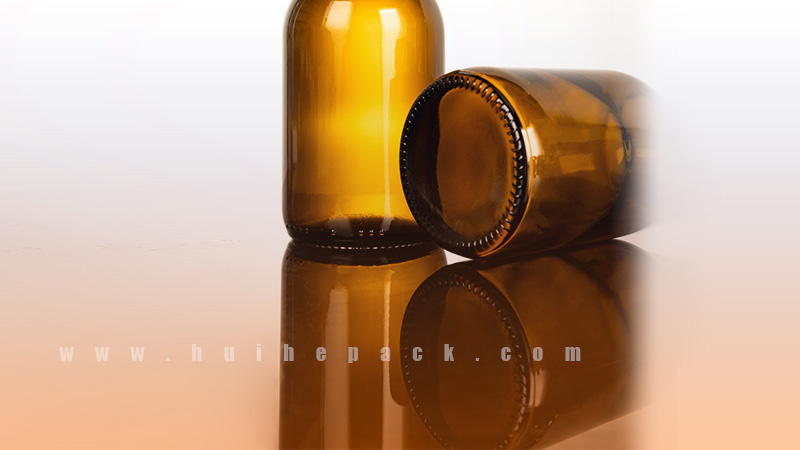
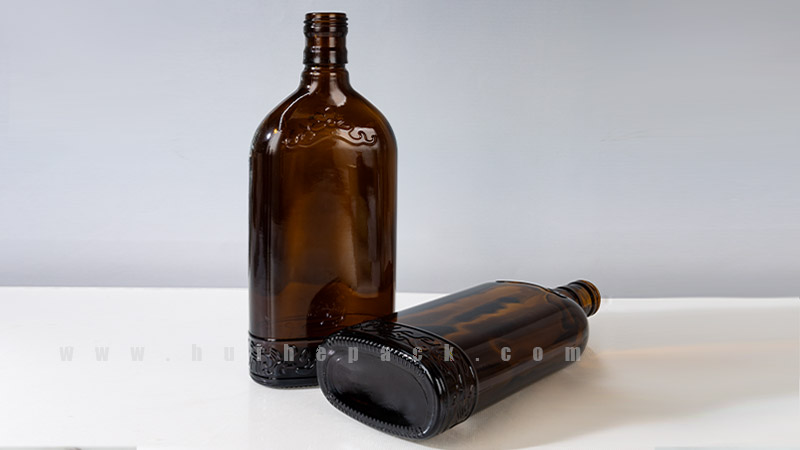
If you look closely at the bottom of a glass beer bottle, you may notice a series of small ridges, rings, or raised sections around the base. They may look like a decorative detail, but they are actually part of the bottle’s functional design.
So, why do beer bottles have ridges on the bottom?
The short answer is that the bottom geometry helps the bottle manage mechanical stress, maintain a stable base, and perform reliably during filling, transport, storage, and handling. The exact design depends on the bottle’s shape, glass distribution, production method, and intended use.
For breweries and beverage companies sourcing glass bottles, understanding the bottle base can also help you make better decisions about bottle weight, stability, filling-line compatibility, and custom bottle design.
What Are the Ridges on the Bottom of a Beer Bottle?
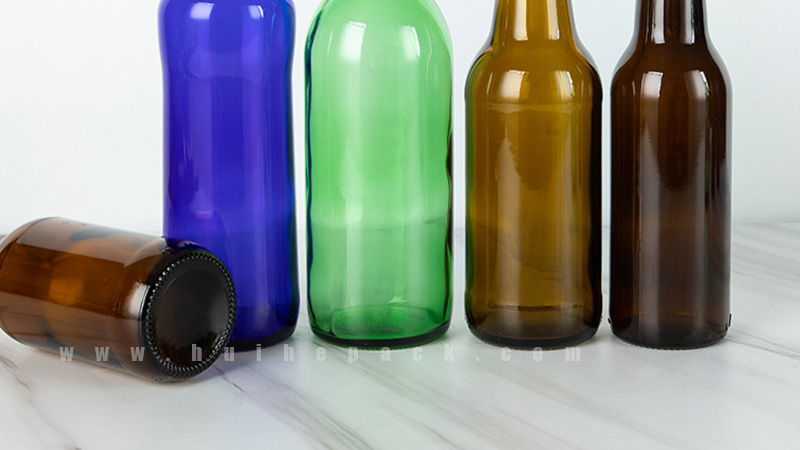
The ridges are raised features formed directly into the glass bottle base during manufacturing. They are part of the mold design, so they are not added after the bottle is produced.
You may see them as a continuous ring, several smaller ribs, or a more detailed pattern depending on the bottle style.
The bottom of a beer bottle can contain several different features:
| Bottle Base Feature | What It Means |
| Bottom ridges | Raised ribs or rings formed into the base |
| Punt | A recessed area in the center of the bottle bottom |
| Heel | The curved transition between the bottle body and base |
| Contact surface | The part of the base that rests on a table or conveyor |
These features work together as part of the overall glass bottle design. A bottle’s bottom should not be considered separately from its body, shoulder, neck, and closure.
Why Do Beer Bottles Have Ridges?
1. They Help Manage Stress in the Bottle Base
The base is one of the areas of a beer bottle that needs careful engineering. A bottle is exposed to different types of mechanical stress throughout its life, from production and filling to shipping and retail handling.
The shape of the base can influence how stress is distributed through the glass.
A well-designed bottle does not simply rely on adding more glass. Instead, the geometry of the bottle helps provide the required structural performance while keeping the glass distribution practical.
This is especially important for beer because carbonated products create internal pressure. The bottle therefore needs to be designed as a complete pressure-resistant package rather than as a simple glass container.
The ridges are one part of that design.
2. They Help Create a Stable Bottle Base
Think about how many times a beer bottle moves before it reaches the customer.
It may travel through:
- Bottle filling
- Capping
- Conveyors
- Inspection
- Labeling
- Carton packing
- Palletizing
- Transportation
- Retail handling
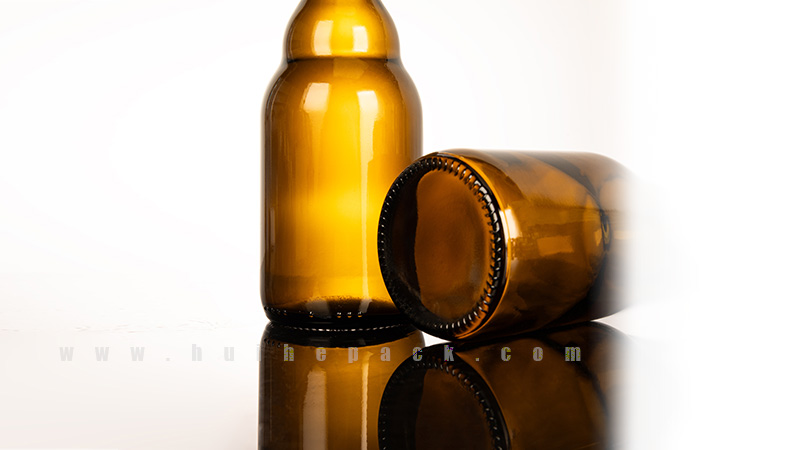
The bottle needs to remain stable while moving across equipment and while standing on different surfaces.
The geometry of the base helps create a consistent contact area and supports stable handling. This becomes even more important for high-speed commercial bottling, where bottles may move continuously along conveyors.
For you as a buyer, this is one reason why bottle base design should be considered alongside bottle dimensions and filling-line requirements.
3. They Allow the Base to Be Engineered Without Simply Adding More Glass
It is easy to assume that a stronger bottle simply needs thicker glass. In practice, glass bottle design is more complicated.
Manufacturers need to balance:
- Structural performance
- Glass weight
- Bottle dimensions
- Production efficiency
- Handling requirements
- Shipping cost
The base geometry gives designers another way to control how the bottle performs.
A well-engineered beer bottle uses its shape as part of the structure. The goal is not to make every area as thick as possible, but to achieve a practical balance between strength, weight, and manufacturing requirements.
4. They Support Repeated Handling and Mechanical Loads
A commercial beer bottle is rarely used just once and placed on a shelf.
During its journey, it can experience impacts, vibration, pressure, conveyor contact, and stacking loads. The base is particularly important because it repeatedly contacts equipment, packaging materials, and other bottles.
This is why the bottom design of a glass beer bottle needs to be consistent from bottle to bottle.
Good manufacturing control is just as important as the design itself. Even a well-designed bottle needs consistent glass distribution, proper forming, annealing, and quality inspection.

Do All Beer Bottles Have Ridges on the Bottom?
No. Not every beer bottle has the same base design.
You can find beer bottles with pronounced ridges, relatively smooth bases, recessed centers, or other molded patterns. The design depends on the bottle shape, capacity, glass weight, production requirements, and brand specifications.
There is also no simple rule that says a bottle with more ridges is automatically stronger.
The overall performance of a beer bottle depends on its complete geometry and manufacturing quality. The neck, shoulder, body, heel, base, glass distribution, and production process all matter.
This is important when comparing different beer bottle suppliers. Looking only at the appearance of the bottom does not tell you everything about the bottle’s performance.
Beer Bottle Ridges vs. a Punt: What’s the Difference?
Ridges and punts are often mentioned together, but they are not the same thing.
A ridge is a raised feature in the glass, usually found around part of the bottle base.
A punt is a recessed area that extends upward into the bottle from the bottom. You can usually see the punt as a central indentation when looking at the bottle from underneath.
Some bottles can have both.
The easiest way to remember the difference is:
Ridges are raised features. A punt is a recessed feature.
Both are created through the bottle mold and form part of the overall base geometry.
The design does not necessarily indicate that one bottle is better than another. It is more useful to look at the entire bottle structure and its intended application.
How Does the Bottom Design Affect Beer Bottle Performance?
The base is only one part of a larger engineering system.
When a glass beer bottle is developed, manufacturers need to consider several factors together.
Internal Pressure
Beer contains dissolved carbon dioxide, which creates pressure inside the bottle. The bottle therefore needs suitable structural performance for the intended beverage and filling conditions.
Glass Distribution
Glass needs to be distributed appropriately throughout the bottle. Excessive glass in one area can increase weight without necessarily providing the best overall design.
Bottle Weight
A lighter bottle can reduce material use and shipping weight, but weight reduction needs to be balanced with the required performance.
Bottle Shape
Tall, narrow bottles and short, wide bottles do not behave in exactly the same way. Changes in diameter, shoulder shape, heel, and base can affect the overall design.
Production Consistency
Even a good bottle design needs reliable manufacturing. Consistent forming, annealing, inspection, and dimensional control all contribute to the final product.
For this reason, you should look at the bottle as a complete system rather than judging it by one feature on the bottom.
What Does a Beer Bottle Base Look Like During Manufacturing?
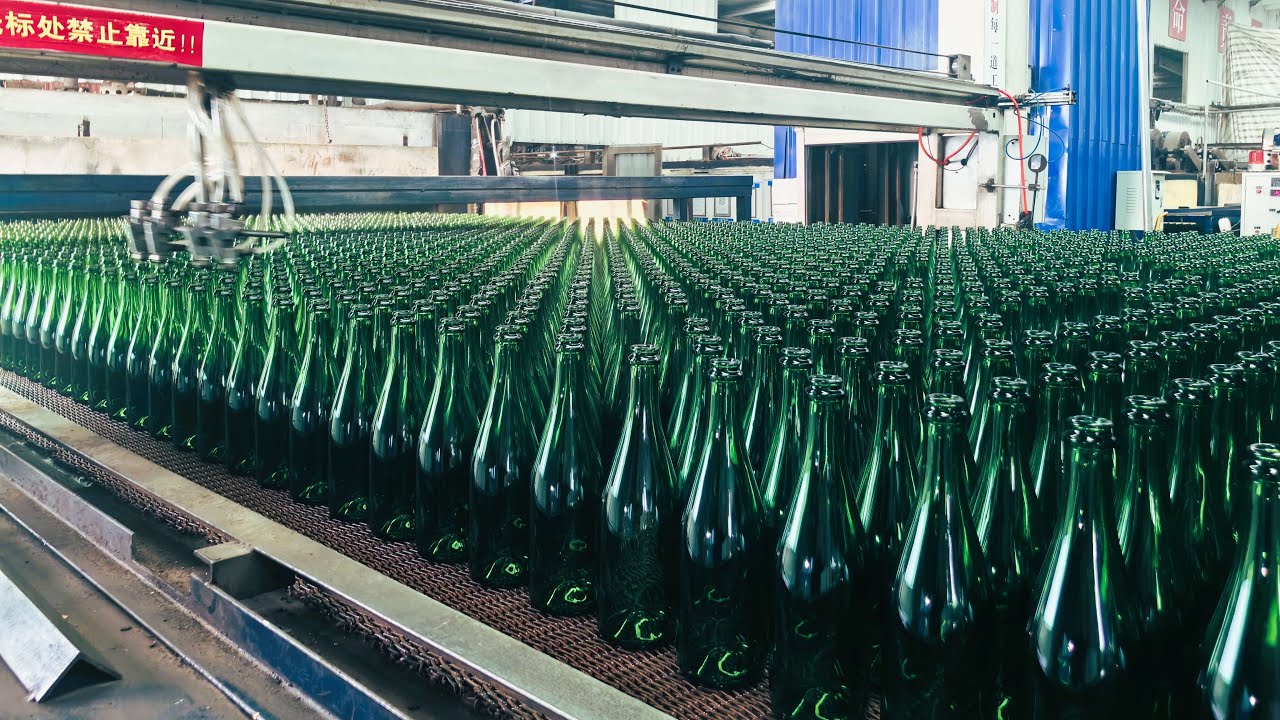
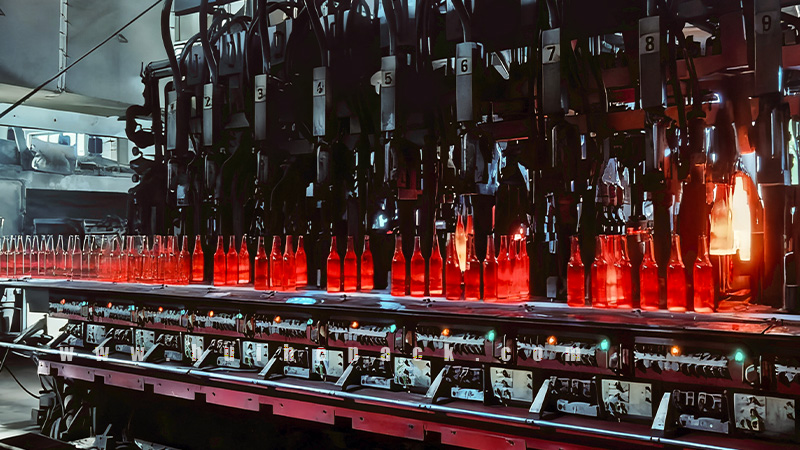
The ridges are formed when the molten glass is shaped inside the bottle mold.
A simplified glass bottle manufacturing process looks like this:
Raw materials → Glass melting → Gob forming → Molding → Annealing → Inspection → Packing
During the molding stage, the molten glass takes the shape of the mold cavity. The bottle base, heel, body, shoulder, and neck are formed as part of this process.
The mold therefore plays a major role in the final appearance of the bottle bottom.
After forming, the bottle passes through an annealing process. Controlled cooling helps reduce internal stress in the glass before the bottles move to inspection and packing.
For custom beer bottles, changes to the base design normally need to be considered together with the rest of the mold and bottle structure.
Does a Ridged Base Make a Beer Bottle Stronger?
Not by itself.
This is one of the most common misunderstandings about beer bottle ridges.
A ridged bottom can be part of a design that helps manage stress and supports the structural performance of the bottle. However, you cannot determine a bottle’s strength simply by counting its ridges or looking at the bottom.
Other factors include:
- Bottle geometry
- Glass distribution
- Base and wall thickness
- Bottle weight
- Manufacturing consistency
- Annealing quality
- Intended internal pressure
- Applicable testing requirements
So, if you are comparing wholesale beer bottles, focus on the complete specification rather than one visual feature.
Can You Customize the Bottom of a Beer Bottle?
Yes, custom beer bottle designs can include different base geometries, depending on the project.
When developing a custom glass beer bottle, you may be able to specify elements such as:
- Bottle capacity
- Body shape
- Base design
- Bottle weight
- Neck finish
- Embossed logos
- Glass color
- Overall dimensions
However, the base should not be designed as an isolated decorative element.
For example, changing the bottle diameter can affect the base, body proportions, and glass distribution. Changing the bottle weight may also require adjustments to the overall structure.
That is why custom bottle development works best when the bottle design, mold, closure, filling requirements, and production process are considered together.
What Should You Consider When Buying Beer Bottles?
If you are sourcing beer bottles for a brewery, beverage brand, or distributor, the bottom design is worth checking—but it should not be your only consideration.
Bottle Capacity
Choose a standard size that fits your product and target market. Common beer bottle sizes include 250ml, 330ml, 355ml, 500ml, 650ml, and 750ml, although available sizes vary by market and bottle style.
Neck Finish
The neck finish determines which closure can be used. Crown finishes are common for beer bottles, while some specialty bottles use swing-top or other closure systems.
Bottle Weight
Weight affects handling, logistics, and material consumption. A suitable weight should provide the required performance without adding unnecessary material.
Glass Color
Amber glass is widely used for beer because it helps reduce light exposure. Green, clear, and other glass colors are also used for specific products and brand positioning.
Filling-Line Compatibility
Before ordering, check the bottle dimensions and neck finish against your filling and capping equipment. A bottle that looks suitable may still require changes if its dimensions do not match your production line.
Testing and Quality Control
For commercial beer packaging, ask your supplier about dimensional inspection and relevant performance testing. Consistent bottle production matters just as much as the initial design.
Why Beer Bottle Base Design Matters to Breweries
For consumers, the ridges on the bottom of a beer bottle may be just a small visual detail.
For a brewery, they are part of a much larger packaging system.
Your bottle needs to work from the moment it leaves the forming machine through filling, capping, labeling, packing, shipping, and retail display.
That is why a good beer bottle design balances structure, weight, appearance, production efficiency, and compatibility with your packaging process.
If you are developing a custom bottle, it is also useful to discuss the base design early rather than treating it as a final detail.
Final Thoughts
Those ridges on the bottom of a beer bottle are more than decoration. They are part of the bottle’s engineered base and can contribute to stress management, stability, and reliable handling.
At the same time, it is important not to judge a beer bottle by its bottom alone. The best bottle design comes from balancing the entire structure, glass distribution, weight, neck finish, production process, and intended use.
If you are sourcing wholesale beer bottles or developing a custom bottle for your brewery, understanding these details can help you ask better questions and choose a bottle that works well from filling line to final delivery.
Frequently Asked Questions
Why do beer bottles have ridges on the bottom?
Beer bottle ridges are part of the molded base design. They can help manage stress, support base stability, and contribute to the bottle’s overall structural performance during filling, transportation, and handling.
What are the ridges on the bottom of a beer bottle called?
They are commonly described as ridges, ribs, or rings in the bottle base. They are different from a punt, which is a recessed area in the center of the bottle bottom.
Do all beer bottles have bottom ridges?
No. Beer bottles can have different base designs depending on their shape, capacity, glass weight, production method, and intended application.
Does the bottom of a beer bottle affect pressure resistance?
Yes, the base is part of the bottle’s overall pressure-resistant structure. However, pressure performance depends on the complete bottle design, glass distribution, manufacturing quality, and testing—not simply on the presence of ridges.
Can I customize the base design of a beer bottle?
Custom beer bottles can be developed with different base geometries, but the base should be designed together with the bottle body, glass distribution, neck finish, weight, and production requirements.
What should I check when choosing a wholesale beer bottle?
Look at the bottle capacity, dimensions, neck finish, closure compatibility, glass color, weight, filling-line compatibility, quality requirements, and MOQ. The base design is one part of the overall specification.