Choosing the right glass jar for food packaging is about more than capacity. Shape matters too.
Two glass jars may hold the same amount of food, but they can look very different on the shelf. They may also perform differently during filling, labeling, packing, and shipping.
A straight sided jar gives you a large, clean label area. A hexagonal jar creates a more distinctive artisan look. A Mason jar feels familiar and traditional, while an Ergo jar offers a practical shape for many everyday food products.
So, which glass jar shape should you choose?
In this guide, we look at the most common glass jar shapes for food packaging, including straight sided, Ergo, hexagonal, Mason, round, square, and Paragon jars. We will also help you match each shape with foods such as honey, jam, pickles, sauces, nut butter, and spices.
Why Does Glass Jar Shape Matter for Food Packaging?
The shape of your food jar affects both appearance and function.
When comparing glass food jars, consider how easy the jar is to fill, label, seal, pack, and use. The right shape should also match the texture of your product and the image you want your brand to create.
For example, a wide-mouth straight sided jar makes it easy for customers to scoop out thick nut butter. A tall Paragon jar can work well for pickled vegetables. A hexagonal glass jar can give honey or preserves a more decorative appearance.
Jar shape can also affect:
- Mouth opening and product access
- Label size and placement
- Closure compatibility
- Filling and capping processes
- Shelf presentation
- Carton configuration and pallet efficiency
This is why it is better to choose your jar based on the complete packaging system rather than appearance alone.
Common Glass Jar Shapes for Food Packaging
There is no single jar shape that works best for every food. Here are some of the most common options and where they work well.
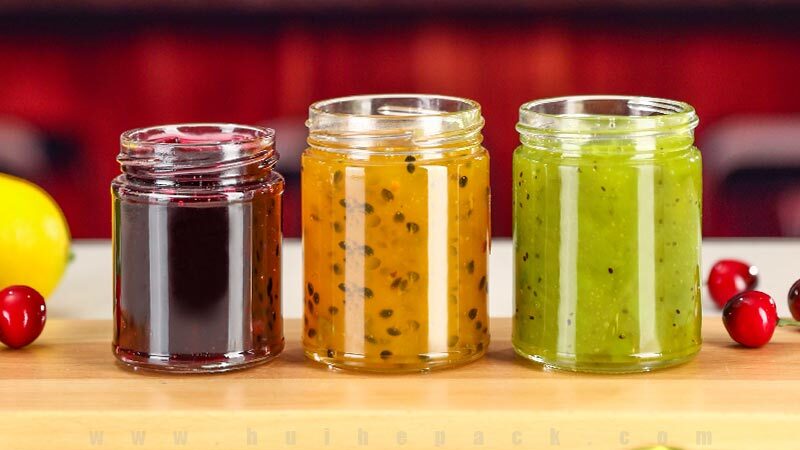
1. Straight Sided Glass Jars
Straight sided glass jars have vertical or nearly vertical walls with little transition between the body and shoulder. They often come with a relatively wide mouth.
Their simple shape gives you a large, uninterrupted surface for labels. This makes straight sided jars a good choice when your packaging design uses wraparound labels or clean, modern graphics.
They are commonly used for:
- Jam and preserves
- Nut butter
- Salsa
- Dips
- Spreads
- Sauces
- Condiments
A wide opening also makes thick foods easier to fill and scoop out. If you sell peanut butter, almond butter, jam, or similar products, a straight sided food jar is often worth considering.
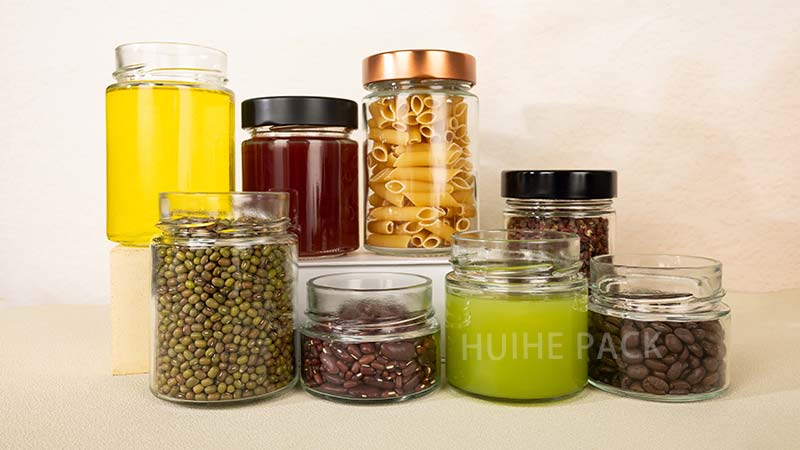
2. Ergo Glass Jars
Ergo glass jars are designed with a slightly taller neck area than many standard food jars. This gives you more space to grip the jar around the neck when twisting the lid on or off. The extra gripping area can make handling easier and require less effort, which is especially useful when opening or closing the jar by hand.
Ergo jars usually combine this taller neck with a rounded body and defined shoulders, giving them a practical and familiar food packaging appearance.
They are commonly used for:
- Honey
- Jam and preserves
- Salsa
- Pasta sauce
- Condiments
- Other packaged foods
The taller neck is also a useful detail to consider when you are comparing jar shapes for both consumer convenience and packaging appearance.
Ergo jars are available in different capacities and neck finishes. When sourcing them for commercial food packaging, make sure you match the jar with the correct closure and confirm that the complete jar-and-lid system suits your filling and processing requirements.
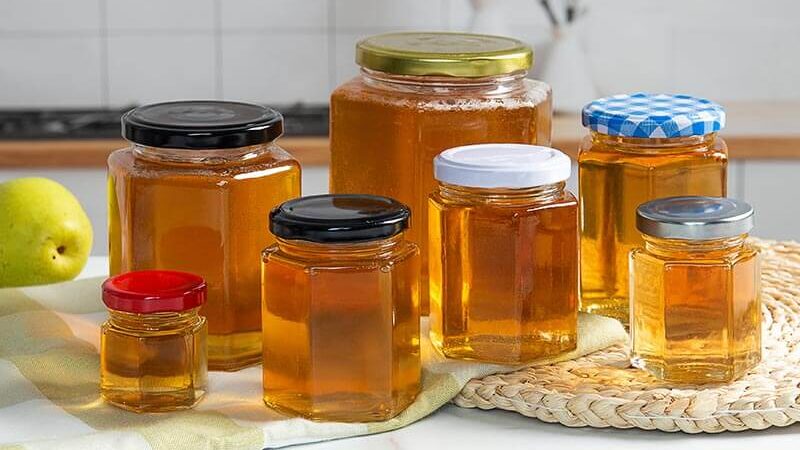
3. Hexagonal Glass Jars
Want your product to look a little different from a standard round jar? A hexagonal glass jar is an easy way to add character.
The six-sided body creates multiple flat panels and a distinctive silhouette. For this reason, hexagonal jars are especially popular for artisan and premium food products.
They are often used for:
- Honey
- Jam
- Marmalade
- Preserves
- Chutney
- Gourmet foods
Hexagonal honey jars are particularly recognizable. The shape pairs well with metal lids, decorative labels, and honey dippers for gift or specialty packaging.
However, think about label dimensions before you order. The individual panels give you less continuous labeling space than a straight sided round jar.
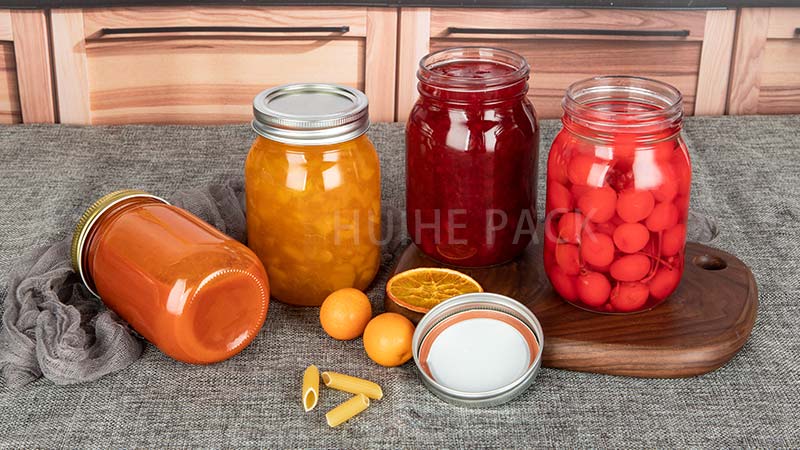
4. Mason Jars
Few food jar shapes are as recognizable as the Mason jar.
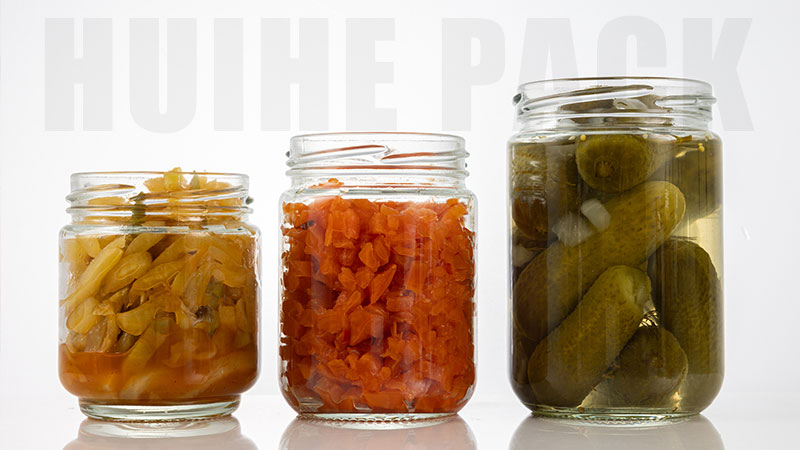
Mason-style jars typically feature a wide opening, threaded neck, and sturdy, traditional appearance. Depending on the design, they may have smooth walls or decorative embossing.
They work well for:
You can choose between different mouth sizes and closure systems depending on the jar design. If your brand has a rustic, homemade, farm-style, or traditional identity, Mason jars can reinforce that look.
For commercial food packaging, always confirm that the specific jar and closure combination matches your filling and processing conditions.
5. Round and Economy Glass Jars
Sometimes simple is exactly what you need.
Round or economy-style glass food jars are practical options for a wide range of everyday products. Their familiar profile works across many food categories and leaves plenty of room for branding.
Common applications include:
- Mayonnaise
- Sauces
- Jam
- Pickles
- Condiments
- Spreads
Round jars are especially useful when you want packaging that keeps the focus on your label and product rather than an unusual container shape.
They are also available in many capacities, making them easier to integrate into a broader product range.
6. Square Glass Jars
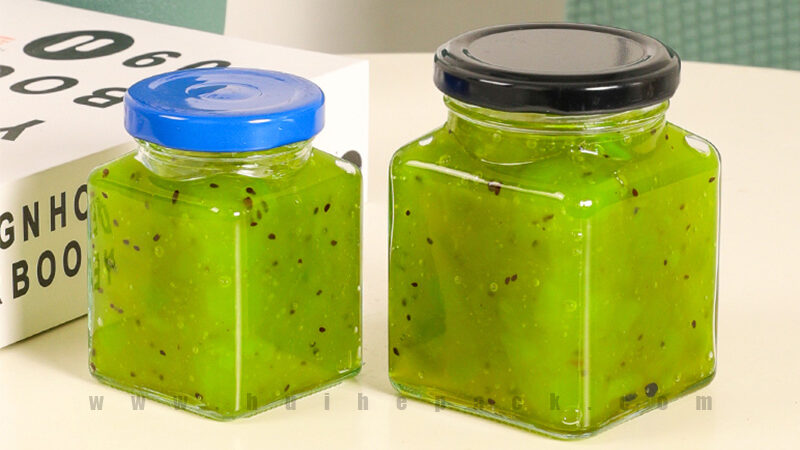
Square glass jars offer a more structured look. Their flat panels can create clear areas for front, back, or side labels, while the angular profile helps the package stand out beside conventional round jars.
They are a good option for:
Square jars can also use shelf and carton space differently from round jars. However, packaging efficiency depends on the actual dimensions of the jar, carton, dividers, and pallet layout. It is best to test your complete case configuration rather than assume one shape will always save space.
7. Paragon and Tall Glass Jars
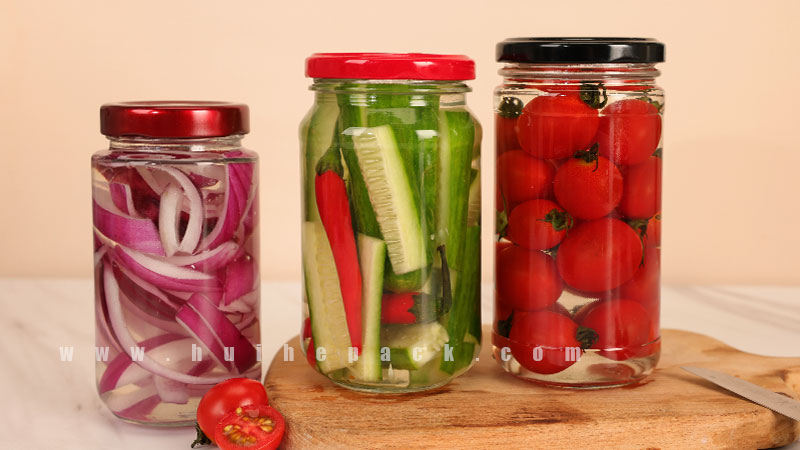
Paragon jars have a tall, narrow profile that gives food packaging a classic specialty-food appearance.
They are often a good match for:
- Pickled vegetables
- Olives
- Relishes
- Sauces
- Vegetables
- Specialty foods
Their height can make products more visible on the shelf while using a relatively small footprint.
If your food contains long pieces, such as certain pickled vegetables, pay attention to both the jar height and mouth diameter. You need enough space for efficient filling and easy product removal.
Glass Jar Shapes at a Glance
| Glass Jar Shape | Common Food Applications | Key Advantage | Typical Brand Style |
| Straight Sided | Jam, nut butter, salsa, dips | Large label area and easy access | Clean, modern |
| Ergo | Honey, sauces, preserves, salsa | Versatile food packaging shape | Classic retail |
| Hexagonal | Honey, jam, chutney | Distinctive shelf appearance | Artisan, premium |
| Mason | Pickles, jam, fermented foods | Familiar wide-mouth format | Rustic, traditional |
| Round/Economy | Sauces, condiments, spreads | Simple and versatile | Mainstream |
| Square | Honey, spices, gourmet foods | Flat panels and strong shelf presence | Modern, premium |
| Paragon | Pickles, olives, vegetables | Tall, narrow profile | Specialty food |
Use this table as a starting point, not a fixed rule. Your ideal jar will also depend on capacity, mouth size, closure, processing method, and branding requirements.
How to Choose the Right Glass Jar Shape
Once you have narrowed down the basic style, look at how the jar will work with your actual product.
Match the Jar to Your Food
Start with texture and how customers will remove the food.
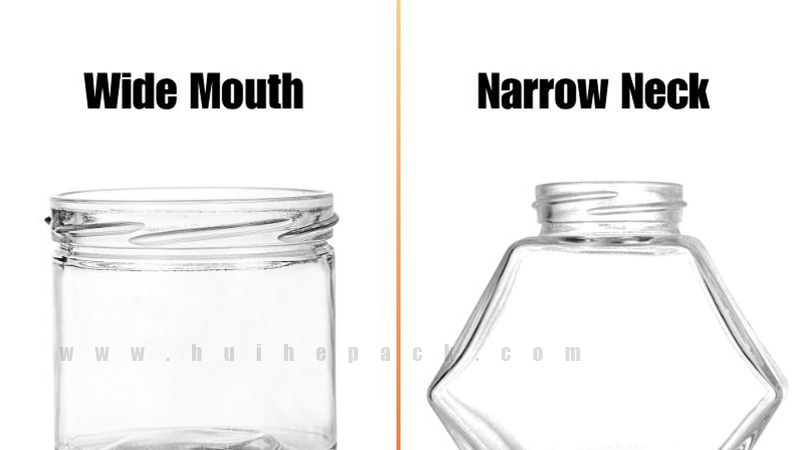
Thick products such as nut butter, jam, salsa, and dips often benefit from a wide-mouth glass jar. A wide opening makes filling easier and lets customers reach the product with a spoon or knife.
For pickles and larger food pieces, the opening needs to be wide enough to load and remove the contents without difficulty.
Pourable sauces may give you more flexibility in jar shape and mouth size.
Consider Your Filling Process
Your packaging needs to work on the production line, not just on a product rendering.
Consider whether you use:
- Hot filling
- Cold filling
- Pasteurization
- Vacuum sealing
- Automatic or semi-automatic filling
If your process involves hot filling, pasteurization, or other thermal treatment, confirm that the specific glass jar and closure system are designed and tested for those processing conditions.
Do not select a jar based on shape alone.
Think About Your Label
Your label design can quickly narrow your choices.
Straight sided jars provide a broad continuous surface and are convenient for large wraparound labels. Square jars give you distinct flat panels. Hexagonal jars offer several smaller panels that can work well with decorative or minimalist labels.
Shouldered jars may provide less uninterrupted label space.
If branding is important, ask for jar drawings or samples before finalizing your label dimensions.
Match the Jar With the Right Closure
Jar shape and jar finish are two different decisions.
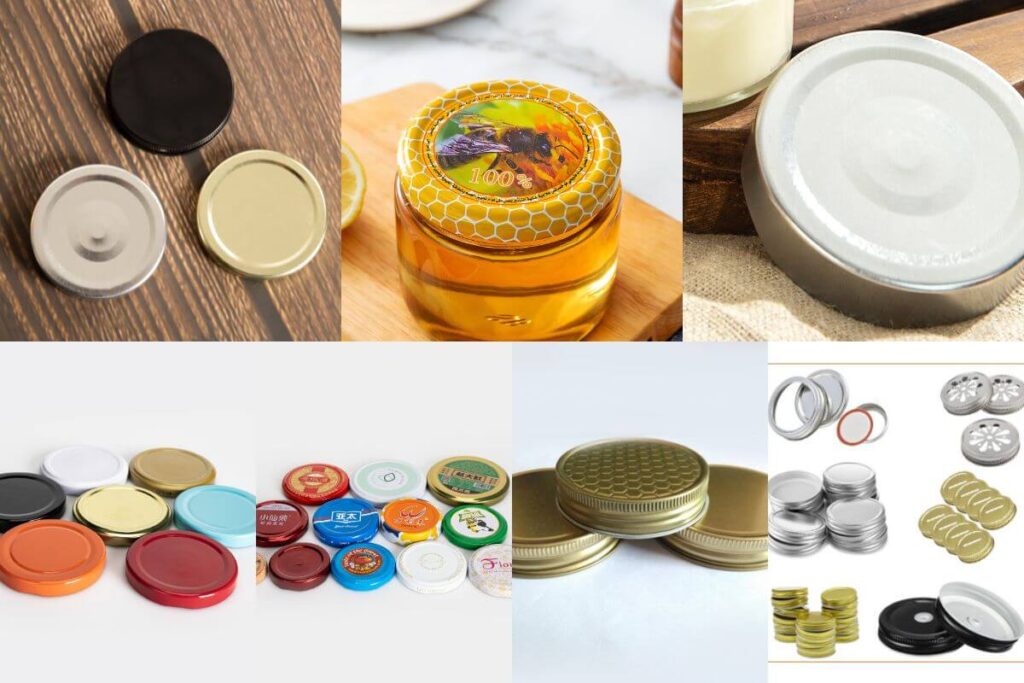
A beautiful jar will not help if the closure does not fit your production or sealing requirements. Depending on your food product, your options may include metal lug lids, continuous thread caps, plastic caps, or other food jar closures.
Check the neck finish, cap size, liner, sealing method, and processing requirements together.
This is especially important for products such as honey, jam, sauces, and pickles, where the closure plays an important role in the complete packaging system.
Consider Shipping and Pallet Efficiency
Packaging cost does not stop at the jar.
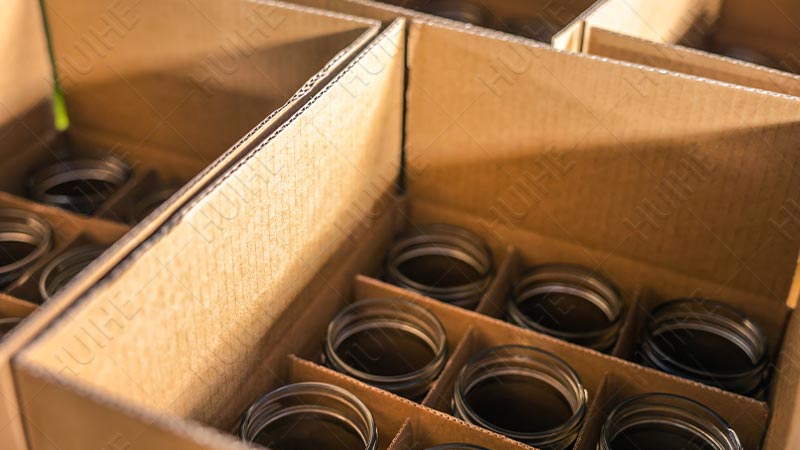
Diameter, height, shape, glass weight, carton dimensions, dividers, and pallet layout can all influence shipping efficiency.
A compact jar shape may allow you to fit more units into a carton, but this should be verified with your actual packaging configuration. For larger B2B orders, even small changes in case packing can make a difference to storage and freight planning.
Which Glass Jar Shape Is Best for Different Foods?
If you are still comparing options, start with the food you need to pack.
For honey, hexagonal, Ergo, and classic round jars are popular choices. Hexagonal jars work especially well when you want an artisan or gift-oriented look.
For jam and preserves, straight sided, hexagonal, Mason, and round jars all work well. Your choice will often depend on branding and label design.
For pickles, consider Mason, Paragon, or other wide-mouth round jars. Make sure the opening suits the size of your pickled vegetables.
For sauces and salsa, Ergo, straight sided, and round glass jars provide versatile packaging options.
For nut butter, straight sided wide-mouth jars make it easier to fill the product and reach the contents.
For spices and seasonings, smaller round, square, or tall jars can provide good shelf presentation while supporting different label and closure options.
Standard or Custom Glass Jar Shape?
You do not always need a custom mold to create distinctive food packaging.
Standard glass jar shapes can offer several advantages, including existing molds, established sizes, proven closure options, and faster sourcing. You can still customize the package with labels, printing, embossing, coatings, caps, or other decoration.
A custom glass jar makes more sense when the container shape itself is an important part of your brand identity. You may want a unique silhouette, embossed logo, special capacity, or particular dimensions.
Before developing a custom mold, consider expected order volume, development cost, lead time, closure compatibility, and secondary packaging.
Find the Right Glass Jar for Your Food Packaging
There is no universal “best” glass jar shape.
The right choice depends on what you are packing, how you fill it, how customers use it, and how you want your brand to look on the shelf.
Straight sided jars offer clean labeling and easy access. Ergo jars provide a versatile food packaging profile. Hexagonal jars bring an artisan feel. Mason jars create a familiar traditional look. Square and Paragon jars give you more ways to differentiate your product.
At HUIHE PACK, we supply glass jars for honey, jam, sauces, pickles, spices, nut butter, condiments, and other food products. You can choose from different jar shapes, capacities, mouth sizes, closures, and decoration options.
If you are sourcing glass jars for food packaging, tell us what you plan to pack, your target capacity, closure requirements, and order quantity. We can help you compare suitable jar options for your project.
FAQs About Glass Jar Shapes
What is the best glass jar shape for food packaging?
There is no single best shape. Straight sided jars work well for thick foods and large labels, while hexagonal jars are popular for premium honey and preserves. Mason and Paragon jars are commonly considered for pickles and specialty foods. Choose based on your food, filling process, closure, labeling, and branding needs.
What foods are straight sided glass jars used for?
Straight sided glass jars are commonly used for jam, nut butter, salsa, dips, spreads, sauces, and condiments. Their wide opening and large label area make them a versatile food packaging option.
Are hexagonal glass jars good for honey?
Yes. Hexagonal glass jars are widely used for honey because their distinctive shape creates an artisan or premium appearance. They are also popular for jam, marmalade, preserves, and chutney.
Which glass jar shape is best for labeling?
Straight sided glass jars are one of the easiest options for large or wraparound labels because they provide a broad, relatively uninterrupted surface. Square jars also offer useful flat labeling panels.
Does glass jar shape affect shipping costs?
It can. Jar diameter, height, weight, shape, carton configuration, and pallet layout all affect packing efficiency. Compare complete case and pallet configurations before choosing a jar based on shipping efficiency alone.