
The best glass jars for spices, herbs and seasonings are the ones that protect the product, dispense it cleanly and run reliably through your packing operation. A fine powder, a leafy herb and a whole peppercorn blend can share a brand identity without needing the same opening or insert. Choosing by appearance alone often creates filling problems or a frustrating experience in the kitchen.
For food brands, wholesalers and private-label buyers, the right starting point is a product-and-pack specification. Define the ingredient, target net weight, dispensing method and sales channel before comparing jar prices. This guide explains how to turn those requirements into a practical shortlist of glass spice jars and compatible closures.
Start with the ingredient, not a standard jar volume
Spices differ considerably in particle size, bulk density and flow. A jar holding a given weight of salt will not necessarily hold the same weight of dried basil. Fine powders can bridge at a narrow opening, while large herb flakes can catch under a shaker insert. Oily blends may also behave differently from dry, free-flowing products.
Send representative product samples to the packer and test the proposed fill. Record the settled fill height, usable headspace and appearance after transport simulation. Nominal capacity is useful for comparing containers, but it is not a promise of net weight. Ask whether the quoted volume is a working fill or brimful capacity and keep that definition consistent across suppliers.
| Product | Useful jar features | What to test |
|---|---|---|
| Fine ground spices | Controlled dispensing insert and secure overcap | Dust, clumping and flow through the holes |
| Dried leafy herbs | Accessible mouth and larger dispensing openings | Flakes bridging or catching under the insert |
| Coarse salts and seasoning blends | Spoon access or an appropriate shaker | Particle segregation and portion control |
| Whole peppercorns | Pour opening or matched grinder system | Feed consistency and grinder compatibility |
| Premium gift assortments | Consistent exterior dimensions and label panels | Case fit, visual fill and protection between jars |
Choose capacity around your sales channel
Retail jars need a clear shelf presence and convenient household handling. Foodservice packs prioritize replenishment, grip and fast access. Gift sets introduce another constraint: several ingredients with different densities must still look balanced together. Using one external format can simplify cartons and labels, but each recipe needs its own confirmed net weight.
A useful sample program compares two or three capacities with the real ingredients. Consider how long the product remains in use after opening as well as the purchase price. A larger jar may offer good value but take longer to finish. For a UK assortment, our spice jar size guide offers additional format context; your fill trials should determine the final choice.
Match shape to filling, labeling and shelf use
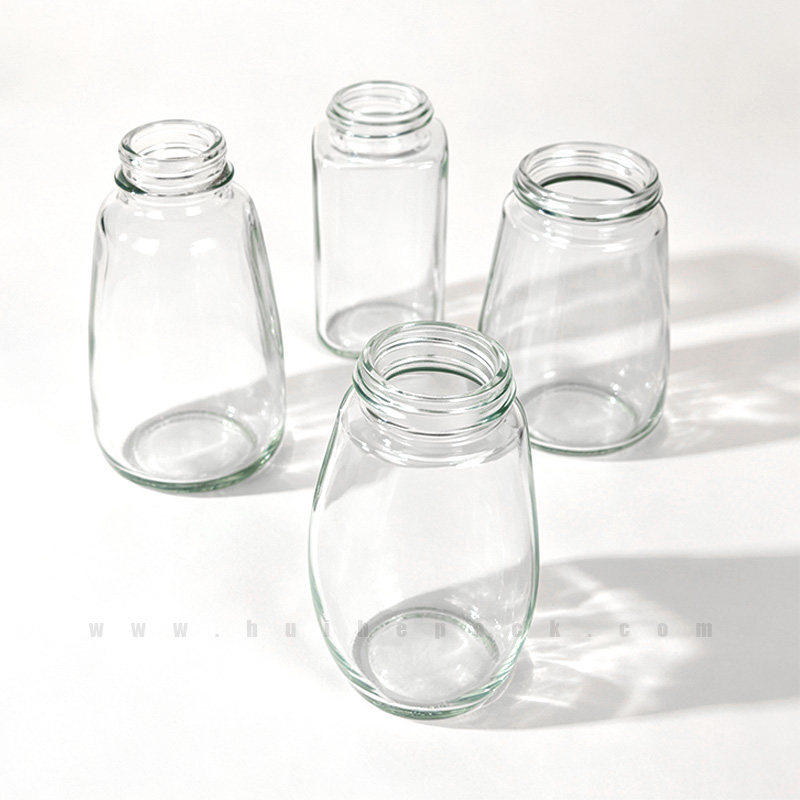
Round jars can suit wraparound labels and common handling systems. Square and rectangular profiles provide distinct front panels and can help organize an assortment, although corners and shoulder transitions need attention during label trials. A straight-sided body usually gives designers a more predictable printable area than a strongly tapered profile.
Check the maximum outside dimensions, not just the stated capacity. Include the fitted cap when assessing shelf height, carton dividers and display trays. Evaluate stability when the jar is almost empty and grip when hands are wet. A decorative shape should earn its place through useful handling and recognizable presentation, rather than requiring excessive secondary packaging.
Make the mouth and dispensing system work together
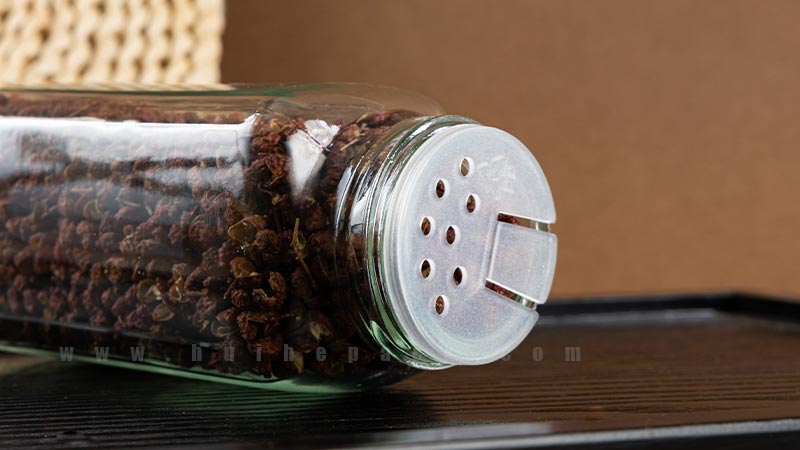
The neck finish determines which cap can fit; the mouth opening determines how the product enters and leaves. These are related but different specifications. A cap with a similar measured diameter may have the wrong thread geometry or seating height. Request matching finish drawings and samples instead of approving components from nominal diameter alone.
For shakers, select hole size and pattern using the actual blend. An insert that works with fine paprika may block with oregano. Dual-opening designs can offer shake and spoon access, but both positions need to close securely. Grinder jars require a matched grinding mechanism and neck connection. Do not assume that an ordinary screw-cap jar can accept a grinder head.
Our bulk spice shaker options are a starting point for comparing dispensing formats. Ask the packer to check insert application, removal resistance and cap operation after normal distribution handling.
Evaluate the complete moisture and aroma barrier
Glass provides a strong barrier through the container wall, making it useful for ingredients whose quality depends on keeping moisture and unwanted odors out. The complete pack still depends on the closure, liner, insert and sealing surfaces. Calling a jar airtight without assessing those components can hide the most likely weak point.
Request a closure recommendation for the actual product and storage conditions. Consider repeated opening, powder on the sealing land and the effect of humid kitchens. A shaker insert is a dispensing component; it should not automatically be treated as the primary seal. Where a separate membrane is proposed, confirm compatibility with the jar and cap and validate the application process.
Clear glass displays ingredient color well. If the formulation is light-sensitive, compare colored glass, labels or secondary packaging using product-specific storage tests. Amber is a useful option to investigate, but the finished pack should not carry an untested shelf-life claim. The label should also communicate the storage conditions established for the food.
Select lids for protection and everyday handling
Metal and plastic screw caps, grinder tops and other dispensing closures offer different combinations of appearance and use. The visible outer material does not establish food-contact suitability on its own. The liner and any component that contacts the seasoning need appropriate documentation for the intended market and conditions.
Evaluate opening effort with filled samples and check resealing after multiple uses. A cap that looks premium but becomes slippery or difficult to grip may disappoint customers. If tamper evidence is required, choose a compatible band or seal and test that it survives shipping while remaining straightforward to remove. Review available food jar accessories as part of the complete specification.
Approve decoration and distribution before ordering
Reserve enough space for the product name, net quantity, required ingredient information and traceability details. Test label readability on a filled jar: a dark seasoning can change the contrast of transparent artwork. Confirm where date or batch coding will sit and whether that area remains accessible on the filling line.
Shipping trials should use the final cap, label and carton. Inspect for chipped finishes, loose closures, scuffed decoration and product trapped around inserts. For mixed gift sets, check contact points between neighboring jars. A visually successful sample is only the first step; the production pack must also tolerate the agreed distribution route.
A practical buying checklist
- Record each ingredient, target net weight and verified fill volume.
- Approve the jar drawing, neck finish and compatible closure together.
- Test the insert or grinder with representative product.
- Confirm food-contact documentation and applicable market requirements.
- Evaluate seal integrity, repeated opening and storage performance.
- Approve decorated samples, coding position and final shipping cartons.
- Agree tolerances, inspection criteria and change-control responsibilities.
Frequently asked questions
Can one jar work for every spice?
One body style can support a coherent range, but net weights and dispensing inserts may need to vary. Test powders, flakes and whole ingredients separately before standardizing.
Is a wider mouth always better?
A wider mouth can improve spoon access and filling, but dispensing control and closure availability also matter. Choose the opening around how customers will use the seasoning.
How should buyers compare quotations?
Compare the complete pack: glass, cap, liner, insert, decoration, protective carton and approved quality requirements. A cheaper empty jar can become more expensive if it creates filling losses or requires a different closure.
Build your spice jar specification with HUIHE PACK
Share your ingredient types, target weights, dispensing preferences and destination market when discussing a project with HUIHE PACK. Start with suitable food jar formats, then confirm the complete pack through samples and filling trials. That process creates a more reliable decision than selecting a jar from appearance or capacity alone.
Technical reference: Gerresheimer’s overview of glass packaging for spices illustrates the range of glass colors, shapes and closure formats available for this application.