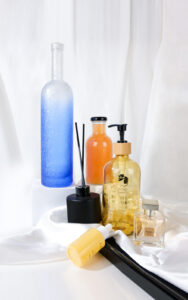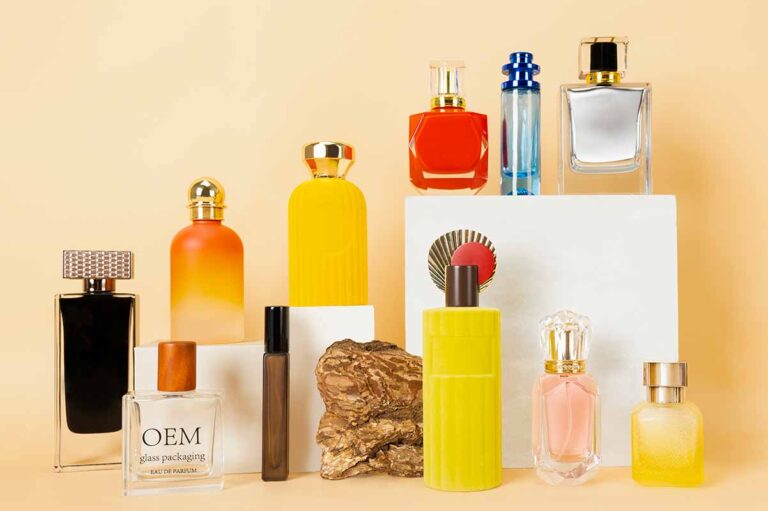
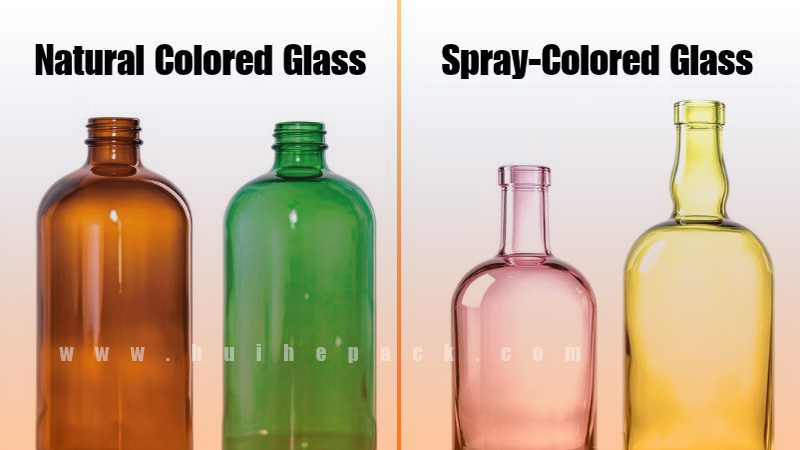
When choosing colored glass packaging, you have more options than simply picking a bottle color. The way that color is applied can affect the bottle’s appearance, durability, light protection, and customization options.
Two common methods are natural glass coloring and spray coating. While both can create attractive colored glass bottles and jars, they work in very different ways.
So, which one should you choose for your packaging project? In this guide, we’ll compare natural colored glass vs. spray-colored glass, explain their key differences, and help you find the right option for your products and brand.
What Is Natural Colored Glass?
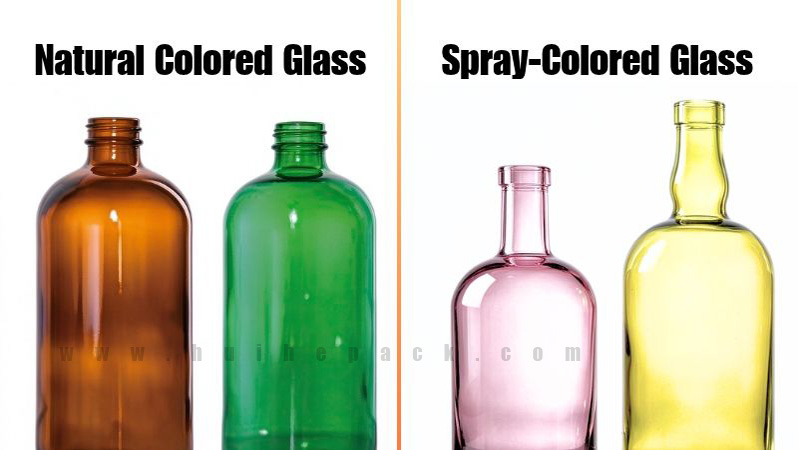
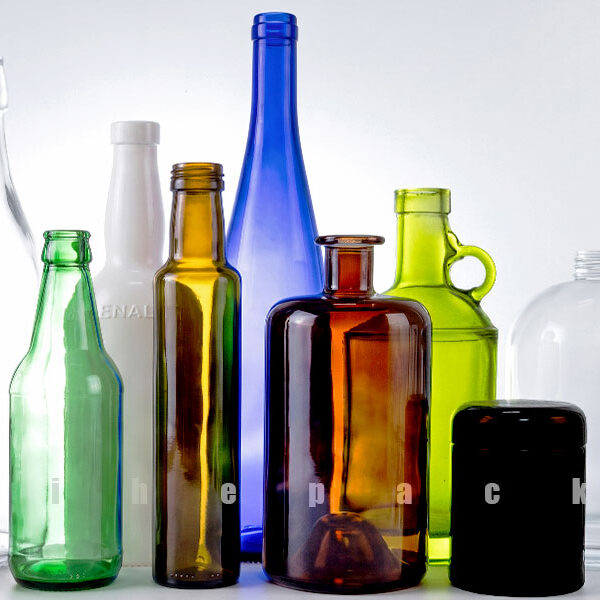
Natural colored glass, also known as body-colored or mass-colored glass, gets its color during the glass manufacturing process. Colorants are added to the raw glass materials before melting. Once the mixture melts at high temperatures, the color becomes part of the glass itself.
This means the color runs through the entire glass wall, rather than sitting on the surface.
Common examples include:
- Amber glass: Often used for essential oils, pharmaceutical products, and beverages that need some protection from light.
- Blue glass: A popular choice for cosmetic, fragrance, and specialty packaging.
- Green glass: Common in food, beverage, and personal care packaging.
- UV violet glass: Used for premium products that require a distinctive appearance and specific light-filtering properties.
- Opal glass: Also known as milk glass, opal glass has a soft white, opaque, or semi-opaque appearance. It is a popular choice for skincare, cosmetic, and personal care packaging, especially when you want a clean, elegant look.

What Is Spray-Colored Glass?
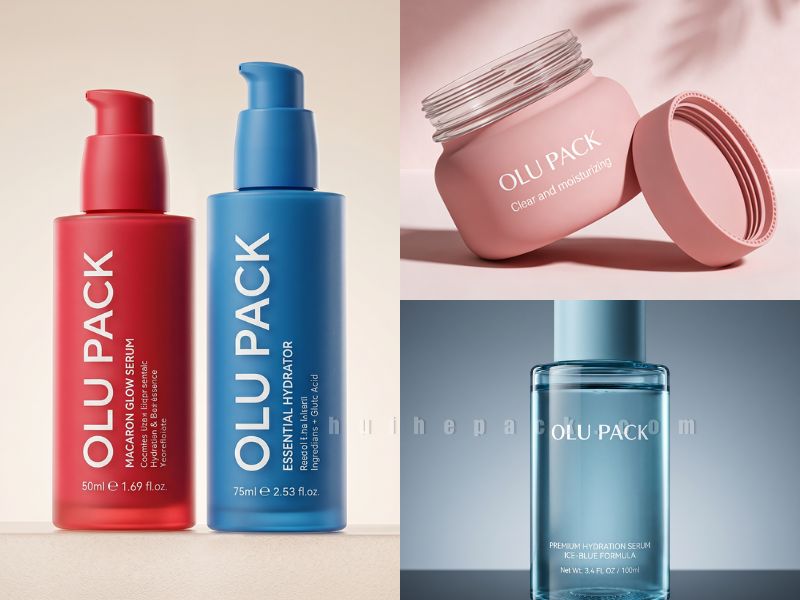
Spray-colored glass is made by applying a colored coating to the surface of an already formed glass bottle or jar. The base container is usually clear glass, although other glass colors can also be used.
The basic spray coating process includes:
- Cleaning the glass surface to remove dust, oil, and other impurities.
- Applying the selected coating through a spray system.
- Drying or curing the coating according to its requirements.
- Inspecting the finished bottle for color consistency and surface quality.
Advantages of Spray-Colored Glass
More color choices: You can choose from a wide range of colors, including custom shades that are difficult to produce through natural glass coloring.
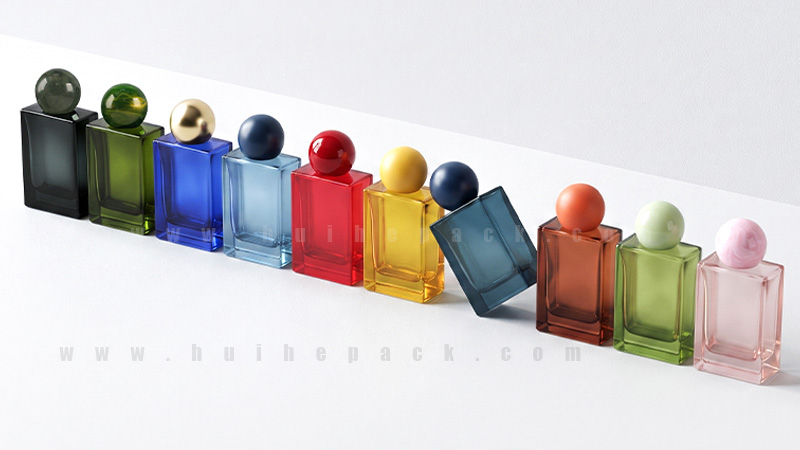
Flexible finishes: Spray coating can create matte, glossy, frosted, metallic, and gradient effects.
Easier color customization: If you need to match your brand’s signature color or a specific Pantone shade, spray coating usually offers more flexibility.
More design possibilities: You can use full-body spraying, partial spraying, or combine different finishes to create a distinctive look.
Another advantage is that you can often customize the appearance of an existing glass bottle without changing its original glass formulation or mold.
For cosmetic and fragrance brands, spray-colored glass offers plenty of room for creative packaging designs.
Natural Colored Glass vs. Spray-Colored Glass: Key Differences
Both methods can produce attractive glass packaging, but their performance and customization options are different.
| Comparison | Natural Colored Glass | Spray-Colored Glass |
| Coloring method | Color added during glass melting | Color applied to the glass surface |
| Color position | Throughout the glass wall | On the coated surface |
| Color options | More limited | Wide range of choices |
| Customization | Requires glass color production | Flexible color and finish options |
| Scratch resistance | Color cannot peel or rub off | Coating may scratch or wear |
| Surface finish | Depends on the glass itself | Matte, glossy, metallic, frosted, etc. |
| UV protection | Depends on glass color and composition | Depends on coating performance |
| Cost | Depends on production volume and glass formulation | Depends on coating, finish, and order quantity |
Here are three differences worth considering before you place an order.
Durability
Natural colored glass has an advantage when it comes to surface wear because its color is part of the glass itself.
Spray-colored glass has an additional coating layer, so its durability depends on the coating material, application process, and curing quality. A well-made spray coating can perform well in normal use, but it may be more vulnerable to scratches, friction, or chemical exposure.
If your packaging will be handled frequently or reused, ask your supplier about abrasion resistance and coating adhesion tests.
Light Protection
Don’t assume that every colored glass bottle offers the same level of UV protection.
Amber glass is often chosen for light-sensitive products because it can block a significant amount of UV light. Other colors may offer different levels of protection.
Spray-colored glass may also reduce light transmission, depending on the coating. However, its decorative color alone does not prove that it provides enough UV protection.
If you package essential oils, skincare formulas, or other light-sensitive products, ask for light transmission test data before making your decision.
Color Customization
This is where spray coating stands out.
Natural glass coloring requires adjustments to the glass formulation and production process. It may take more planning to achieve a specific shade.
With spray coating, you have more freedom to match brand colors, create special finishes, and develop seasonal packaging designs.

Which Type of Colored Glass Is Best for Your Packaging?
The right choice depends on what you put inside the bottle and how you want your packaging to look and perform.
Essential Oils and Light-Sensitive Products
If your product is sensitive to light, natural amber glass is often a practical choice. It offers built-in color and can provide useful light protection.
For products with strict light protection requirements, always check the actual UV and visible light transmission data.
Skincare and Cosmetic Packaging
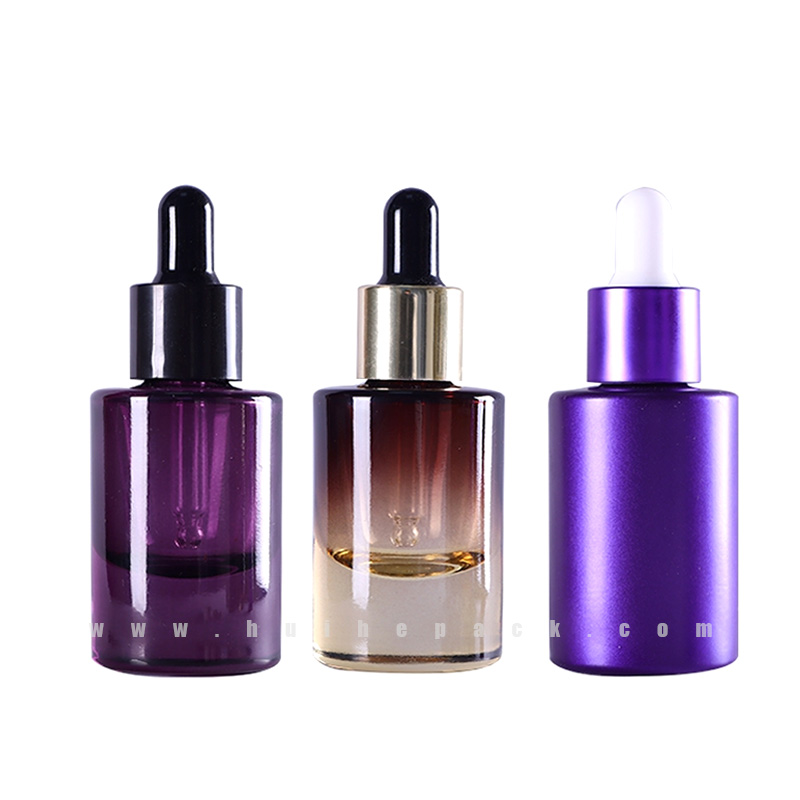
If you want pastel colors, matte finishes, or a specific brand color, spray-colored glass is worth considering.
It works well for facial serum bottles, lotion bottles, cream jars, and other cosmetic packaging where appearance plays an important role.
Perfume and Fragrance Packaging
Perfume packaging often focuses on visual appeal and brand identity. Spray coating gives you more freedom to create metallic finishes, gradient colors, and custom shades.
You can also combine natural colored glass with surface decoration for a more distinctive look.
Food and Beverage Packaging
For food and beverage products, natural colored glass is often a straightforward choice, especially when you want durable color without an external coating.
If you prefer spray-colored packaging, make sure the coating is suitable for the intended use and complies with relevant packaging requirements.
You don’t always have to choose just one method. Combining naturally colored glass with partial spray coating can also create attractive packaging with a more individual style.
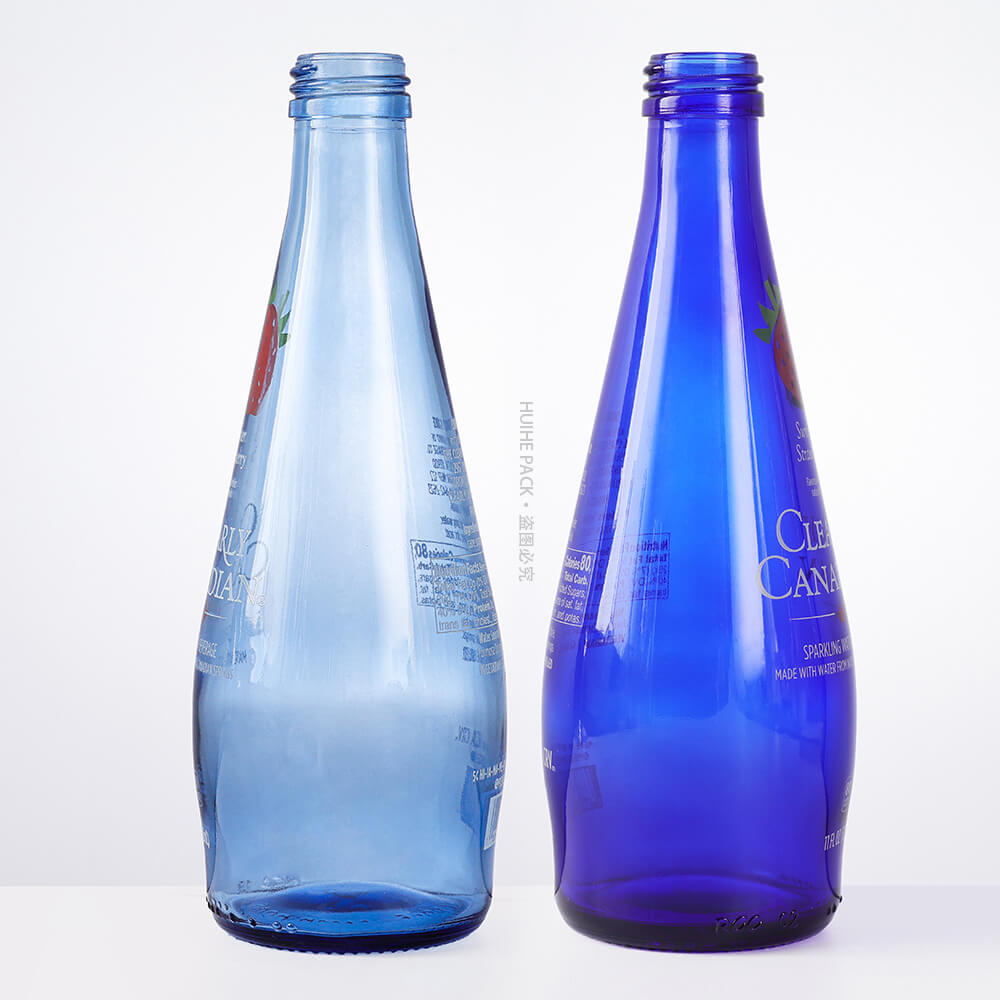

What Should You Consider Before Ordering?
Before sourcing custom colored glass bottles or jars, look beyond the initial appearance. A few practical details can make a big difference to your final packaging.
1. Minimum Order Quantity (MOQ)
Custom natural glass colors may require specific production arrangements and larger order quantities. Spray coating can sometimes be more flexible because you can use existing bottle designs.
However, actual MOQ requirements depend on the bottle, color, coating, and manufacturer’s production setup.
2. Color Consistency
Ask your supplier how they control color differences between production batches. Request a physical sample and confirm the acceptable color variation before mass production.
3. Coating Durability
For spray-colored bottles, check coating adhesion, scratch resistance, and chemical resistance. This is especially important for products that may come into contact with oils, alcohol-based formulas, or cleaning agents.
4. Light Protection
If your product is light-sensitive, request actual light transmission data instead of relying on the bottle’s appearance.
5. Total Packaging Cost
Compare the full cost, including the glass container, color customization, surface finishing, production quantity, and transportation. The cheapest bottle price doesn’t always mean the best overall value.
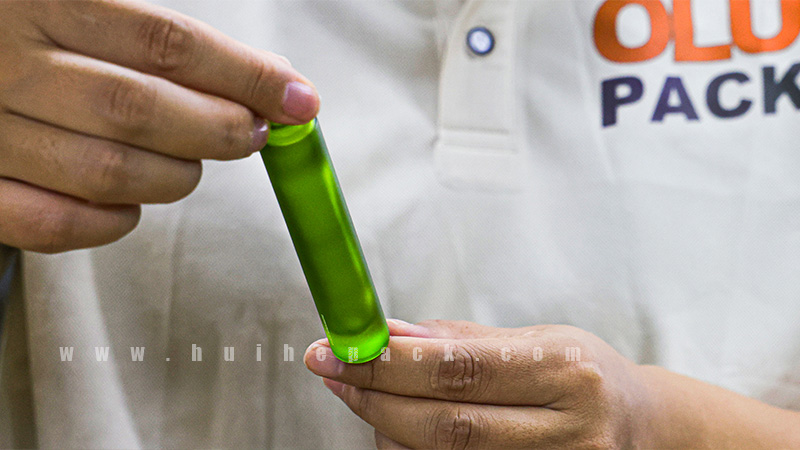
How to Tell Natural Colored Glass from Spray-Colored Glass?
If you’re reviewing packaging samples, a few visual checks can help you identify the coloring method.
- Check the inside of the bottle: Natural colored glass usually has the same color inside and outside. Spray-colored glass may have a clear or differently colored interior.
- Inspect the bottle opening and base: Look for coating edges or areas where the spray finish may not fully cover the glass.
- Examine the surface: A spray coating may have a different texture or finish from the underlying glass.
These checks are useful for an initial assessment, but they are not always conclusive. Some spray-coated bottles have carefully finished surfaces, so you should ask your supplier to confirm the manufacturing process when it matters.
Conclusion: Choose the Right Glass Coloring Method for Your Brand
Natural colored glass and spray-colored glass both have a place in modern packaging. Natural coloring gives you lasting color and useful functional benefits, while spray coating offers greater freedom in color matching and surface design.
Before making a decision, consider your product’s light protection needs, expected handling conditions, brand style, and order quantity.
At HUIHE PACK, we understand that the right packaging needs to balance appearance, function, and cost. Whether you’re looking for naturally colored glass bottles or custom spray-colored glass packaging, choosing the right coloring method is a good first step toward building packaging that works for your brand.
Frequently Asked Questions
Is natural colored glass better than spray-colored glass?
Neither is always better. Natural colored glass offers permanent color and good resistance to surface wear. Spray-colored glass provides more flexibility in color matching and decorative finishes. Your choice depends on your product and packaging goals.
Does spray-painted glass scratch or peel?
It can, depending on the coating material and manufacturing quality. Proper surface preparation and curing help improve coating adhesion and durability.
Does spray-colored glass provide UV protection?
Not necessarily. Some coatings can reduce light transmission, but decorative color alone does not guarantee UV protection. Ask for test data if light protection is important.
Can spray coating match a specific Pantone color?
Yes, spray coating can often be customized to match a Pantone reference. However, the final result may vary depending on the base glass color, coating, and surface finish. Always approve a physical sample before mass production.
Which type of colored glass is more cost-effective?
It depends on your order quantity, color requirements, and finishing details. Spray coating may be more practical for certain custom colors, while natural colored glass can be a better fit for standard colors and larger production runs.