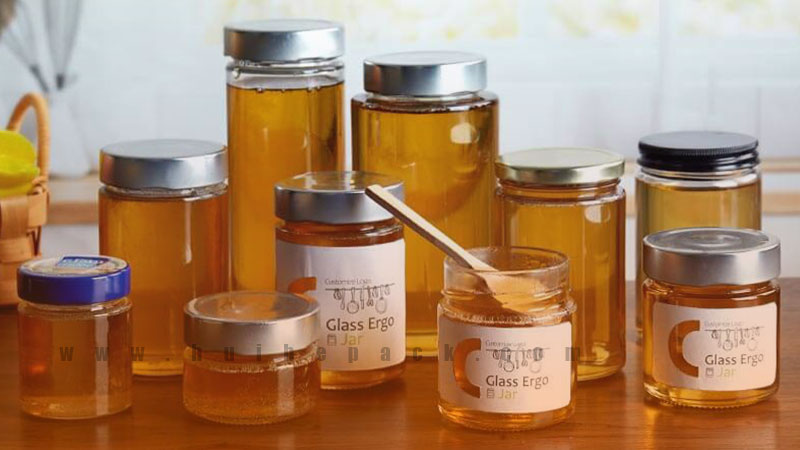
Choosing the right honey jar size is about more than filling a container. The size of your glass jar affects how customers perceive your product, how much it costs to ship, how much space you have for branding, and even how efficiently your products are packed for export.
Whether you sell raw honey at local farmers’ markets, supply supermarket chains, or build a premium private-label brand, selecting the right glass honey jar helps you create packaging that fits both your market and your budget.
For wholesale buyers, choosing the right capacity also reduces packaging waste, improves pallet utilization, and simplifies inventory management. A jar that works well for one market may not be the best choice for another, which is why understanding standard honey jar sizes is an important step before placing a large order.
In this guide, you’ll learn the most common honey jar sizes, their typical dimensions, recommended applications, and practical tips from a glass packaging manufacturer. If you’re also comparing different jar styles, explore our Honey Jar Collection to see available wholesale options before choosing a size.
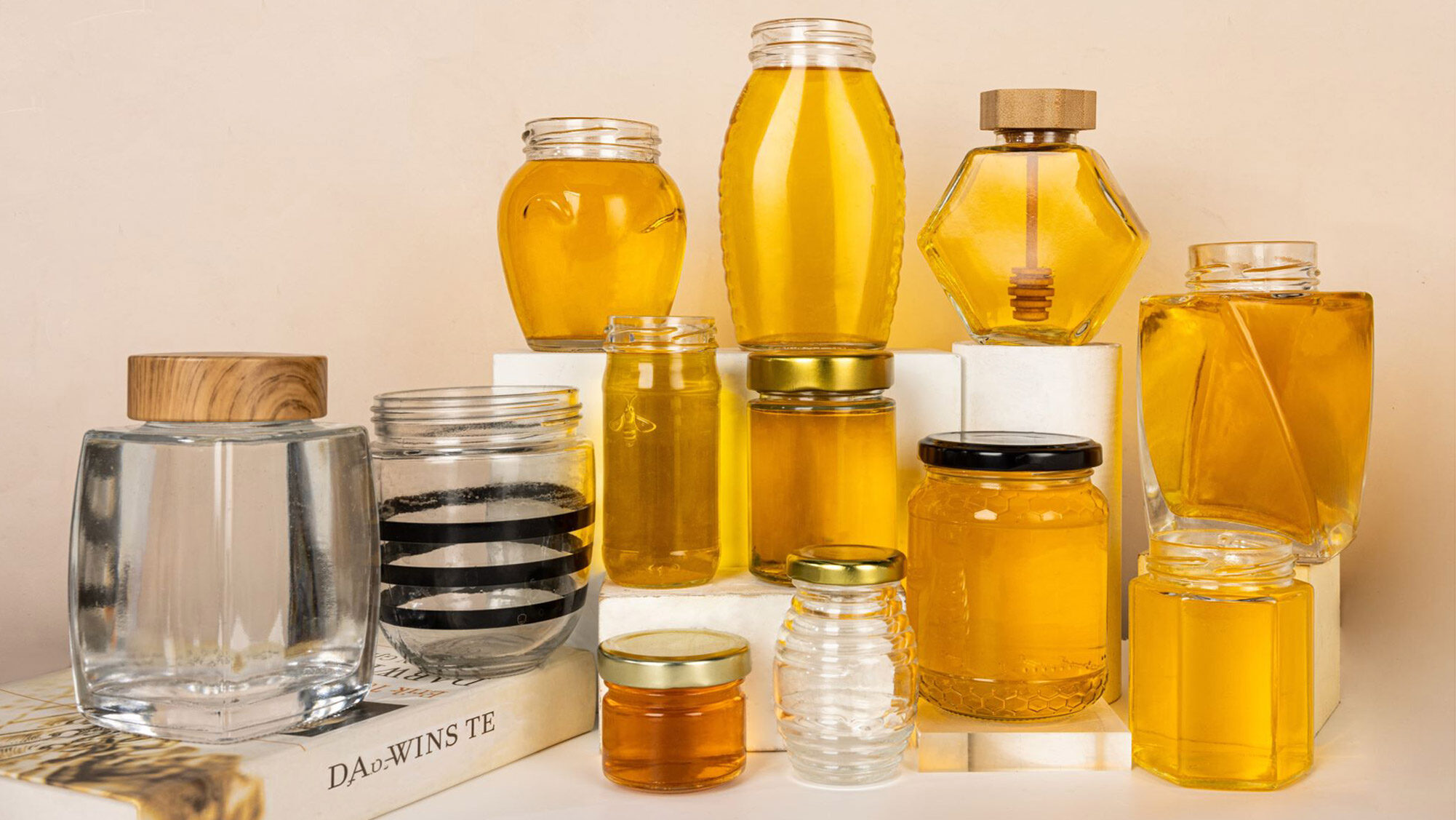
Standard Honey Jar Sizes (Complete Size Chart)
There is no single “best” honey jar size. The right choice depends on your target customers, sales channel, product positioning, and local market preferences.
Smaller jars are often used for gift packaging, premium honey, and promotional samples, while medium and large jars remain the most popular options for everyday retail and wholesale distribution.
The table below shows the most widely used glass honey jar sizes in international markets.
| Jar Capacity | Approx. Honey Weight* | Common Applications | Popular Markets |
|---|---|---|---|
| 30 ml | 40 g | Wedding favors, tasting samples | Europe, Japan |
| 45 ml | 60 g | Mini gift jars, hotel breakfast | Japan, Korea |
| 80 ml | 110 g | Premium gift sets | Global |
| 100 ml | 140 g | Retail samples, specialty honey | Global |
| 180 ml | 250 g | Farmers’ markets, local brands | North America |
| 250 ml | 340 g | Daily retail sales | Europe |
| 375 ml | 500 g | Best-selling family size | Worldwide |
| 500 ml | 700 g | Supermarkets, online stores | Worldwide |
| 720 ml | 1 kg | Bulk retail, food service | Worldwide |
| 1000 ml | 1.4 kg | Wholesale supply, commercial use | Global |
*Honey weight varies slightly depending on moisture content and density.
Although these are considered standard capacities, many honey brands customize jar height, shoulder shape, neck finish, or decoration to create a unique shelf appearance while keeping filling equipment compatible.
Honey Jar Size Comparison
Choosing between different capacities becomes much easier when you understand how consumers typically use each size.
Mini Honey Jars (30–100 ml)
Mini honey jars are designed for sampling rather than daily use. They are widely used for wedding favors, hotel breakfasts, corporate gifts, promotional events, and premium gift boxes.
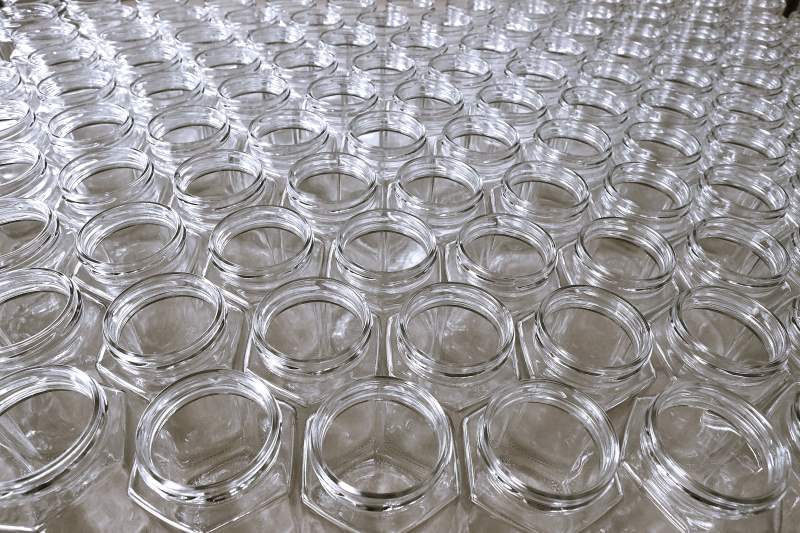
Because these jars are compact, brands often invest in decorative lids, customized labels, and premium printing to create a luxury presentation. Hexagon jars are particularly popular in this size range because their distinctive shape immediately attracts attention.
If your brand focuses on gift packaging, premium Manuka honey, or artisan products, small jars provide excellent perceived value while keeping packaging costs relatively low.
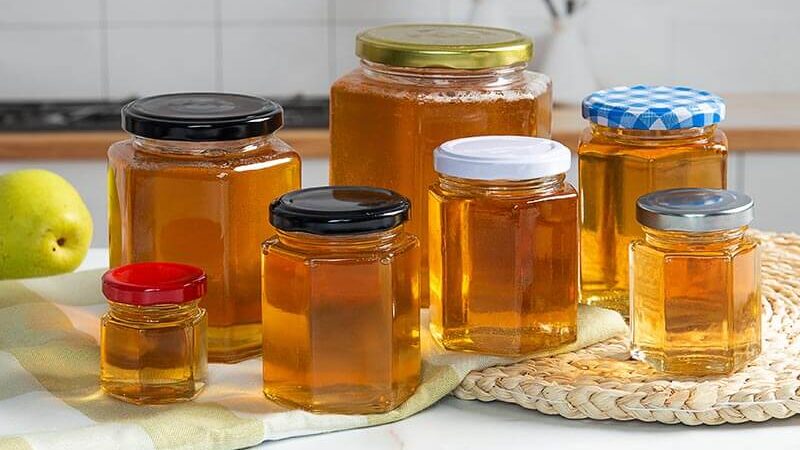
Medium Honey Jars (180–375 ml)
Medium-sized jars are the most common choice for retail packaging.
They offer enough honey for regular household use without appearing oversized on store shelves. This capacity range is also ideal for online sales because it balances product value with shipping costs.
Among all available options, the 375 ml honey jar remains one of the most popular choices worldwide. It provides approximately 500 g of honey, making it familiar to consumers across Europe, Australia, and many export markets.
For many new honey brands, starting with medium-sized jars allows you to serve both retail customers and wholesale distributors using a single packaging format.
Large Honey Jars (500–1000 ml)
Large honey jars are designed for customers who buy honey regularly or in larger quantities.
These sizes are commonly supplied to supermarkets, restaurants, bakeries, food manufacturers, and wholesale distributors. Larger capacities reduce packaging material per kilogram of honey and often lower transportation costs over high-volume shipments.
They also provide more space for product information, nutritional facts, and brand storytelling, making them suitable for export markets that require multilingual labels.
Many commercial buyers combine 500 ml retail jars with 1 kg wholesale jars to serve different customer groups while maintaining a consistent brand image.
Honey Jar Dimensions
Capacity alone doesn’t tell the whole story. Two jars with the same volume may have very different heights, diameters, and neck finishes depending on their shape.
These dimensions affect filling equipment, shipping cartons, pallet efficiency, and label design, so they’re just as important as the jar’s capacity when selecting packaging.
Below are typical dimensions for standard round and hexagon glass honey jars. Actual specifications may vary slightly between manufacturers.
| Capacity | Approx. Height | Approx. Diameter | Common Neck Finish |
|---|---|---|---|
| 45 ml | 55–60 mm | 45–50 mm | Twist-Off |
| 100 ml | 70–75 mm | 52–56 mm | Twist-Off |
| 180 ml | 82–90 mm | 60–65 mm | Twist-Off |
| 250 ml | 95–105 mm | 68–72 mm | Twist-Off |
| 375 ml | 110–120 mm | 75–80 mm | Twist-Off |
| 500 ml | 135–145 mm | 80–85 mm | Twist-Off |
| 720 ml | 160–170 mm | 90–95 mm | Twist-Off |
| 1000 ml | 180–200 mm | 98–105 mm | Twist-Off |
Before finalizing your packaging, it’s a good idea to request technical drawings or production samples. Even a small difference in diameter can affect label application, carton layout, or compatibility with automated filling lines.
If you’re considering different jar shapes, compare the dimensions of Hexagon Honey Jars alongside traditional round jars to find the best fit for your production process and brand positioning.

How to Choose the Right Honey Jar Size
The best honey jar size depends on who you’re selling to, where your products are sold, and how your customers typically use honey. Instead of choosing the largest or smallest option, think about the buying habits of your target market.
Here are a few practical recommendations based on common commercial applications.
For Gift Packaging
If your honey is sold as a premium gift or included in seasonal gift boxes, smaller jars usually create a better presentation.
Recommended sizes:
- 30 ml
- 45 ml
- 80 ml
- 100 ml
These compact jars are popular for artisan honey, wedding favors, hotel amenities, and holiday collections. Decorative finishes such as embossing, silk screen printing, and gold lids can further increase their shelf appeal.
For Retail Stores
Retail customers usually look for a balance between price and quantity. Medium-capacity jars meet this expectation while remaining easy to carry and store.
Recommended sizes:
- 180 ml
- 250 ml
- 375 ml
These sizes dominate supermarket shelves and specialty food stores because they suit everyday household use and provide enough label space for branding, certifications, and product information. Many brands also pair these jars with customized closures and premium decoration available through Custom Honey Jar Packaging Solutions to create stronger shelf impact.
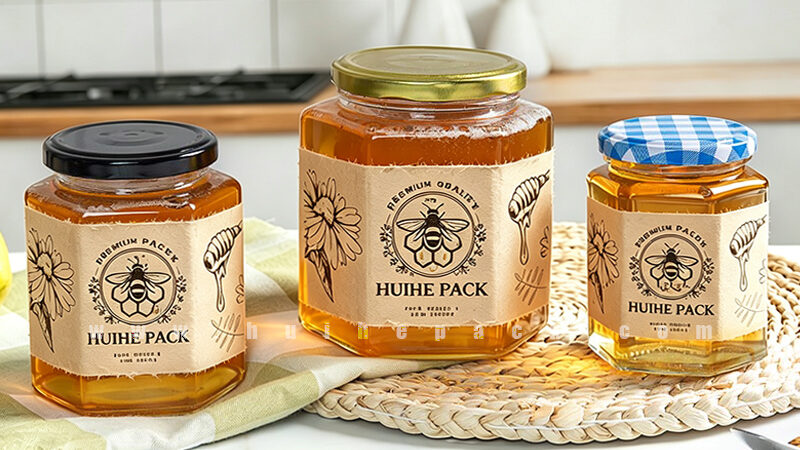
Honey Jar Sizes by Sales Channel
Where you sell your honey is just as important as what you sell. Different sales channels have different packaging expectations, and choosing the right glass honey jar size can improve both customer satisfaction and logistics efficiency.
| Sales Channel | Recommended Sizes | Why They Work |
|---|---|---|
| Farmers’ Markets | 250 ml, 375 ml | Easy for local shoppers to carry and compare |
| Supermarkets | 375 ml, 500 ml | Standard retail sizes with broad consumer acceptance |
| Online Stores | 250 ml, 375 ml | Lower shipping costs and reduced risk of damage |
| Gift Shops | 45 ml, 80 ml, 100 ml | Attractive presentation and premium appearance |
| Hotels & Restaurants | 30 ml, 45 ml | Single-serving portions for breakfast service |
| Wholesale & Food Service | 720 ml, 1000 ml | Better value for high-volume buyers |
If you’re planning to expand into multiple markets, offering several standard sizes can help you meet different customer needs without redesigning your entire packaging line.
Round vs. Hexagon Honey Jars: Which Shape Should You Choose?
Size is only one part of the decision. The shape of your jar also affects branding, shelf visibility, packing efficiency, and customer perception.
Round Honey Jars
Round jars remain the most widely used option worldwide. They are compatible with most filling lines, labels, and packaging equipment.
Advantages include:
- Efficient manufacturing
- Easy label application
- Excellent stacking performance
- Familiar appearance for consumers
Round jars are suitable for almost every type of honey, from local retail products to large-scale export packaging.

Hexagon Honey Jars
Hexagon jars immediately stand out on store shelves. Their geometric design creates a premium appearance while highlighting the natural beauty of honey.
They’re commonly used for:
- Premium honey
- Gift packaging
- Organic brands
- Artisan products
- Seasonal collections
Although hexagon jars may require customized labels, many brands consider the stronger shelf impact well worth the investment. You can explore different capacities and styles in our Hexagon Honey Jar Collection.
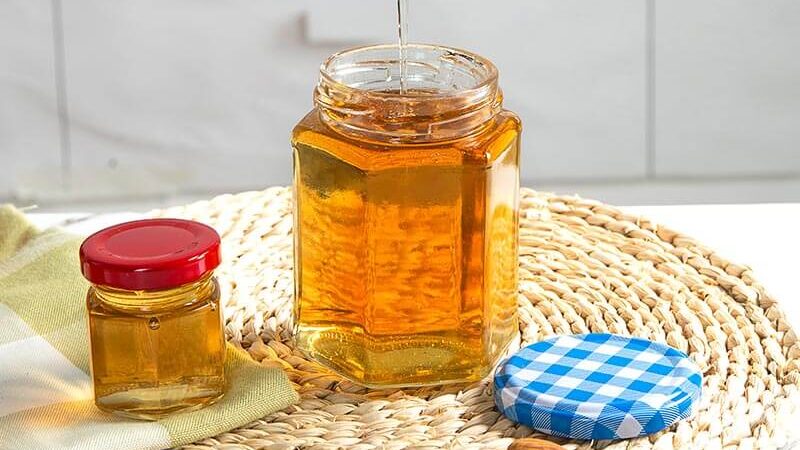
Honey Weight vs. Jar Capacity
One common misunderstanding is that a jar’s volume is the same as the weight of the honey it holds.
In reality, honey is denser than water, so a 250 ml jar does not contain exactly 250 g of honey. Depending on the honey variety and moisture content, the actual weight is usually higher.
The table below provides approximate conversions used by many honey producers.
| Jar Capacity | Approximate Honey Weight |
|---|---|
| 100 ml | 140 g |
| 180 ml | 250 g |
| 250 ml | 340 g |
| 375 ml | 500 g |
| 500 ml | 700 g |
| 720 ml | 1 kg |
| 1000 ml | 1.4 kg |
These figures are intended as practical references. Actual filling weights should always be verified through product testing because floral source, moisture content, and temperature can slightly affect honey density.
Understanding this relationship helps you choose the correct honey jar size, calculate shipping weights more accurately, and comply with local labeling regulations.
Choosing the Right Lid for Different Honey Jar Sizes
A high-quality jar deserves an equally reliable closure. The right lid protects freshness, prevents leakage during transportation, and improves the customer experience.
For most glass honey jars, metal twist-off lids remain the industry standard because they provide an airtight seal and are suitable for pasteurized honey products.
Here are some common options:
| Lid Type | Best For |
|---|---|
| Twist-Off Lid | Most retail honey jars |
| Lug Lid | High-speed filling lines |
| Deep Twist-Off Lid | Larger-capacity jars |
| Gold or Black Metal Lid | Premium branding |
| Custom Printed Lid | Private label packaging |
Many honey brands also customize lid colors with their logo or brand name to create a stronger visual identity. When paired with customized decoration and labeling, even a standard glass honey jar can become a distinctive retail product.
If you’re sourcing complete packaging rather than jars alone, consider working with a supplier that can provide matching lids, decoration, and packaging services together through Honey Packaging Solutions. This helps ensure compatibility across every component while simplifying your purchasing process.
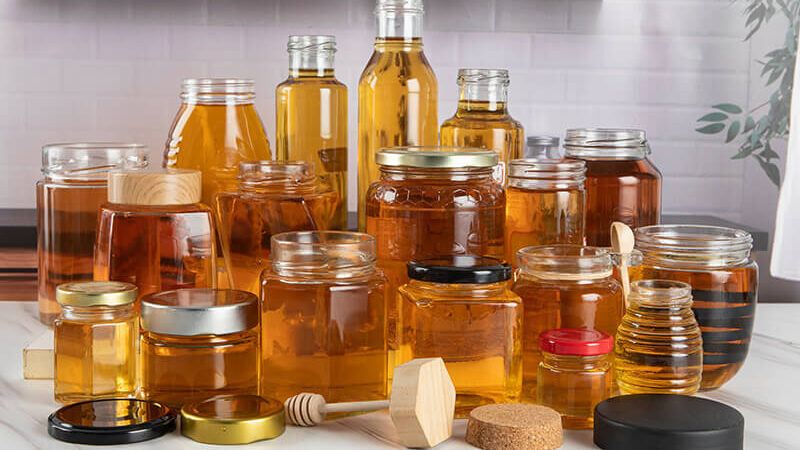
Label Size Recommendations for Different Honey Jar Sizes
Your label should fit the jar without covering too much of the glass. Customers like to see the natural color and clarity of honey, so leaving part of the jar visible can improve shelf appeal.
When planning your packaging, consider not only the front label but also the nutrition panel, barcode, QR code, and any certification marks required for your market.
| Jar Size | Recommended Front Label | Wrap Label | Best For |
|---|---|---|---|
| 45–100 ml | Small square or oval | Not recommended | Gift jars |
| 180–250 ml | Medium front label | Optional | Retail packaging |
| 375 ml | Large front label | Yes | Supermarkets |
| 500 ml | Large front label | Yes | Family-size products |
| 720–1000 ml | Full wrap label | Recommended | Wholesale and export |
For premium products, many brands also add a neck label, tamper seal, or metallic foil details to create a more refined appearance.
If you’re developing a private-label product, coordinating your labels with Custom Honey Jar Packaging Solutions can help ensure the artwork matches the jar shape and closure.
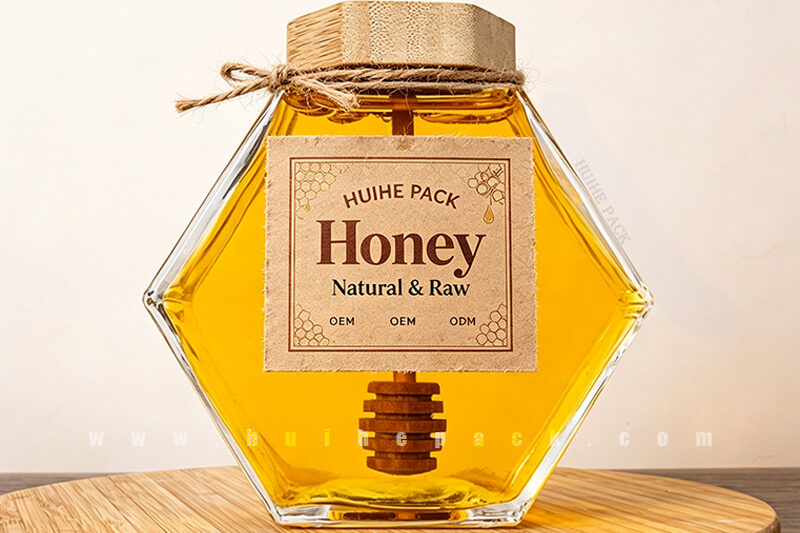
Wholesale Honey Jar Size Recommendations
Buying honey jars in bulk requires a different approach than purchasing small quantities for local sales. Besides appearance, you should consider production efficiency, shipping costs, warehouse storage, and long-term supply.
Here are some recommendations based on different business types.
For Startups
If you’re launching a new honey brand, it’s usually best to focus on one or two popular sizes.
Recommended sizes:
- 250 ml
- 375 ml
These capacities are widely accepted by consumers and help simplify inventory during the early stages of your business.
For Established Retail Brands
Brands selling through supermarkets or distributors often benefit from offering multiple capacities.
A typical product range includes:
- 250 ml for individual buyers
- 375 ml as the core retail product
- 500 ml for families
- 1 kg for value-conscious customers
This allows customers to choose according to their needs while maintaining a consistent brand image.
For Exporters
Export businesses should also consider pallet efficiency and container utilization.
Standard capacities such as 375 ml, 500 ml, and 720 ml are commonly used because cartons can be arranged efficiently during transportation, reducing shipping costs and minimizing breakage.
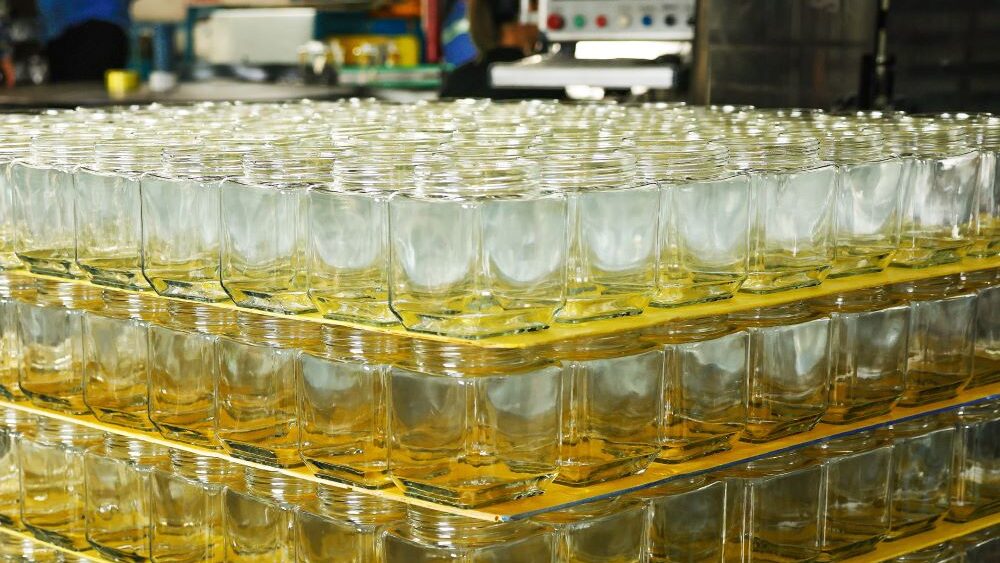
Working with an experienced Glass Jar Manufacturer also helps ensure consistent dimensions across production batches, making automated filling and packaging more reliable.
Common Mistakes When Choosing Honey Jar Sizes
Choosing the wrong honey jar size can increase costs and reduce your product’s competitiveness. Here are some common mistakes to avoid.
Choosing Capacity Without Understanding Your Market
A jar that sells well in one country may not perform as well in another.
For example, European buyers often prefer 250 ml and 500 g packaging, while North American consumers are more familiar with ounce-based sizes.
Always research your target market before finalizing your packaging.
Ignoring Shipping Costs
Larger jars reduce packaging material per kilogram of honey, but they also increase shipping weight.
Finding the right balance between retail appeal and logistics efficiency can significantly reduce overall costs.
Overlooking Label Space
Some small jars simply don’t provide enough room for mandatory product information.
Before selecting a jar, make sure there is adequate space for:
- Product name
- Ingredients
- Nutrition facts
- Country of origin
- Barcode
- Certifications
- Brand story
Selecting Style Over Function
Unique jar shapes attract attention, but they should also work well with your filling equipment, labels, cartons, and pallet layouts.
Choosing packaging that supports efficient production is just as important as creating attractive shelf appeal.
Forgetting Future Product Expansion
Many successful honey brands eventually introduce new flavors, organic lines, or gift collections.
Selecting a packaging family that includes multiple capacities helps maintain consistent branding as your product range grows.
Factory Insight: How HUIHE PACK Helps Honey Brands Choose the Right Jar Size
After supplying glass packaging to customers in different markets, HUIHE PACK has found that there isn’t one universal best honey jar size.
Instead, the most successful brands choose packaging based on their sales channel and customer expectations.
For example, many premium brands combine 100 ml gift jars with 375 ml retail jars and 720 ml family-size jars. This creates a complete product range while keeping the same design language across every package.
Export customers also tend to prioritize standard dimensions because they improve pallet loading, reduce transportation costs, and simplify warehouse management.
When developing a new project, HUIHE PACK works with customers to recommend suitable capacities, matching lids, decoration options, and custom packaging based on the product’s positioning rather than simply supplying glass containers.
Frequently Asked Questions
1. What is the most popular honey jar size?
The 375 ml honey jar is one of the most popular choices worldwide because it holds approximately 500 g of honey, making it ideal for everyday retail sales.
2.What size honey jar is best for gift packaging?
Small capacities between 45 ml and 100 ml are commonly used for wedding favors, holiday gifts, promotional events, and premium honey collections.
3.What size jar should I choose for supermarket sales?
Most supermarkets carry 250 ml, 375 ml, and 500 ml jars because these sizes match consumer buying habits and provide sufficient space for branding and product information.
4.Are glass honey jars better than plastic containers?
Glass jars preserve flavor, resist odors, are fully recyclable, and offer a more premium appearance. They are also preferred by many consumers purchasing natural and organic honey.
5.Can I customize honey jar sizes?
Yes. In addition to standard capacities, many manufacturers can develop custom molds for unique shapes, capacities, embossing, and decorative finishes depending on your order quantity.
6.Which honey jar shape sells best?
Round jars remain the industry standard because they are practical and cost-effective. However, hexagon honey jars are increasingly popular for premium products thanks to their distinctive appearance and strong shelf presence.
7.What type of lid is best for honey jars?
Metal Twist-Off lids are the most common option because they provide a reliable airtight seal, are easy to open, and work well with automated filling lines.
8.How do I choose the right honey jar for export?
Consider more than capacity. Look at carton dimensions, pallet utilization, container loading efficiency, local labeling requirements, and customer preferences in your destination market.
Conclusion
Choosing the right honey jar size is about finding the best balance between branding, customer expectations, production efficiency, and logistics.
Whether you’re packaging artisan honey in elegant 100 ml jars, supplying supermarkets with 375 ml retail products, or exporting 1 kg family-size containers, selecting the right glass honey jar can improve both product presentation and operational efficiency.
At HUIHE PACK, you’ll find a complete range of wholesale glass honey jars in standard and custom sizes, along with matching lids, decoration services, and OEM packaging solutions. From selecting the ideal capacity to developing a unique package for your brand, HUIHE PACK helps you create honey packaging that stands out in the market while meeting the practical needs of large-scale production.

References
To ensure accurate packaging recommendations and measurement references, the information in this guide aligns with recognized food packaging and labeling resources:
- U.S. Food & Drug Administration (FDA). Food Labeling Guide.
- National Honey Board. Honey Industry Resources.
- Codex Alimentarius. Standard for Honey (CXS 12-1981).
- Glass Packaging Institute. Benefits of Glass Packaging.