Choosing a glass jar for caviar starts with the product and filling process, not the appearance of the empty container. A jar that looks attractive may still be difficult to fill, poorly matched to its lid or inefficient to ship. For producers, importers and premium food brands, the right specification brings together portion size, product access, closure performance and a consistent retail presentation.
This guide explains how to compare glass jars for caviar packaging and turn a design preference into a purchasing specification. Whether you are launching a small retail portion or reviewing an existing pack, evaluate the complete jar-and-closure system with your actual product before committing to a bulk order.
1. Define the product and distribution route first
Write down the caviar or roe type, target net weight, processing method and intended sales channel. Fresh refrigerated caviar, pasteurized roe products and other seafood preparations do not necessarily share the same packaging requirements. A container suitable for one formulation should not automatically be approved for another.
Include the conditions between filling and consumption: refrigerated storage, transport duration, retail display, handling by distributors and the instructions given to customers. The jar supplier needs to know whether your process includes heat treatment or other steps that place demands on the glass, cap and liner. Your food safety team or process specialist should establish the necessary controls.
Glass packaging is not a substitute for a validated food safety plan. The FDA’s seafood hazards and controls guidance discusses temperature and other controls for seafood, including reduced-oxygen products. Do not assume that vacuum sealing makes caviar shelf-stable, or assign a shelf life solely because you selected glass.
2. Match usable capacity to your target net weight
Jar capacity is normally described as a volume, while caviar is commonly sold by weight. A 50 ml jar is not automatically suitable for a 50 g fill. Roe size, packing arrangement, liquid content and the intended headspace can change the volume needed. Establish the relationship through filling trials with the actual product rather than using a universal conversion.
Ask whether a quoted capacity is nominal, recommended fill capacity or brimful capacity. Brimful volume describes the container filled to the top; it does not establish the operating fill level. Define the headspace and fill height with your processing team, and record the acceptable variation. Check the finished pack after the actual closing and cooling steps, where applicable.
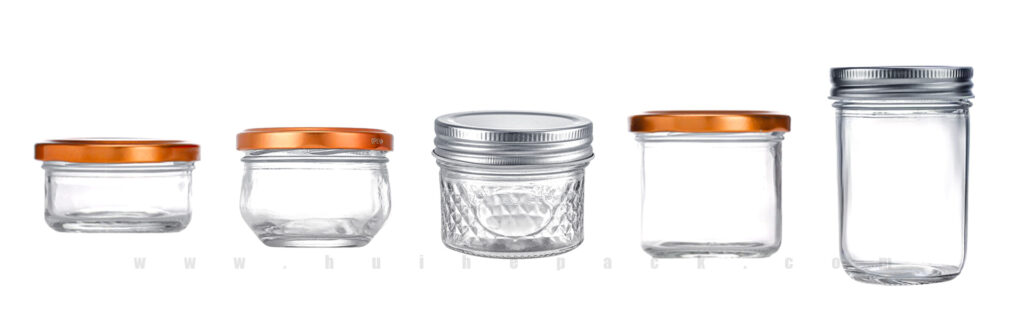
For a range of portion sizes, consider a coordinated family of jars instead of simply scaling one design. A smaller pack may need a proportionally wider opening for serving, while a larger foodservice pack may need a different height and handling approach. Request dimensional drawings and samples for every shortlisted size.
3. Choose a shape that supports filling and serving
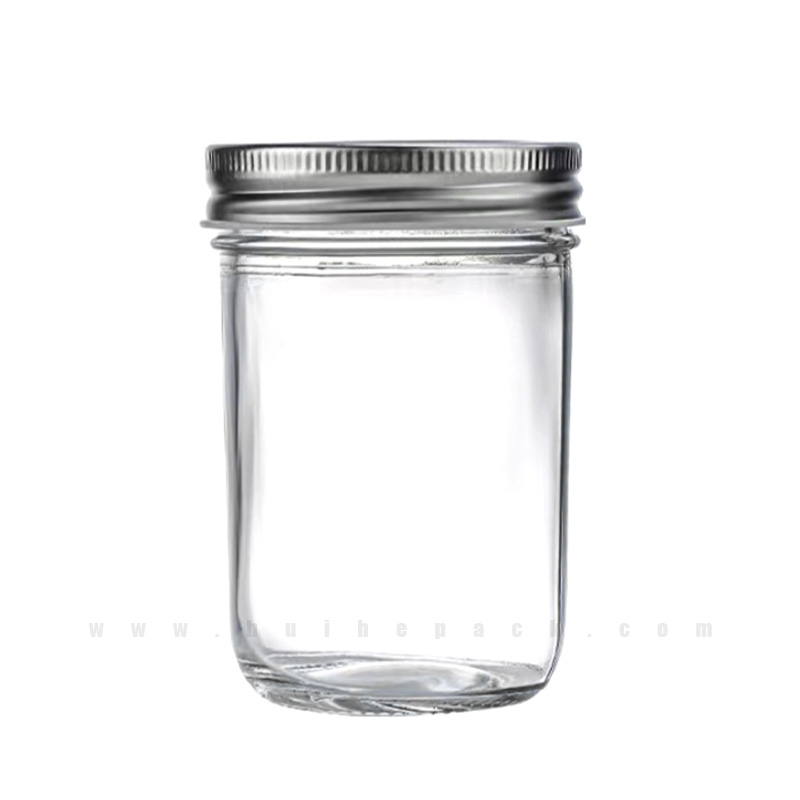
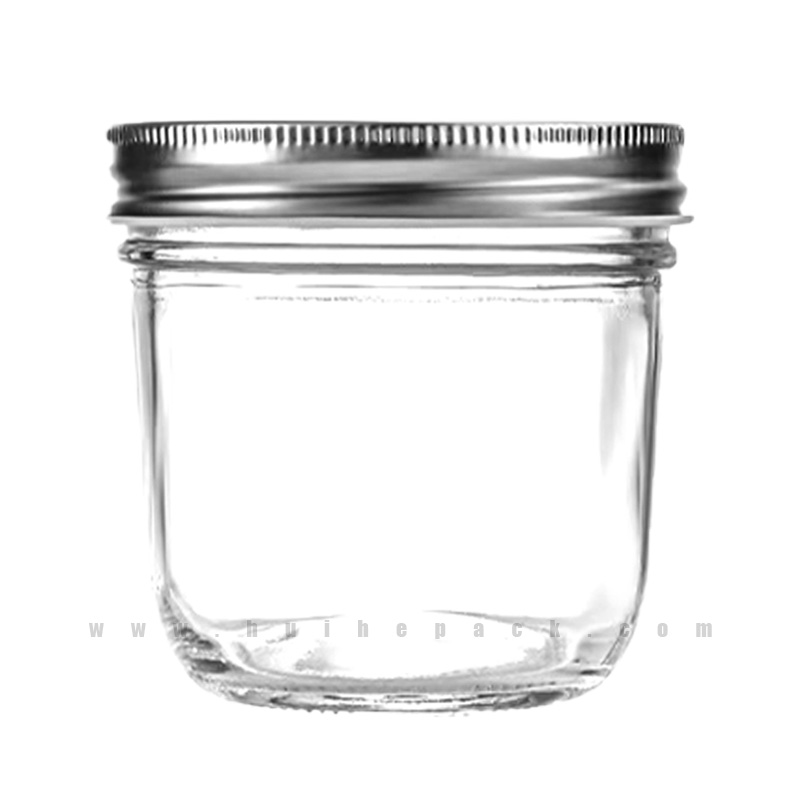
Low-profile jars can offer easy spoon access and a compact presentation. Taller jars may provide more label space, but the last portion can be harder to reach. Look at the internal shape, shoulder and base as well as the external silhouette. A wide opening can simplify controlled filling and serving, provided it works with the chosen closure.
Assess how the shape behaves on your line: stability on conveyors, compatibility with guides, gripper clearance and space under filling nozzles. Ask operators to handle samples rather than approving a jar from photographs alone. For a broader explanation of access and filling considerations, see our guide to wide-mouth versus narrow-mouth glass jars.
4. Specify the neck finish, cap and liner together
The closure is a critical part of the package. Matching an approximate lid diameter is insufficient: the neck finish, threads or lugs, sealing surface and cap specification must work together. Twist-off lug lids and continuous-thread screw caps are different systems and should not be treated as interchangeable.
Discuss the product composition and processing conditions with the closure supplier. The food-contact liner and internal coating must be appropriate for the intended application and destination market. Ask for the recommended closing procedure, relevant operating limits and a way to check closure consistency on your equipment. Avoid assuming that a decorative lid color indicates a particular liner or food-contact suitability.
Where appropriate, define tamper evidence and opening requirements separately from seal performance. A band or label may indicate opening, but it does not prove a leak-free seal. Test the finished package for the conditions your business actually encounters. Our food jar lids and accessories page provides a starting point for discussing matching closures.
5. Balance product visibility with light protection
Clear glass allows buyers to see the roe and supports an understated premium presentation. The glass body provides a strong barrier to gas and moisture transfer, but the complete package still depends on the closure and the condition of the sealing surfaces. A thick-looking jar is not evidence of a better seal.
Clear glass also allows light to reach the product. Evaluate retail lighting, display duration and transport exposure with your product team. Labels, sleeves or secondary cartons can be considered when visibility must be balanced with light protection. Any decorated or colored option should be assessed for its actual performance rather than marketed with unverified protection claims.
6. Check labeling and chilled handling
Reserve enough space for your brand, product identity, net quantity, storage instructions, lot code and other market-specific information. Have the responsible team confirm labeling requirements for the destination. Do not let a decorative wrap conceal information customers or distributors need to handle the product correctly.
Trial the label on the actual jar after refrigeration and normal handling. Condensation, curved surfaces and contact with outer packaging can affect adhesion and legibility. Check barcode readability, date coding and whether the artwork leaves the intended viewing window. Review the pack at its actual size, not only as an enlarged design proof.
7. Evaluate transit protection and total delivered cost
Glass requires protection against impact and handling damage. Discuss dividers, trays, cartons and pallet arrangements with the supplier and your logistics team. Test the packaging route relevant to your business, including refrigerated handling and parcel delivery if you sell directly to consumers. Define what constitutes acceptable arrival condition.
Compare the cost of the complete system: jar, cap, decoration, protective packaging, freight, storage and expected losses. A low unit price can become expensive when packing density is poor or damaged stock interrupts production. Likewise, an attractive heavier jar may need a commercial justification if it increases transport cost. Base the decision on a delivered quotation and realistic volumes.
8. Approve samples against a written specification
Before ordering, combine commercial requirements with technical acceptance criteria. Record the selected model, dimensions, capacity definition, neck finish, closure and liner specification, decoration, packing method and required documentation. Agree how proposed changes will be communicated. Sample approval should cover the complete finished pack, not only the empty jar.
A useful approval checklist includes dimensional checks, visual inspection, trial filling, cap application, opening performance, leakage assessment, label adhesion and transport trials. The exact methods and acceptance limits should be agreed with your processing and quality teams. Keep an approved reference sample so future deliveries can be assessed against the same standard.
Source your caviar jar with a complete project brief
HUIHE PACK offers caviar glass jar options for wholesale and custom packaging projects. Share your target net weight, product type, filling method, closure requirements, destination market and estimated order quantity. Request suitable samples and project-specific documentation before final approval.
The best glass jar for caviar is the one that fits your product, process and route to market consistently. Start with measurable requirements, validate the assembled package and then refine the design. This approach gives your brand a stronger foundation than choosing a jar by appearance or nominal volume alone.