
Glass milk bottles are often described by a mixture of terms: round, square, clear, amber, screw cap or swing top. These describe different parts of the package. A useful comparison separates body shape, glass color, neck finish and closure so that an attractive format is not mistaken for a complete technical specification.
This guide explains the main design choices and the questions each one raises for a dairy brand. Availability varies by supplier, size and market. Treat the examples as a way to structure your inquiry, then confirm the actual bottle and closure combination before testing or ordering.
Separate four decisions before comparing designs
The body shape affects appearance, handling and packing. Color changes presentation and can influence light transmission. The neck finish provides the interface with the closure. The closure completes the sealing and opening system, often with a liner, gasket or tamper-evident feature.
These decisions interact, but none replaces the others. A clear square bottle can use different neck finishes, and a cap described as a screw cap can have several incompatible specifications. Ask for the full drawing and component references when reviewing glass milk bottle formats.
Round bottles: familiar appearance and curved labels
A round body creates the traditional milk-bottle silhouette many brands recognize. It offers a continuous curved surface for labeling and can work with equipment already configured for round containers. Actual line suitability still depends on dimensions, stability and the operating setup.
Check the label width against the usable panel and curvature. Large artwork can become difficult to read as it wraps around the bottle, and a seam may need careful placement. Test a printed sample rather than approving flat artwork alone.
Round does not mean one standard proportion. A short, broad body and a tall, slender one can share the same capacity while differing in grip, refrigerator fit and case arrangement. Compare the filled package in the setting where customers will use it.
Square and rectangular bottles: distinct panels
Square or rectangular bodies can provide defined faces for artwork and a different shelf presentation. A French-square style is one example buyers may encounter, although catalog terminology varies. Confirm the drawing instead of assuming the style name identifies an exact shape.
Flat-looking faces may still contain curves or transitions that affect label application. Ask the decorator to identify the practical label area. On an automated line, shaped bottles may also need orientation control so that filling, printing or labeling occurs consistently.
Potential packing efficiency should be checked at case level. Glass containers need appropriate separation and protection, so the apparent absence of space between digital silhouettes does not establish how many safe, usable bottles fit on a pallet.
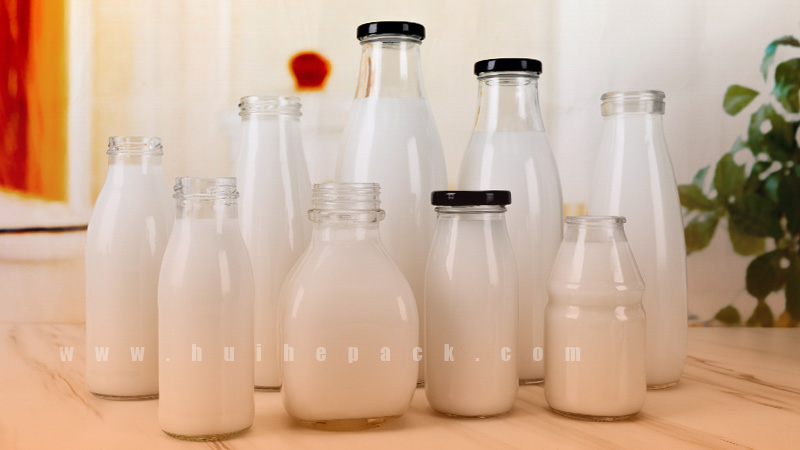
Traditional shoulders and wider openings
The neck and shoulder profile affect both presentation and use. A narrower opening may support controlled pouring, while a wider mouth can change filling access and the drinking experience. Neither is automatically suitable for every dairy beverage or filling method.
Trial the actual product, especially if it is thicker than ordinary fluid milk. Observe drips, pouring control and product left near the shoulder. A water demonstration can help reveal basic geometry but does not replace a test with the intended formulation.
For custom shapes, involve the filling team before finalizing the profile. Our custom glass bottle options are a starting point for discussing design needs; feasibility, tooling and commercial terms require a project-specific review.
Clear glass: visibility with a protection question
Clear glass displays the milk and label design directly. That visibility can support a brand’s presentation, but it also allows light exposure. Dairy packaging research shows that lighting conditions and protective packaging features can affect quality, so clear glass should not be treated as a light-blocking solution.
Evaluate the display environment, distribution period and complete label coverage. If the package needs additional protection, assess an appropriate covering or secondary pack with your technical team. Establish performance through testing rather than assuming that transparent packaging is harmless under all lighting.
Amber and other colors: assess the actual specification
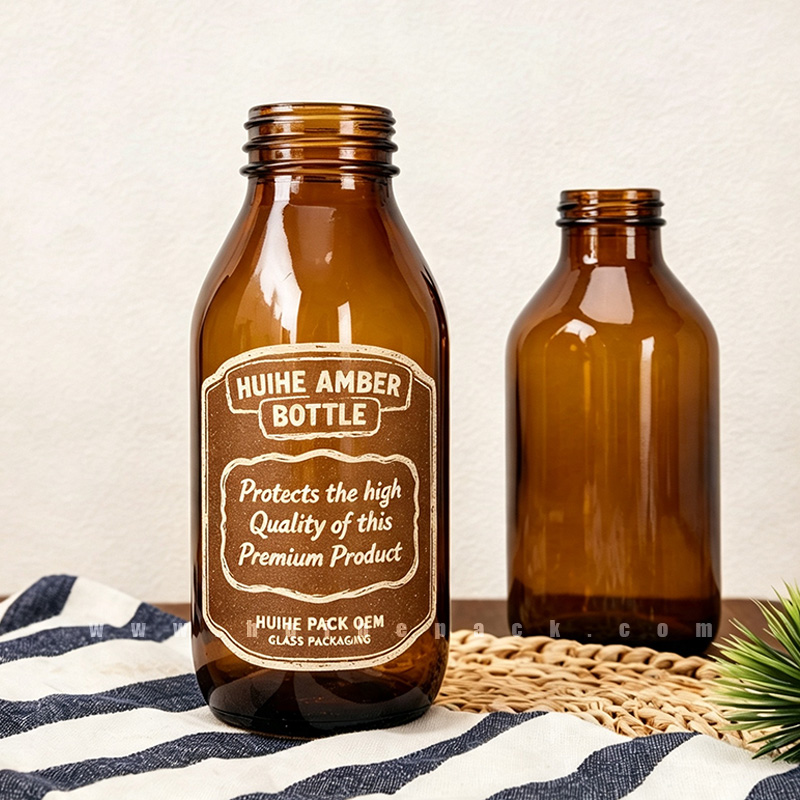
Amber glass offers a darker appearance and is often considered where light protection matters. However, color alone is not a complete light-transmission specification. The bottle design and relevant wavelengths need assessment for the intended product and exposure conditions.
Green and other colored glass can create a different brand identity, but should not be selected on an unsupported shelf-life claim. Confirm availability, consistency and recovery considerations in the destination market. If a colored exterior is created by a coating rather than the glass itself, clarify that distinction with the supplier.
Explore amber glass packaging as one possible design direction, then verify that the required milk-bottle size, finish and process compatibility are available. A bottle appropriate for another beverage is not automatically suitable for your dairy operation.
Screw caps: convenient opening needs a precise match
Screw closures can support familiar opening and resealing, but the bottle finish, cap dimensions and sealing system must match. Specify the closure material, liner where applicable and any required tamper evidence. A metal cap and a plastic cap should not be assumed to share operating settings.
Have the cap supplier and filling team define the appropriate application controls. Check leakage, opening effort and resealing after representative storage and handling. Tightening a cap harder is not a universal solution to a sealing problem and can introduce new issues.
Lug, press-on and swing-top systems
A lug closure uses a different engagement arrangement from a continuous-thread screw closure and requires the matching finish. Press-on or snap-style systems also rely on their own bottle geometry. These systems should be considered only where the component supplier confirms the intended dairy application and process.
Swing-top closures create a distinctive reusable-looking presentation, but their wire mechanism and gasket add parts that need evaluation. A swing top is not automatically tamper-evident, and its appearance does not establish suitability for commercial return, cleaning or refilling.
Review beverage closures and accessories as a complete package discussion. Ask about the approved use, cleaning limitations, replacement components and equipment needs rather than choosing a closure solely for its visual character.
Compare types with a practical decision table
| Design choice | Potential reason to consider it | What to verify |
|---|---|---|
| Round body | Traditional profile and curved label presentation | Grip, label wrap and line handling |
| Square body | Defined artwork faces and distinct appearance | Orientation, corners and protective packing |
| Clear glass | Product visibility | Quality under intended light exposure |
| Amber glass | Darker presentation and potential light protection | Actual performance and format availability |
| Screw closure | Familiar opening and resealing | Finish match, liner and application settings |
| Alternative closure | Specific use or brand experience | Dairy suitability and complete system validation |
Do not confuse bottle type with reuse approval
Single-use and returnable systems can look similar. For commercial reuse, obtain a specification suited to the intended wash, inspection and refill process. Define rejection criteria and the handling of caps or gaskets with the responsible technical team.
The same principle applies to shelf life: shape, color and closure style do not independently establish it. Validate the dairy product in the complete package under the intended process and storage conditions. Keep an approved sample and component list so that future substitutions receive review.
Build a complete bottle request
When contacting HUIHE PACK, provide the capacity, preferred body shape, color, closure needs, dairy process and sales channel. Add your order forecast and any filling-line constraints. This turns a broad style preference into a practical brief that can be evaluated through drawings, samples and a controlled trial.
Research reference: Journal of Dairy Science research on lighting and milk sensory quality.