Glass and plastic milk bottles can both serve a dairy brand well, but they solve different operational problems. The right choice depends on your product, filling system, distribution distance and customer experience. A local return service and a national supermarket launch should not automatically use the same packaging strategy.
Instead of asking which material wins in every situation, compare complete packaging systems. Include the bottle, closure, light protection, transit packing and end-of-life route. This guide provides a practical framework for choosing a format without assuming that material alone determines milk quality or environmental performance.
Define the milk product before comparing bottles
Start with the processing method and intended storage conditions. Chilled pasteurized milk and a product designed for ambient storage have different packaging and process requirements. Putting milk in a glass bottle does not make it shelf-stable, and changing the container cannot substitute for a validated dairy process.
Record the target fill volume, recipe, intended shelf life and distribution channel. Include flavored products or other formulation differences that may affect the filling and cleaning operation. Then ask potential suppliers to assess the actual use rather than recommend a bottle from a photograph.
Flavor protection: avoid a blanket material claim
A 2023 study in the Journal of Dairy Science compared milk in several packaging types under refrigerated, dark storage. Consumers did not distinguish milk in glass, PET and HDPE in the study’s day-ten comparison. Those conditions matter: the result does not establish that every bottle performs identically under retail lighting or every supply chain.
For your brand, compare filled samples using an appropriate sensory and shelf-life program. Include the complete closure system and realistic storage conditions. A package that performs well in darkness may need additional light protection in a brightly illuminated display.
Do not promise that glass automatically makes milk taste better or remain fresh for a specified number of extra days. Such claims need product-specific evidence. The more useful purchasing question is whether the proposed packaging maintains your defined quality through the intended product life.
Light protection is a separate design decision
Transparent packaging allows customers to see the milk, but visibility also means light can reach the product. Dairy research shows that lighting conditions and packaging protection can influence milk quality. Clear glass should therefore not be treated as a complete light barrier simply because the glass body is an effective material barrier.
Possible design responses include a suitable colored container, protective secondary packaging or a validated light-blocking label arrangement. Plastic also varies: a transparent bottle and an opaque, purpose-designed bottle should not be grouped together as one performance category. Assess the actual package rather than the material name.
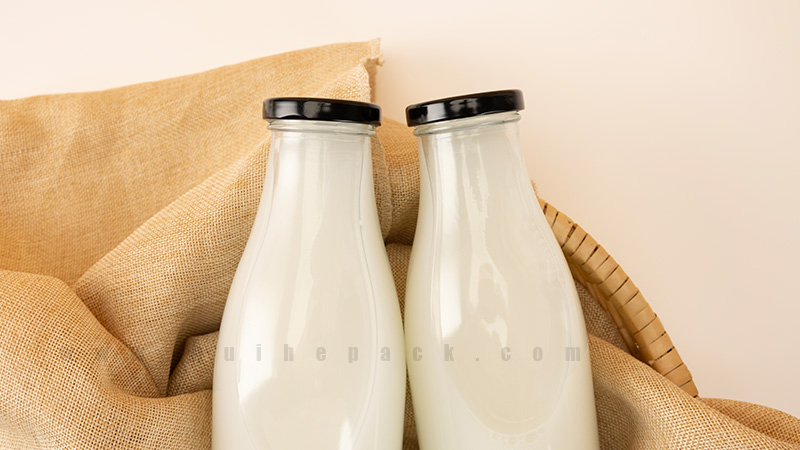
Weight, breakage and distribution
Plastic bottles are typically lighter than comparable glass formats, which can benefit handling and distribution. Glass offers rigidity and a distinctive feel, but its weight and breakage potential require suitable case design and operating controls. Compare the actual empty and filled pack weights in the supplier quotations.
Test the route your product will travel. Crates on a local delivery vehicle face different stresses from parcels passing through multiple sorting points. Include unloading, storage and customer handling in the assessment. A strong bottle can still fail when the surrounding packaging or handling method is unsuitable.
Measure delivered results rather than considering bottle price alone. Record damaged units, line interruptions and any additional packing requirements during trials. These costs can change the ranking of two apparently similar quotations.
Brand presentation and customer use
Glass can suit brands seeking a traditional dairy presentation, visible product and a substantial bottle feel. Plastic can support convenience where low carrying weight and resistance to shattering are priorities. These are positioning choices, not guarantees about what every customer prefers.
Put filled samples in front of representative buyers. Ask them to open, pour, reseal and store the bottle. A beautiful package may be difficult to grip when cold or may not fit the refrigerator shelf your customer uses. For larger sizes, test pouring when the bottle is full and nearly empty.
Explore glass milk bottle options using your intended label and closure. Real samples reveal proportions and handling details that a digital rendering can hide.
Reuse depends on a functioning return loop
Glass is often considered for returnable dairy systems, but a glass bottle is not automatically designed for repeated commercial washing and filling. Confirm the intended use with the supplier and define the inspection, sanitation and rejection process with the dairy’s responsible technical team.
The environmental and financial result depends on actual return rates, transport, washing and losses. A bottle reused many times in an efficient local loop has a different profile from one returned over long distances or frequently lost. Evaluate your system rather than borrowing a universal break-even number.
If customers are expected to return bottles, make the return method clear and convenient. Decide how deposits, damaged bottles and closures will be handled. Keep returned empties separate from clean packaging and ensure the operation has the capacity to manage the additional steps.
Recycling and environmental comparisons
Both glass and some plastic packaging formats can enter recycling systems, but local collection and processing matter. The complete design, including color, label and closure, should be reviewed against the destination’s recovery infrastructure. Technical recyclability alone does not prove that every used bottle will be recycled.
Compare environmental options with a consistent assessment boundary. Include production, transport, losses and any return washing, and distinguish a single-use system from a reusable one. Our broader glass versus plastic food packaging guide can help organize the material discussion, while your project requires its own evidence.
Compare the total packaging cost
| Decision area | Glass question | Plastic question |
|---|---|---|
| Distribution | What protective packing and handling are needed? | What strength and stacking performance are needed? |
| Light exposure | Does the selected color or covering protect the milk? | Does the exact bottle design provide sufficient protection? |
| Reuse | Is the bottle approved for the proposed return system? | Is reuse intended and technically supported? |
| Economics | What are freight, breakage and return costs? | What are material, tooling and barrier-related costs? |
Request the same scope from each supplier: bottle, cap, decoration, packing and delivery basis. Keep one-time development costs separate from repeat purchasing costs. Include minimum quantities and storage needs so that a lower unit price does not hide an impractical inventory commitment.
When each option deserves priority
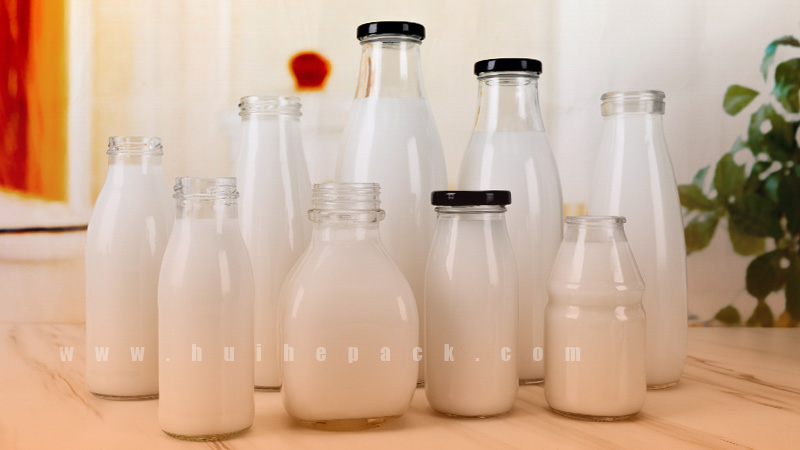
Glass deserves close consideration when your brand values its presentation, has suitable handling infrastructure and can support the economics of the chosen route. It may also suit a properly designed returnable model. Plastic deserves close consideration where low weight, distribution convenience or shatter resistance drive the brief.
Neither conclusion removes the need for trials. Confirm closure compatibility, package integrity, line performance and product quality before launch. Discuss beverage closure options using the bottle’s documented neck finish, not an assumed match based on cap diameter.
Make the choice with a realistic pilot
Choose the most promising complete pack, run a controlled pilot and compare it with your current baseline. Share the results and your operating requirements with HUIHE PACK when evaluating glass alternatives. The best milk bottle is the one your brand can fill reliably, distribute responsibly and support throughout its intended use.
Research references: The role of packaging on the flavor of fluid milk; Retail lighting and packaging influence consumer acceptance of fluid milk.